China encourages Iran, US to rebuild negotiation mechanism, conduct substantive consultations: top diplomat
By Zhang Wanshi and Published: Sep 16, 2026 09:06 PM

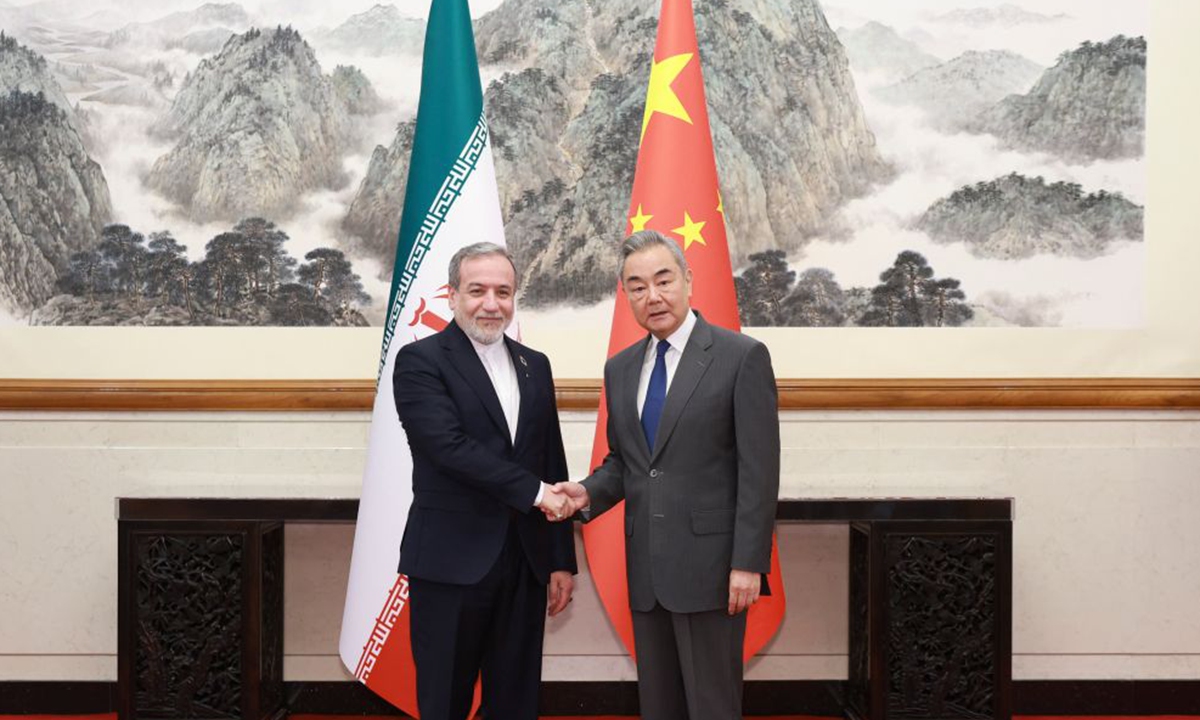
Chinese Foreign Minister Wang Yi, also a member of the Political Bureau of the Communist Party of China Central Committee, holds talks with Minister of Foreign Affairs of Iran Seyyed Abbas Araghchi in Beijing, capital of China, on September 16, 2026. Photo: Xinhua
China encourages Iran and the US to stay rational and exercise restraint, return to the Islamabad Memorandum of Understanding (MoU) at an early date, rebuild the negotiation mechanism on the basis of the consensus reached so far, and conduct substantive consultations on issues of respective concern, Chinese Foreign Minister Wang Yi said during his meeting with Minister of Foreign Affairs of Iran Seyyed Abbas Araghchi on Wednesday in Beijing.
Wang, also a member of the Political Bureau of the Communist Party of China Central Committee, said the continued prolongation of the US-Iran conflict is not in the common interest of the parties concerned and the international community, according to the Xinhua News Agency.
The visit comes only days after Wang and Araghchi met on the sidelines of the BRICS summit in New Delhi. According to an official release by the Chinese Foreign Ministry, previously in June, Araghchi briefed Wang on a first-phase memorandum of understanding reached between Iran and the US and expressed sincere gratitude to China for its positive role in advancing the negotiations and concluding the agreement.
Qin Tian, deputy director of the Institute of Middle East Studies of China Institutes of Contemporary International Relations, told the Global Times that the intensive interactions between China and Iran demonstrate the high level of strategic cooperation between the two sides, particularly Iran's strong emphasis on its relations with China. Following the US-Iran conflict, Iran has shown a high level of strategic importance attached to China.
Tehran also realizes that the current stop-and-start stalemate between the two sides is not in its own interest, Qin said. "It hopes that China can play the role of a major power and do some work to break the deadlock in US-Iran relations. Therefore, Araghchi's visit comes with specific requests."
Wang said China supports dialogue between Iran and other Gulf countries, supports the two sides in respecting each other's territorial sovereignty and national security, and safeguarding the shared interests of the region in a constructive manner, per Xinhua.
Wang urged all parties to take effective measures to reopen the Strait of Hormuz at an early date, keep international waterways open and secure, and safeguard the stability of international energy transportation as well as production and supply chains.
China's position on the strait has been consistent: it hopes that the strait will return to safety and resume navigation as soon as possible, that international energy supplies remain stable, and that the militarization of the strait be opposed, Qin noted. However, the expert added that the opening of the strait may be difficult to see tangible progress in the short term.
During the meeting, Wang said that the current situation once again demonstrates that the existing security architecture in the Middle East is inadequate and needs to be reformed and strengthened, according to the Chinese Foreign Ministry's website. On the issue of the Middle East, China, as a responsible major country, will continue, as always, to contribute to peace and stability, to make efforts to mediate and promote dialogue, and to uphold fairness and justice, the foreign minister said.
Araghchi briefed the Chinese side on the latest developments in the Middle East and the Gulf region, as well as Iran's considerations for its next steps. He said that Iran does not wish to see the conflict continue and hopes to return to the path of a diplomatic solution, while firmly safeguarding its own rights and interests.
Iran believes the US-Iran memorandum of understanding remains valid. Iran has reached an arrangement with Oman to reopen the Strait of Hormuz, and the US should faithfully fulfill all the commitments it has made. Iran is also willing to engage in dialogue and consultations with countries in the region, establish and develop good-neighborly and friendly relations, and work to restore peace and tranquility in the region at an early date, Araghchi said.
Araghchi added that Iran is willing to strengthen cooperation with China and looks forward to China playing a greater role in promoting peace and stability in the region.
China has a unique position in mediation as it can talk to all parties, Qin said. Araghchi's latest visit can also be viewed in the context of China's vision for a new security architecture in the Middle East. The architecture is inclusive and supports regional countries in building a shared home featuring good-neighborliness, development, security, and cooperation, the expert said.
RELATED ARTICLES