One-armed giant panda cub gets braces in world-first treatment to correct jaw asymmetry: report
By Published: Sep 16, 2026 09:22 PM

Like children who wear braces to straighten crooked teeth, giant panda Bei Xia underwent orthodontic treatment as a cub. His custom-made appliances helped correct a misaligned jaw that was making it difficult for him to drink milk and feed normally.
Details of the successful treatment have recently been shared by specialists at Sichuan University's West China Hospital of Stomatology and the Chengdu Research Base of Giant Panda Breeding. Local news outlet Red Star News in a recent report described the case as the world's first use of functional orthopedic treatment to correct jaw asymmetry in a giant panda.
The treatment took place in early 2023. The case was subsequently published in the July 2026 issue of The Angle Orthodontist, under the title "Functional orthopedic treatment for mandibular asymmetry in a giant panda with amputation."
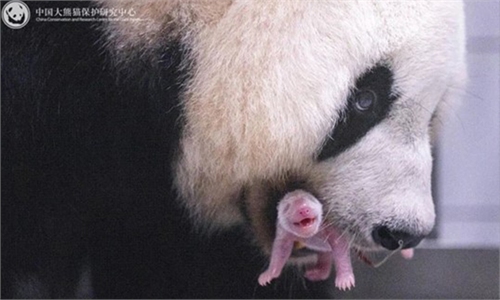
Born in 2022, Bei Xia faced a difficult start. His mother accidentally injured his left forelimb and lower jaw while handling him, according to Red Star News. Irreversible tissue damage forced veterinarians to amputate the injured limb less than 24 hours after his birth.
Saving a newborn weighing little more than 100 grams required careful temperature control, bleeding management and postoperative care. Yet another problem emerged as he grew: His lower jaw increasingly shifted to the left.
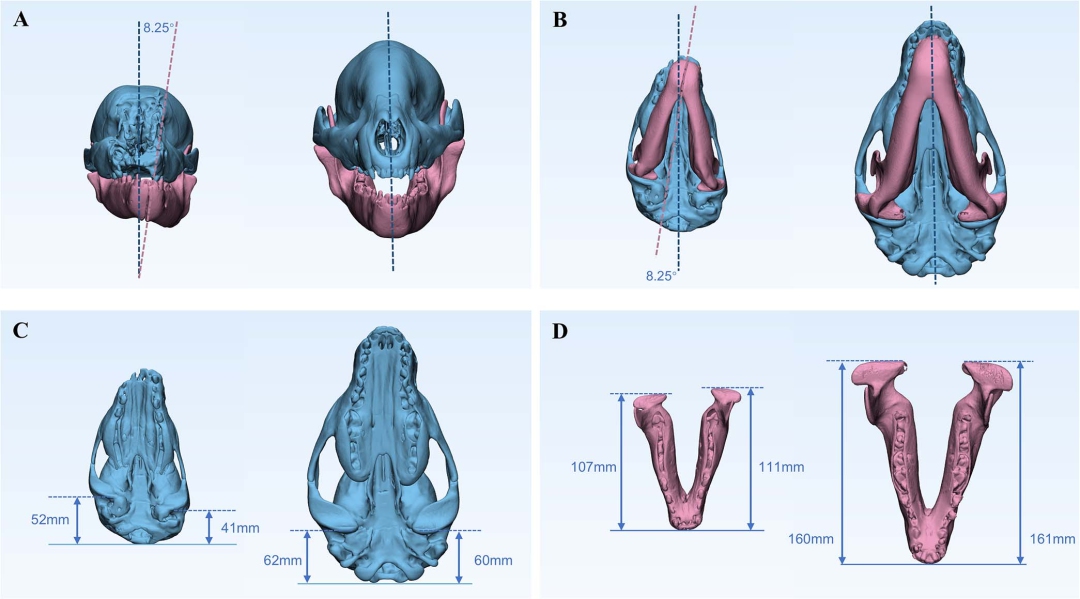
CT scans showed an 8.25-degree deviation between the lower jaw and skull midlines, according to Stomatology Today, the dental publication of China Medical Tribune. The left side of the skull base was underdeveloped, leaving the jaw joint positioned farther back than its counterpart on the right.
Rather than wait for adulthood to consider major corrective surgery, the team chose to guide growth while the cub's skull and jaw were still developing rapidly.
"The difficult part was not the technology, but understanding giant pandas themselves," orthodontist Long Hu told Red Star News.
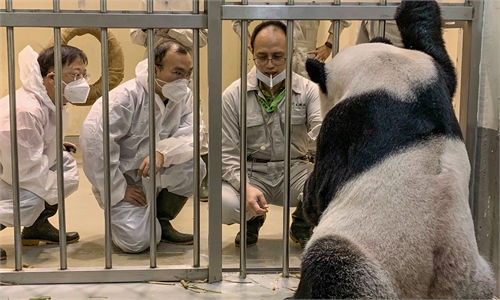
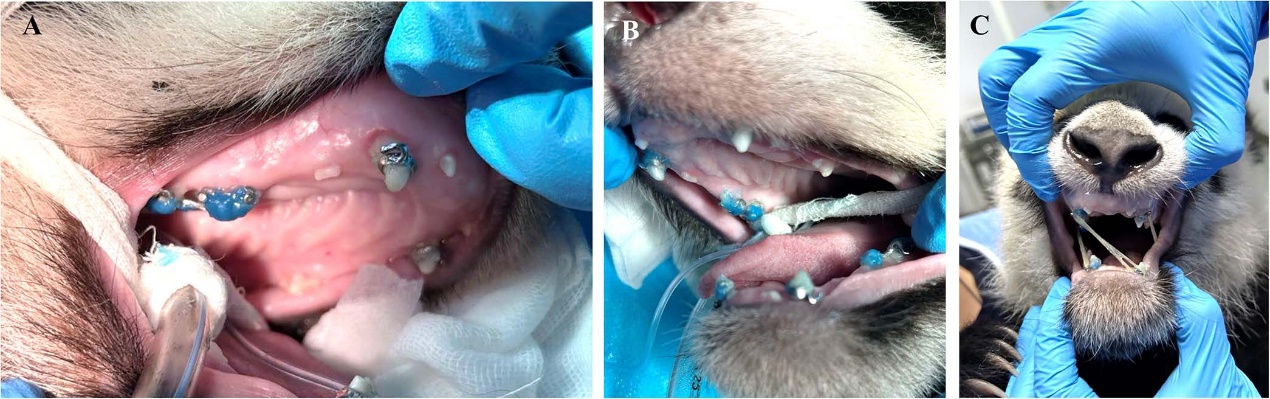
Veterinarians helped the dental specialists understand the unusual patient's anatomy and care needs. After repeated consultations, the team designed a treatment combining custom-made, 3D-printed appliances bonded to the teeth with elastic bands that applied carefully directed forces.
"Bei Xia was very cooperative. He sat quietly on his keeper's lap, and we succeeded on the first attempt," Long told Red Star News.
Fitting the appliances was more demanding. The cub needed general anesthesia, while dental specialists and veterinarians shared access to a very small mouth. The team had to maintain a clear airway while monitoring breathing, heart rate, blood oxygen and body temperature.
The procedure ran from about 9 pm until 1 am, with orthodontists, imaging specialists, veterinarians, keepers and anesthesia staff working together, Long recalled.
Then came six months of daily care. Three orthodontic elastic bands supplied the traction. Keepers removed them before milk feeds and replaced them afterward, while changing the bands daily.
Initially, Bei Xia tried to dislodge the unfamiliar equipment with his tongue and limbs. Staff watched closely to prevent him from swallowing loose bands and to keep the treatment on track.
After six months, his jaw deviation had largely been corrected, and normal sucking, chewing and swallowing functions were restored, according to Stomatology Today. CT measurements showed that an approximately 11-millimeter difference in the positions of the two jaw joints had narrowed to about 2 millimeters. The teeth supporting the appliances showed no loosening after removal.
The team said the case offered a new direction for collaboration between veterinary medicine and human dental specialists. It does not mean every animal jaw problem can be treated the same way, but demonstrates how growth-guiding techniques can be adapted to a carefully assessed case.
Now four years old, Bei Xia lives at Panda Valley, the breeding base's research center in Dujiangyan city, Sichuan, being healthy and eating well.
"At first glance, it's a novel and amusing story, but Bei Xia really has been remarkably resilient with only one front limb," panda fan Dou Zi told the Global Times.
"He's grown into a handsome big boy. Next time I see him at Panda Valley, I'll have to take a really good look at his face."
Details of the successful treatment have recently been shared by specialists at Sichuan University's West China Hospital of Stomatology and the Chengdu Research Base of Giant Panda Breeding. Local news outlet Red Star News in a recent report described the case as the world's first use of functional orthopedic treatment to correct jaw asymmetry in a giant panda.
The treatment took place in early 2023. The case was subsequently published in the July 2026 issue of The Angle Orthodontist, under the title "Functional orthopedic treatment for mandibular asymmetry in a giant panda with amputation."
Born in 2022, Bei Xia faced a difficult start. His mother accidentally injured his left forelimb and lower jaw while handling him, according to Red Star News. Irreversible tissue damage forced veterinarians to amputate the injured limb less than 24 hours after his birth.
Saving a newborn weighing little more than 100 grams required careful temperature control, bleeding management and postoperative care. Yet another problem emerged as he grew: His lower jaw increasingly shifted to the left.
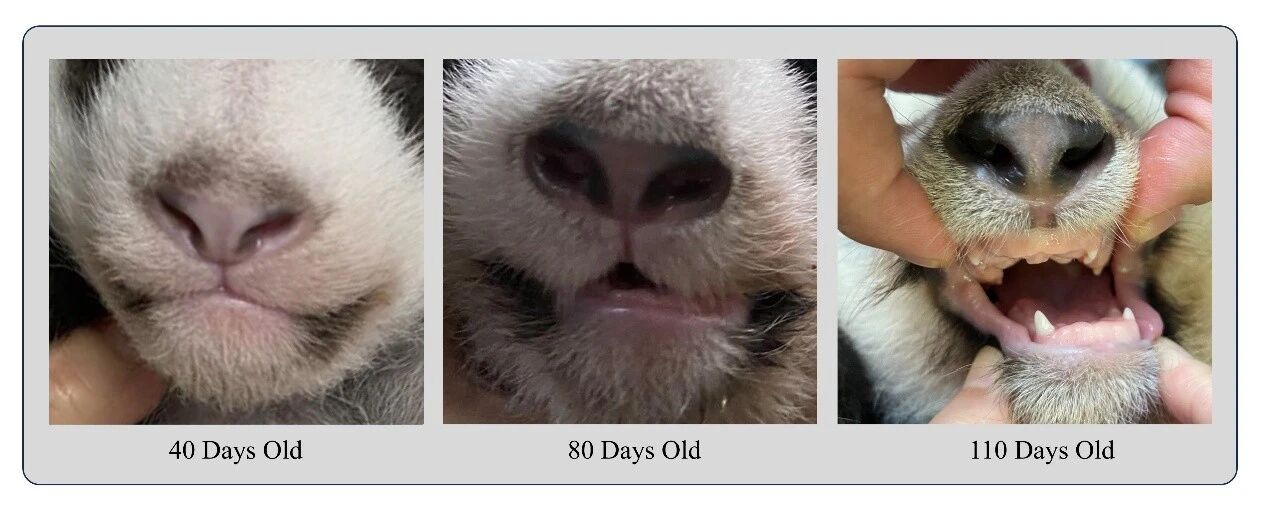
Stages of giant panda Bei Xia's orthodontic treatment to correct jaw asymmetry. Photo: WeChat account of China Medical Tribune's Stomatology Today
By three months of age, the misalignment was interfering with feeding. Bei Xia struggled to create the suction needed to drink milk, which frequently leaked from his mouth. The team suspected that the early jaw injury and changes in how he used his remaining limbs could both have contributed to uneven development.CT scans showed an 8.25-degree deviation between the lower jaw and skull midlines, according to Stomatology Today, the dental publication of China Medical Tribune. The left side of the skull base was underdeveloped, leaving the jaw joint positioned farther back than its counterpart on the right.
Rather than wait for adulthood to consider major corrective surgery, the team chose to guide growth while the cub's skull and jaw were still developing rapidly.
"The difficult part was not the technology, but understanding giant pandas themselves," orthodontist Long Hu told Red Star News.
Veterinarians helped the dental specialists understand the unusual patient's anatomy and care needs. After repeated consultations, the team designed a treatment combining custom-made, 3D-printed appliances bonded to the teeth with elastic bands that applied carefully directed forces.
Stages of giant panda Bei Xia's orthodontic treatment to correct jaw asymmetry. Photo: WeChat account of China Medical Tribune's Stomatology Today
An intraoral scanner provided the digital models needed to make the appliances. That step proved easier than expected."Bei Xia was very cooperative. He sat quietly on his keeper's lap, and we succeeded on the first attempt," Long told Red Star News.
Fitting the appliances was more demanding. The cub needed general anesthesia, while dental specialists and veterinarians shared access to a very small mouth. The team had to maintain a clear airway while monitoring breathing, heart rate, blood oxygen and body temperature.
The procedure ran from about 9 pm until 1 am, with orthodontists, imaging specialists, veterinarians, keepers and anesthesia staff working together, Long recalled.
Then came six months of daily care. Three orthodontic elastic bands supplied the traction. Keepers removed them before milk feeds and replaced them afterward, while changing the bands daily.
Initially, Bei Xia tried to dislodge the unfamiliar equipment with his tongue and limbs. Staff watched closely to prevent him from swallowing loose bands and to keep the treatment on track.
After six months, his jaw deviation had largely been corrected, and normal sucking, chewing and swallowing functions were restored, according to Stomatology Today. CT measurements showed that an approximately 11-millimeter difference in the positions of the two jaw joints had narrowed to about 2 millimeters. The teeth supporting the appliances showed no loosening after removal.
CT-based comparisons of giant panda Bei Xia's skull and jaw before and after orthodontic treatment show improved jaw alignment and symmetry. Graphic: WeChat account of China Medical Tribune's Stomatology Today
The team said the case offered a new direction for collaboration between veterinary medicine and human dental specialists. It does not mean every animal jaw problem can be treated the same way, but demonstrates how growth-guiding techniques can be adapted to a carefully assessed case.
Now four years old, Bei Xia lives at Panda Valley, the breeding base's research center in Dujiangyan city, Sichuan, being healthy and eating well.
"At first glance, it's a novel and amusing story, but Bei Xia really has been remarkably resilient with only one front limb," panda fan Dou Zi told the Global Times.
"He's grown into a handsome big boy. Next time I see him at Panda Valley, I'll have to take a really good look at his face."
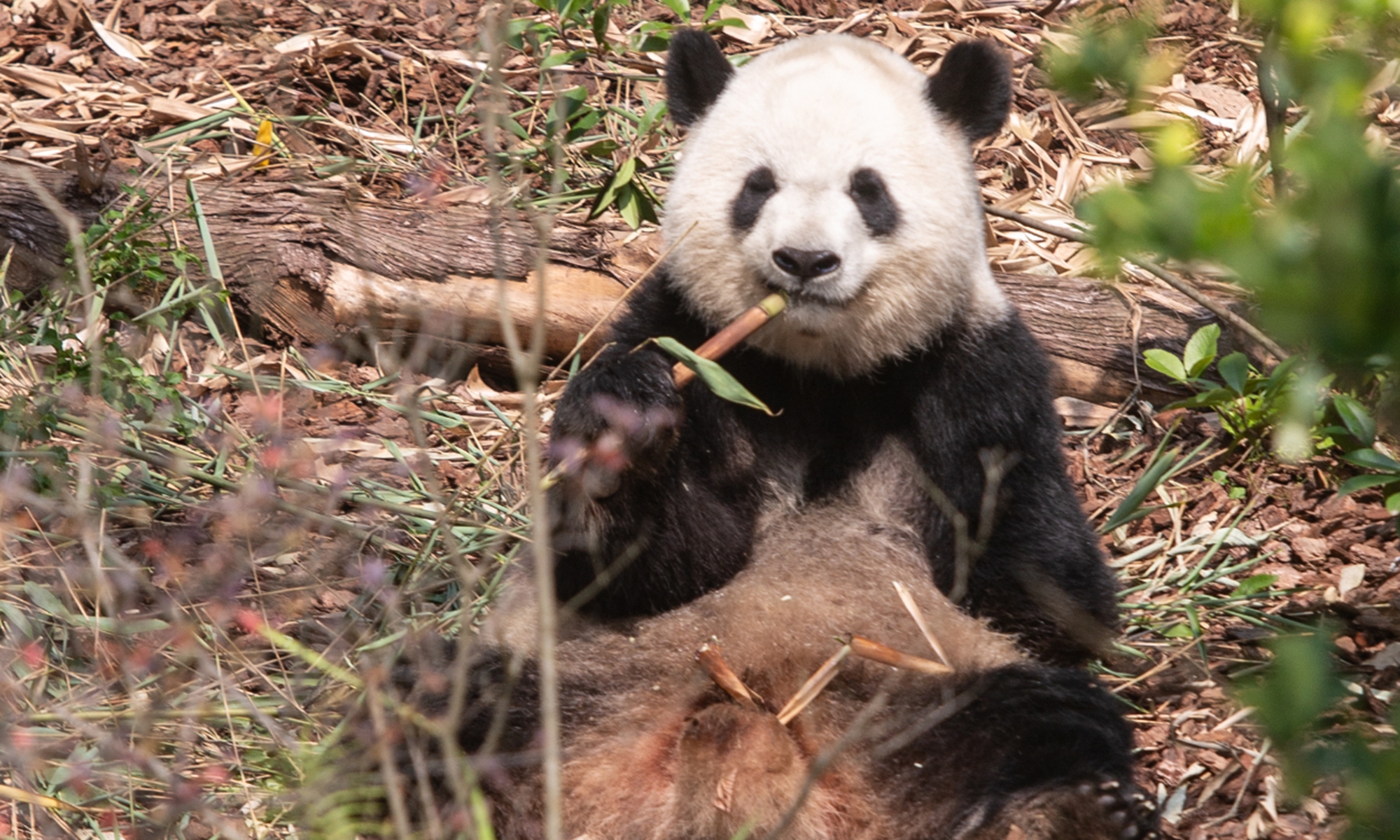
Giant panda Bei Xia Photo: Shan Jie/GT
RELATED ARTICLES