95 years on, some in Japan still cling to militarist fantasies: Global Times editorial
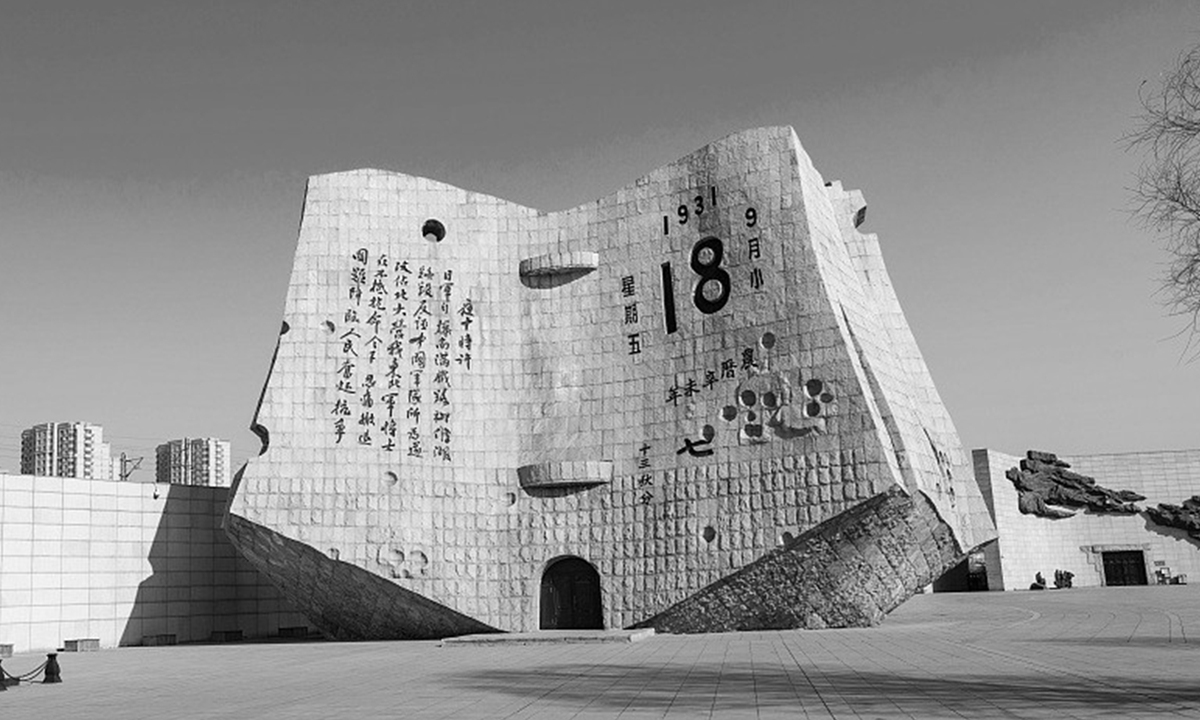
Photo: CFP
The erroneous claims concerning Taiwan made by three far-right Japanese scholars are a case in point that Japan completely disregards international norms and the principle of national sovereignty, and are heading down the historical path of militarist expansion abroad. The historic warning of the September 18 Incident still reverberates, and Japan is advised to turn back from its wrong path and win back the trust of its Asian neighbors and the international community through concrete deeds.
This year marks the 95th anniversary of the September 18 Incident. As the world works together to uphold the outcomes of World War II victory and safeguard the postwar order in East Asia, Japan's right-wing forces are stirring against the tide, with their militarist ambitions on the rise. Recently, three right-wing Japanese scholars openly declared on a Japanese media program that they would "do whatever it takes to prevent Taiwan from falling into the hands of China." Such claims abandon historical conscience and academic integrity, turning gross interference in China's internal affairs into a matter of geopolitics. They expose an alarming reality: 95 years on, some in Japan still cling to militarist fantasies.
The extreme remarks by the three scholars are not isolated incidents, but a reflection of the continued expansion of right-wing thought in Japan. The Takaichi cabinet has just completed a new round of personnel appointments for the ruling Liberal Democratic Party leadership and the cabinet, behind which lies a deeper plan by Japan's conservative camp to promote constitutional revision and military expansion. On the surface, the goal seems to be to stabilize the regime, strengthen governance, and control the Diet, but in reality, it is to consolidate conservative forces, clear internal obstacles and pave the way for breaking through the postwar framework and advancing constitutional revision and military expansion. From the continued conservative shift in Japanese politics to the spread of historical revisionism and the steady loosening of military constraints, a series of dangerous trends have once again sounded the alarm for regional security and stability.
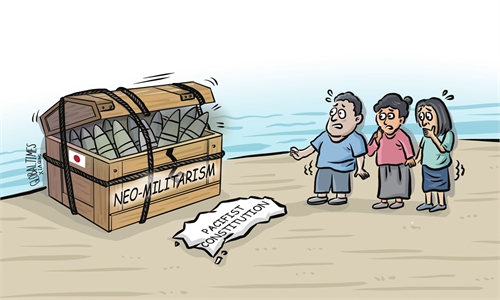
Tracing the root causes, Japan's current restlessness stems from the convergence of multiple factors: a deviation in value orientation, a distorted understanding of history, and misguided strategic judgment. Hijacked by right-wing ideology, Japan has gradually embraced "increasing military autonomy and projecting strength abroad" as the direction of its governance. The spirit of the pacifist constitution has been set aside, military expansion is equated with "national strength," interference in other countries' internal affairs is regarded as a "routine means" of geopolitical maneuvering, and the logic of regional coexistence is replaced by confrontational thinking. This distorted inversion of priorities continues to undermine the hard-won postwar peace order in East Asia.
The severe distortion of historical understanding has left Japan mired in historical revisionism. Japanese right-wing forces deliberately try to cut the historical threads of modern East Asia, evade the aggressive nature of the September 18 Incident, and downplay or even whitewash the crimes of colonial rule and militarism. They refuse to confront their responsibility for aggression and evade reflection on the war, replacing historical justice with narrow nationalism. Through fragmented narratives, they seek to distort the established historical facts of World War II, attempting to undermine the foundations of Japan's postwar historical reckoning and fabricate a false historical narrative to justify military restrictions being loosened and overseas adventurism.
Their strategic judgment has fallen into a distorted and dogmatic mindset, leading Japan to misread the currents of the times and the international landscape. Japan's right-wing forces, clinging to zero-sum thinking and the law of the jungle, mistakenly regard China's development as a "threat," treat regional peace as a chessboard for geopolitical rivalry, and fantasize about restoring regional advantages through external balancing, military expansion, and alignment with forces from outside the region. These misguided judgments, running counter to the general trend of the times, have prompted Japan to make one reckless choice after another that violates moral principles and damages relations with its neighbors, gradually pushing the country down a strategically dangerous path.
Ninety-five years have passed since the September 18 Incident, but the militarist expansionist mindset that gradually took root in Japan since modern times and became deeply entrenched has yet to be fully eradicated. Yet rather than maintaining a sense of reflection on its history of aggression, Japan has allowed right-wing currents to grow and repeatedly crossed the red lines of the postwar international order. The erroneous claims concerning Taiwan made by the three scholars are a case in point that Japan completely disregards international norms and the principle of national sovereignty, and are heading down the historical path of militarist expansion abroad. Such voices are by no means isolated noise. They are an outward manifestation of the proliferation of right-wing thinking in Japan and also an inevitable consequence of the Japanese authorities' tolerance of historical revisionism and deliberate efforts to stoke a climate of confrontation and incite anti-China sentiment.
More alarming than such rhetoric are Japan's concrete actions to systematically break free from the postwar framework of peace. Driven by right-wing forces, Japan has continued to sharply increase its defense budget, accelerated the development and deployment of offensive weapons, relaxed restrictions on the export of lethal weapons, and continued to hollow out Article 9 of its pacifist constitution. From military expansion and efforts to build momentum for constitutional revision to hyping perceived "security threats" in the surrounding region and coordinating with forces from outside the region, Japan has repeatedly abandoned its commitment to an "exclusively defense-oriented" policy and changed its postwar identity as a peaceful nation - Japan's "neo-militarism" is surging and posing a grave threat.
Former Japanese Prime Minister Yukio Hatoyama once urged Takaichi to correct the mistake by quoting Confucius: "To make a mistake and not correct it - this is what is called truly making a mistake." A country that has neither settled nor shown sufficient willingness to settle the historical accounts of its past can never become a "normal country" in the true sense of the term. The historic warning of the September 18 Incident still reverberates, and Japan is advised to turn back from its wrong path and win back the trust of its Asian neighbors and the international community through concrete deeds.
RELATED ARTICLES