What an outrage! Japan’s Defense Ministry is using manga to sell militarism to children
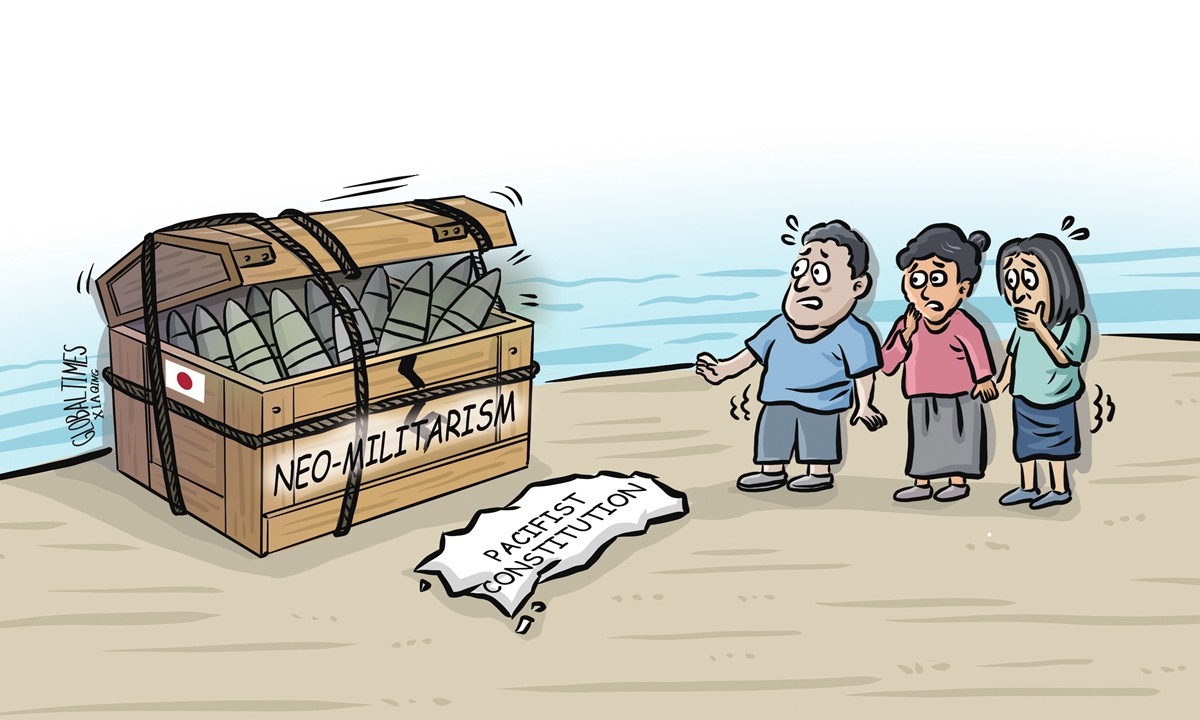
Illustration: Xia Qing/GT
"Defense of Japan 2026," released on August 4, has adopted a dangerous "new face." For the first time, it features an anime-style cover design, with the theme "security for a future-oriented Japan." Beneath its friendly cartoon aesthetics is a far darker message: it links military production with "national prosperity," attempting to feed young Japanese people a misleading narrative that accelerating military expansion is not only about "security," but can also "boost economic growth."
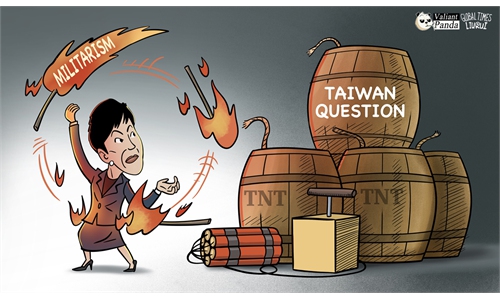
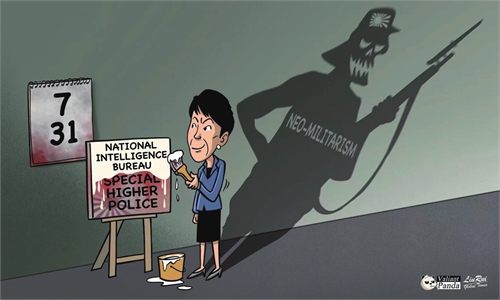
This is where the extreme danger of "neo-militarism" lies. It conceals the nakedly aggressive aspects of militarism - such as advocating external expansion and national superiority - and instead dresses it up in the language of democracy, the rule of law and economic rationality. It no longer openly chants slogans like the "Greater East Asia Co-Prosperity Sphere," but instead talks about "free and open Indo-Pacific" and "cooperation with allies and like-minded countries." It no longer directly incites hatred, but instead repeatedly amplifies the so-called "greatest strategic challenge ever" narrative to create sustained anxiety, with the aim of making the public voluntarily support a doubling of military spending and the expansion of military capabilities amid artificially manufactured fears.
Young people and even children have become targets of this "neo-militarism" campaign. Japan struggles with a declining birthrate, an aging population and economic stagnation, leaving many young people uncertain about their future. The white paper uses anime-style imagery and an absurd vision of the future to exploit this anxiety, implying that "only by strengthening defense can Japan move toward a brighter future." In reality, this represents a more dangerous form of social mobilization: encouraging the next generation to view military expansion as a normal part of daily life, military industry jobs as respectable careers, and "counterstrike capabilities" as an unquestionable right. Once such perceptions become entrenched, the collective memory and anti-war consensus upheld by Japan's postwar pacifist constitution will be further weakened. The recent appearance on overseas social media of images allegedly showing a three-year-old Japanese child waving the "Rising Sun Flag" toward a Self-Defense Forces vessel is by no means accidental.
The Japanese authorities' use of anime-style messaging to lure and influence young people is deeply troubling and shameful. It is also a reminder that militarism never returns overnight. It often begins with the reconstruction of narratives, spreads through education and propaganda, becomes tied to economic interests, and ultimately transforms into fundamental shifts in policy and action.
Today, military industries are linked with "prosperity"; tomorrow, external intervention could be linked with "shared prosperity." Today, cartoons are used to mislead young people; tomorrow, young people could be called upon to serve under a wartime system. Asian neighbors and the international community must remain highly vigilant. No matter how polished the "new face" of neo-militarism may appear, it cannot conceal its dangerous essence.
RELATED ARTICLES