Chinese EV Illustration: Tang Tengfei/GT
Just as China and the EU are engaged in intensive consultations and negotiations on economic and trade relations, two distinct voices have emerged from Europe.On one side, European Commission President Ursula von der Leyen stated in her State of the Union address that the EU's trade deficit with China "has reached a tipping point," adding that the EU "uses all the tools at our disposal to rebalance" China-EU economic and trade relations.
On the other side, Spanish Minister of Economy, Trade and Business Carlos Cuerpo called on the EU to embrace its relationship with China, noting that a "window of opportunity" still exists that is worth seizing. Clearly, rational voices within Europe do not endorse the hardline approach Brussels has adopted toward China-EU trade negotiations.
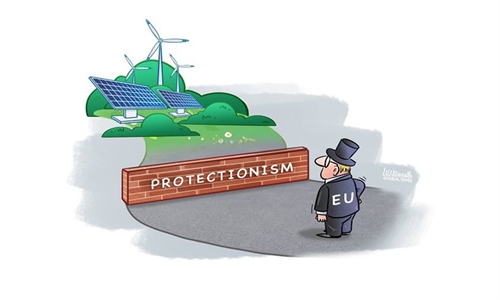
There are no winners in a trade war. Provoking trade disputes on the strength of flawed logic is inherently highly irrational. This should give serious pause to certain EU policymakers in Brussels who insist on adopting a hardline approach toward China.
The industrial chains of China and Europe are highly integrated; Europe has maintained a long-standing surplus with China regarding trade in services; it has substantial investments in China; and affordable, high-quality imports from China help Europe curb inflation and benefit people's livelihoods.
Furthermore, China's technological and industrial chain advantages in the field of new energy can facilitate Europe's energy transition. These advantages are worth preserving, and it would be preferable if they were not put at risk through trade disputes that could arise with the EU.
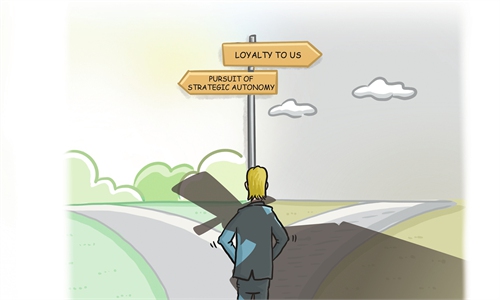
Europe is facing complex challenges. At present, Europe is under pressure from both within and without. Externally, it is deeply entangled in ideological rivalry with the US, disputes over influence in shaping international rules and geopolitical conflicts.
Internally, it faces numerous issues such as social division and polarization of public opinion, and risks being left behind in the global process of technological transformation and innovation.
Therefore, the practical path for China and the EU to resolve trade disputes lies in abandoning a confrontational mindset, returning to rational consultation, upholding existing international trade rules with the utmost sincerity, as well as focusing on problem-solving and balancing the interests of both sides.
At the micro level, China and the EU can engage in step-by-step communication and consultation on key points of contention - such as new energy vehicles, critical raw materials, trade deficits and cross-border e-commerce - to formulate targeted, actionable and concrete solutions that will swiftly resolve current trade disagreements.
At the macro level, Europe should look beyond the confines of disputes and consider specific trade disagreements within the broader framework of market access, investment rules, and the bilateral economic and trade system. Building on the resolution of bilateral issues, both sides should explore cooperative norms that serve as models for the region and even the world.
Working together to enlarge the pie is clearly more attractive than unilaterally creating frictions. China and the EU have already reached significant consensus in structural areas of global and bilateral importance, leaving ample room to advance and solidify cooperation.
Even in the electric vehicle sector - a particularly sensitive area for Europe - many major European automakers have clearly recognized that learning from Chinese technology, drawing on Chinese experience and deepening cooperation with China are the feasible paths to their own industrial transformation. They view direct competition with Chinese companies as a "testing ground" for entering global markets. Rational voices in Europe have recognized the "window of opportunity" in China-EU economic and trade relations.
Europe, together with China, should therefore build upon the common needs of both sides, link economic and trade consultations with structural and long-term cooperation, open the "window of opportunity" for two-way openness and mutual benefit, and achieve long-term stability and high-quality development in China-EU economic and trade relations.
The author is executive director and associate professor at the Institute of European Studies, Shanghai International Studies University. opinion@globaltimes.com.cn
RELATED ARTICLES