China defends UN ‘enemy state clauses’ amid Japan’s re-militarization push
Global vigilance needed over Japan’s erosion of post-war order and regional stability: experts
By and Li Yu Published: Sep 29, 2026 11:09 PM

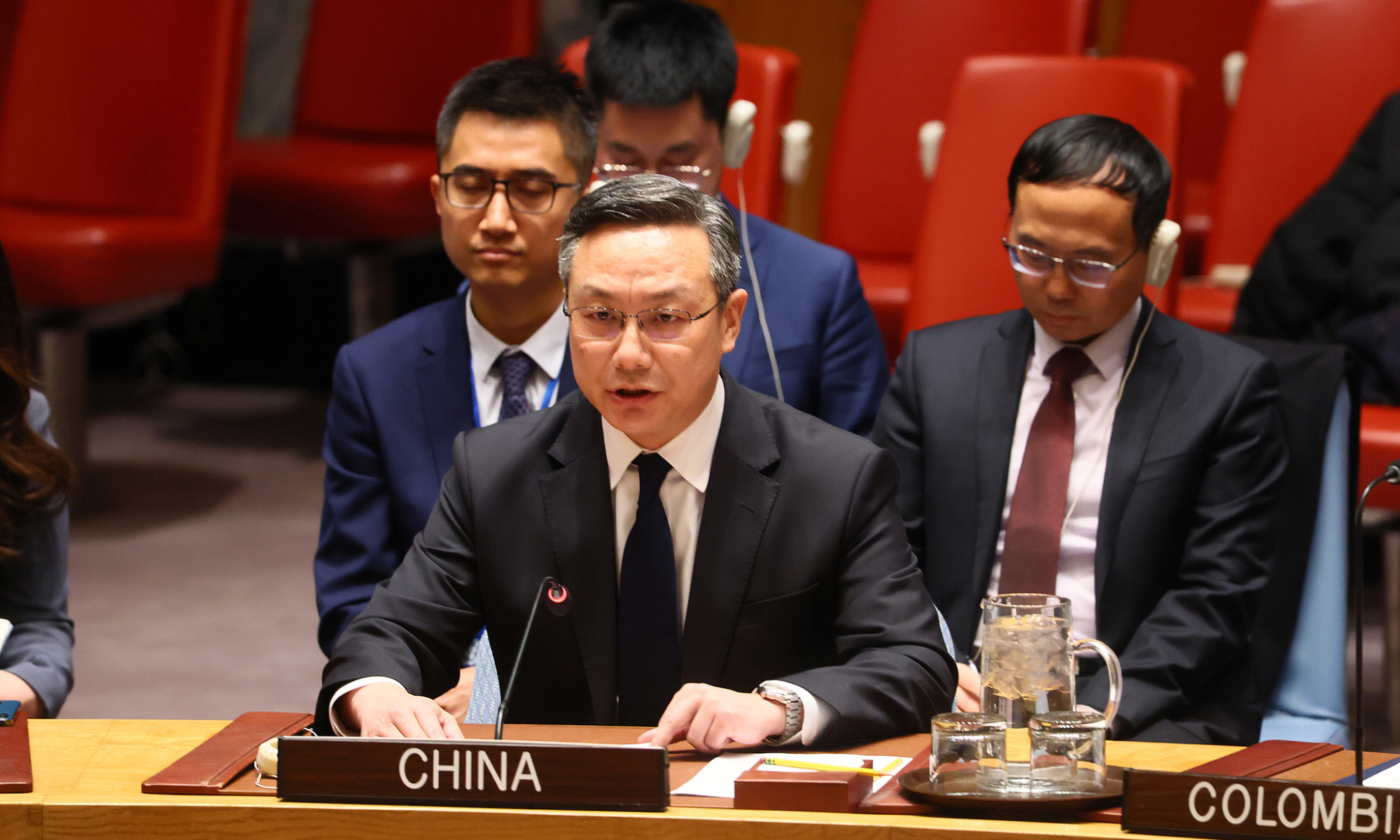
Sun Lei, China's deputy permanent representative to the United Nations speaks at a UN Security Council's emergency meeting on January 15, 2026. Photo: VCG
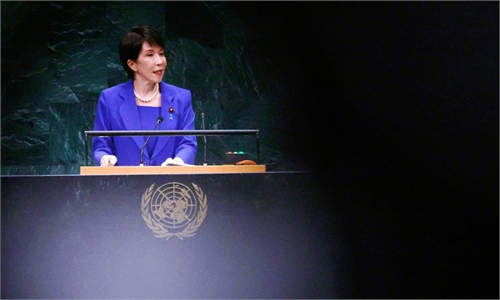
The "enemy state clauses" in the UN Charter shall not be altered or deleted given Japan's re-militarization, a Chinese envoy told the General Debate of the UN General Assembly on Monday local time, exercising the right of reply after Japanese Prime Minister Sanae Takaichi, in a statement delivered at the debate on September 22, called for deletion of the "enemy state clauses," citing Japan's "exclusively defense-oriented policy."
Sun Lei, China's deputy permanent representative to the United Nations, made the remarks and stressed that China firmly opposes Japan's request, adding that Japan joined the United Nations after recognizing its militarist crimes and accepting the UN Charter in its entirety.
Articles 53, 77, and 107 of the UN Charter - commonly known as the "enemy state clauses" - grant the Allied powers of the anti-fascist coalition "exceptional authority" to take preemptive military action to prevent the resurgence of the World War II "Axis powers." Since the 1960s, Japan has spent decades denigrating the "enemy state clauses."
"The enemy state clauses in the UN Charter are a vital institutional arrangement aimed at preventing fascism and militarism from threatening international peace and security ever again. They provide important institutional safeguards for defending the post-war international order and remain extremely relevant today," Sun said.
Analysts said that by seeking to delete the "enemy state clauses," Japan is essentially attempting to shake off its historical guilt and remove international "legal barriers" to its military expansion. The international community should stay highly alert to Japan's dangerous moves and take measures to curb the re-militarization attempts of Japan's right-wing forces to jointly safeguard post-WWII order.
'A real threat'
According to Sun, Japan's post-war system is contingent on deep self-reflection of its history of aggression and a clear break from militarism. However, more than 80 years later, the administration of Prime Minister Sanae Takaichi, instead of self-reflection, has spared no effort to glorify and whitewash Japan's war crimes, and is attempting to cover up its ongoing expansion of military capacities by fabricating narratives about threats from neighboring countries, Sun said.
In recent years, Japan has drastically increased military spending, relaxed restrictions on the export of lethal weapons, advanced the deployment of intermediate and long-range missiles, strengthened offensive military capacities, stockpiled large amounts of sensitive nuclear materials, pushed for amending its pacifist Constitution, attempted to break free from the three non-nuclear principles, and even clamored to become a "war-capable nation," he noted.
"All these facts are proof that Japan's re-militarization has become a real threat to regional and global peace and stability," he said.
A Beijing-based Japan affairs expert told the Global Times that by persistently seeking the deletion of "enemy state clauses," Japan's right-wing forces are essentially attempting to erase Japan's identity as a defeated state in WWII, and want to cast off institutional constraints and historical guilt, remove legal obstacles to remilitarization, and weaken international historical vigilance over its military expansion.
Well aware that as a defeated state in WWII it has no right to unilaterally delete the "enemy state clauses," Japan has nonetheless raised the demand publicly at the UN. It attempts to exploit the international stage to fabricate a narrative that "the clauses are outdated and Japan is wronged" so as to seek external room for military expansion, said the expert who declined to be named.
Tokyo's move may mislead international public opinion, embolden Japan's right-wing forces, heighten regional security anxieties and even fuel a regional arms race, the expert warned.
On Monday, Japanese Defense Minister Shinjiro Koizumi reiterated it is crucial for Japan to debate the issue of nuclear weapons and nuclear-powered submarines "without taboos," claiming that Japan "must possess the capabilities to firmly counter threats directed at us," according to the Japan Times.
"Japan's military spending keeps rising and neo-militarism sentiments are resurging, while Tokyo has blatantly breached the principle of an exclusively defense-oriented policy. Such actions stand in stark contradiction to its self-proclaimed "peace nation" rhetoric. Most notably, Sanae Takaichi previously made blatant provocations against China on the Taiwan question, revealing dangerous aggressive inclinations, and has offered no reflection or apology to this day," Lü Chao, a professor at the Liaoning Academy of Social Sciences told the Global Times.
"This fully illustrates the practical necessity of restraining Japan via the 'enemy state clauses' of the UN Charter," he added.
During a meeting with Takeshi Iwaya, president of the Japanese Association for the Promotion of International Trade (JAPIT) in Beijing on Monday, Chinese Foreign Minister Wang Yi said that this year marks the 80th anniversary of the opening of the Tokyo Trials. If Japan refuses to learn from historical lessons, challenges the post-war pacifist Constitution, denies its history of aggression or glorifies war criminals, it cannot face the world and there's no building a future to speak of.
Shared responsibility
Japan's move has drawn criticism from other regional countries.
Russian Foreign Minister Lavrov told the media that Japan was initially designated as an "enemy state" in the UN Charter. Japan joined the UN after having atoned for its militaristic policies and the crimes it committed. By joining the UN, Japan recognized the principles enshrined in the Charter in their entirety.
Japan's bid has also faced domestic criticism. A Monday report by Asahi Shimbun described Takaichi's call to delete the "enemy states clause" as "adding fuel to fire," noting that some Japanese government officials are "raising doubts about whether such a comment was truly called for."
One government source told the media that "there is no significance to the prime minister raising the issue in her speech," and "it was totally meant for a domestic audience."
Japanese media outlets have also taken note of a point in China's release of the eight deliverables and understandings issued in the wake of the China-US summit. It is mentioned that during their latest leaders' engagement, the two heads of state recalled that China and the US were allies in World War II and fought side by side to win the war.
Upholding the post-war international order, defending the outcomes of victory in WWII and maintaining regional peace and stability are the shared responsibility of the international community, Chinese envoy Sun Lei said at Monday's debate.
China urges Japan to draw profound lessons from history and immediately stop its dangerous acts of re-militarization. China also calls on the international community to distinguish right from wrong, remain vigilant, jointly uphold the outcomes of victory in WWII, and safeguard world peace and stability, he added.
Japan's moves directly challenge the UN Charter-based post-war international order and seek to subvert established WWII conclusions. If Japan's right-wing forces are allowed to act unchecked, the global post-war system will be undermined and the UN Charter's binding force weakened , the Beijing-based expert said.
The international community can roll out multiple targeted measures to curb Japan's right-wing remilitarization attempts and safeguard the post-WWII international order, the expert said.
At UN and Security Council meetings, it shall uphold the UN Charter and WWII historical conclusions, affirm the value of the enemy state clauses and reject Japan's historical distortion and charter revision push, the expert said, adding that the UN review mechanisms should monitor Japan's military expansion, overseas military deployment and nuclear risks, and demand that Japan fulfill its obligations as a WWII defeated nation.
The expert also suggested that UN members should coordinate policies to publicly warn against Japan's dangerous moves that breach its "pacifist Constitution." In addition, regional multilateral security dialogues can be strengthened to jointly resist Japan's moves to stoke bloc confrontation and arms races, and keep pressing Japan to face up to its history of aggression.
Should Japan's resurgent militarism gain momentum, it will spell grave disaster for the international community. Therefore, the global community, especially the five permanent members of the UN Security Council, share the responsibility to take measures to curb Japan's growing militarism, Lü Chao said.
He suggested international community monitor Japan's exports of dual-use items and sensitive equipment, report related information to relevant UN bodies in a timely manner, and enforce controls via the UN if necessary.
"Japan faces a grave choice: will it continue to ignore historical lessons and allow the remnants of militarism to resurface, or will it face up to its history of aggression, honor its peace pledges, and earn the trust of the international community through sincere reflection? Will it continue to confound right and wrong, distort facts and challenge the post-war international order, or deliver on its peace commitments with concrete actions?" Sun said on Monday.
RELATED ARTICLES