China records second carp-linked Haff disease cluster as 5 develop rhabdomyolysis after eating wild red-tailed carp: China CDC report
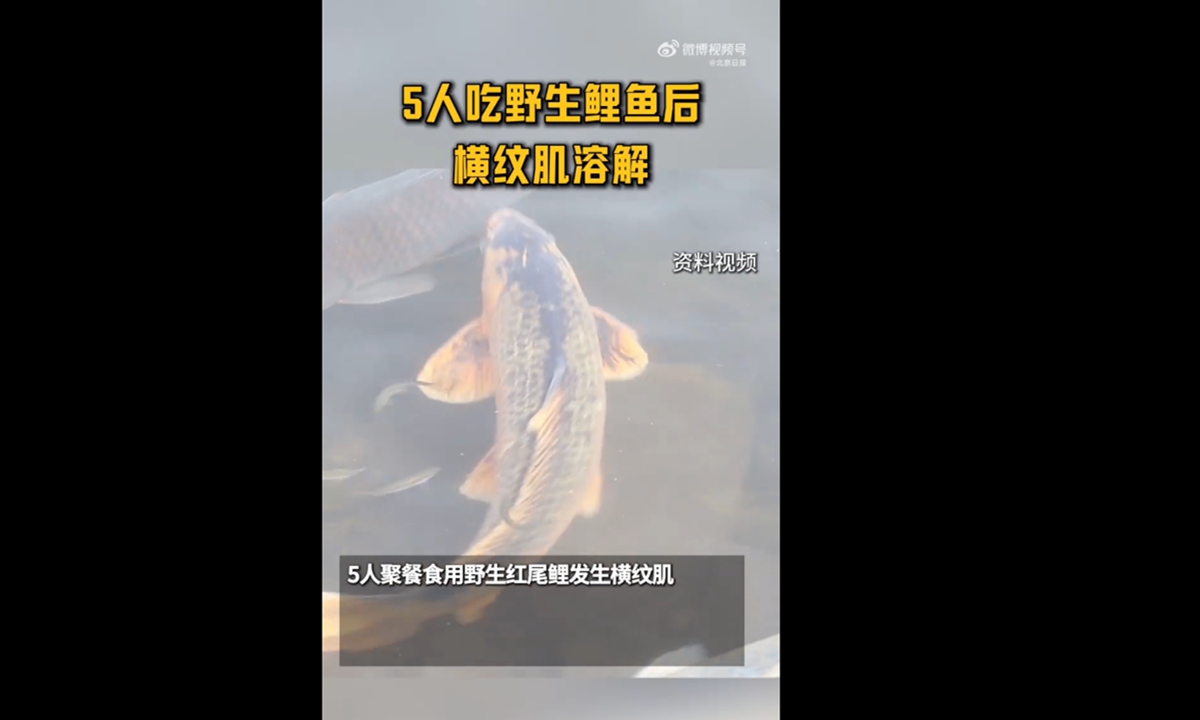
Photo: Screenshot from Sina Weibo
Five people in Heyuan, South China's Guangdong Province, developed rhabdomyolysis after eating wild Cyprinus carpio rubrofuscus (red-tailed carp) in April, with four meeting the clinical criteria for Haff disease, in what constitutes the second carp-associated cluster of Haff disease confirmed in China, Science and Technology Daily reported on Thursday, citing a report published by China CDC Weekly.
All patients have recovered following treatment, according to the report.
The investigation report showed that a local hospital in Longchuan county in Heyuan reported on April 25 that five members of the same family, aged 35 to 69, had begun to develop vomiting, abdominal pain and limb soreness after a family gathering on April 24. All five had significantly elevated creatine kinase levels, ranging from six to 65 times the upper limit of normal, with four meeting the clinical criteria for Haff disease.
The investigation found that a total of seven people shared the meal, which included a 2.5-kilogram wild red-tailed carp, which had been caught in a small bay of a local reservoir. The five people who ate the red-tailed carp all developed rhabdomyolysis, while the two, who did not eat the fish, showed no abnormalities.
Researchers said the outbreak was China's second documented cluster of Haff disease associated with carp. In China, most Haff disease cases are associated with consumption of crayfish, while cases linked to freshwater fish are relatively rare. The investigation confirmed red-tailed carp as another source of Haff disease, according to the report.
According to Wei Guo, a doctor from the nutrition department of Dongfang Hospital, Beijing University of Chinese Medicine, Haff disease is a foodborne rhabdomyolysis syndrome of unknown cause that typically develops within 24 hours of consuming freshwater aquatic products. Consuming large quantities of aquatic products together with alcohol may increase the risk of developing the disease, the Science and Technology Daily reported.
The cause of Haff disease remains unclear nearly a century after it was first identified. Researchers have retained the remaining fish samples for further testing and recommended public health campaigns to raise awareness of the risks associated with eating wild-caught freshwater fish.
Global Times
RELATED ARTICLES