Singapore award-winning documentary exposes historical truths of Unit 731 atrocities across Asia for global audience: Japanese scholar
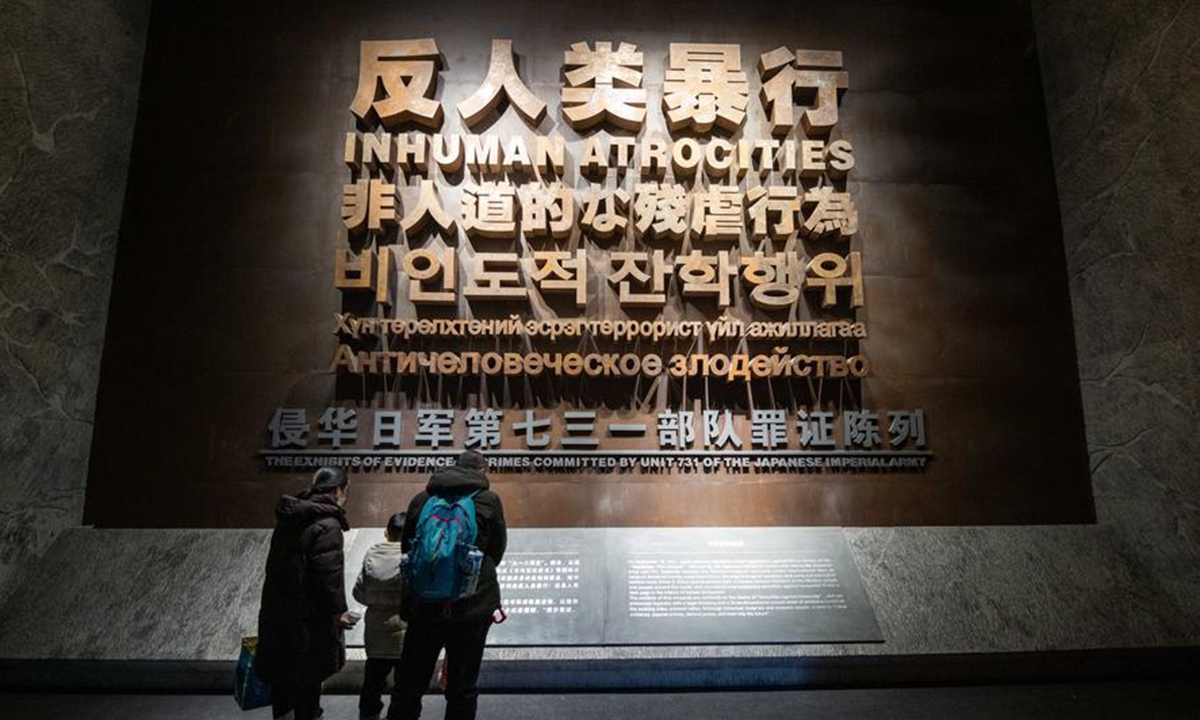
People visit the Exhibition Hall of Evidences of Crime Committed by Unit 731 of the Japanese Imperial Army in Harbin, northeast China's Heilongjiang Province, Jan. 25, 2024. Photo: Xinhua
A documentary revealing Japanese wartime atrocities, titled Inside Unit 731: Japan's Secret Human Experiments, produced by Singapore's mainstream English-language media outlet Channel NewsAsia (CNA), has received Singapore's national award for Best History Documentary at the 2026 Asian Academy Creative Awards (AACA) and has become a finalist for the 2026 AIBs in the international affairs documentary category.
The AIBs (Association for International Broadcasting) results will be unveiled in London on November 20. As of press time, viewership of the documentary on YouTube has surpassed 1.45 million and continues to rise.
The documentary crew traveled to locations including Harbin in Northeast China, conducting on‑site visits to the Unit 731 site, areas heavily affected by bacteriological warfare, and former Allied prisoner‑of‑war camps. They interviewed Chinese victims of bacteriological warfare, descendants of survivors from Allied prisoner‑of‑war camps, as well as scholars from the UK, the US, Japan, Singapore and other countries, exposing the heinous crimes against humanity perpetrated by Unit 731 during World War II, including bacteriological warfare and human experimentation.
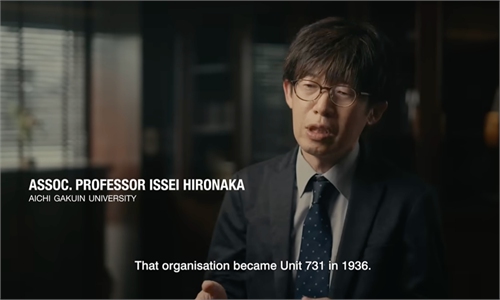
Issei Hironaka, an associate professor from Aichi Gakuin University in Japan who appears in the documentary, told the Global Times on Sunday that the documentary has won awards and drawn international attention due to its exposure of little-known historical facts, such as the development of biological weapons by the Japanese invading troops in Southeast Asia and other regions.
People used to believe that the Unit 731‑led biological weapons development by the invading Japanese troops took place solely in China. However, the documentary reveals that Japanese forces committed these crimes in Southeast Asian nations as well, causing severe suffering to local populations, Hironaka said.
These historical facts have greatly shocked numerous viewers, he said, adding that the significant attention to this documentary demonstrates the public's hunger for historical truth.
The documentary is produced in English, targeting English‑speaking audiences who previously knew little about Unit 731 and Japan's wartime atrocities. It is reported that its Spanish‑language version is set to premiere on October 22 on Movistar Plus+, a major Spanish pay‑TV and streaming platform.
According to Hironaka, exposing Japan's wartime crimes through multilingual content allows for the presentation of historical truths to global audience.
In today's world, conflicts and armed hostilities continue to flare up, and the cruelty and folly of war speak for themselves. In the past, Japan waged wars in China and across Asia, inflicting profound disasters. To prevent historical tragedies from repeating themselves, it is imperative to clarify the historical facts of Japan's wartime aggression, conduct deep soul‑searching, and draw lessons for the future, Hironaka said.
Nevertheless, the current Japanese government no longer talks about reflecting on that war. If this trend continues, Japan will struggle to maintain sound ties with victim countries in East Asia. Hironaka noted that the Japanese government must first sincerely face up to its wartime past and engage in soul‑searching as a perpetrator‑state.
RELATED ARTICLES