Global mayors gather in Luoyang, discussing historic city’s modernization path that preserves cultural roots
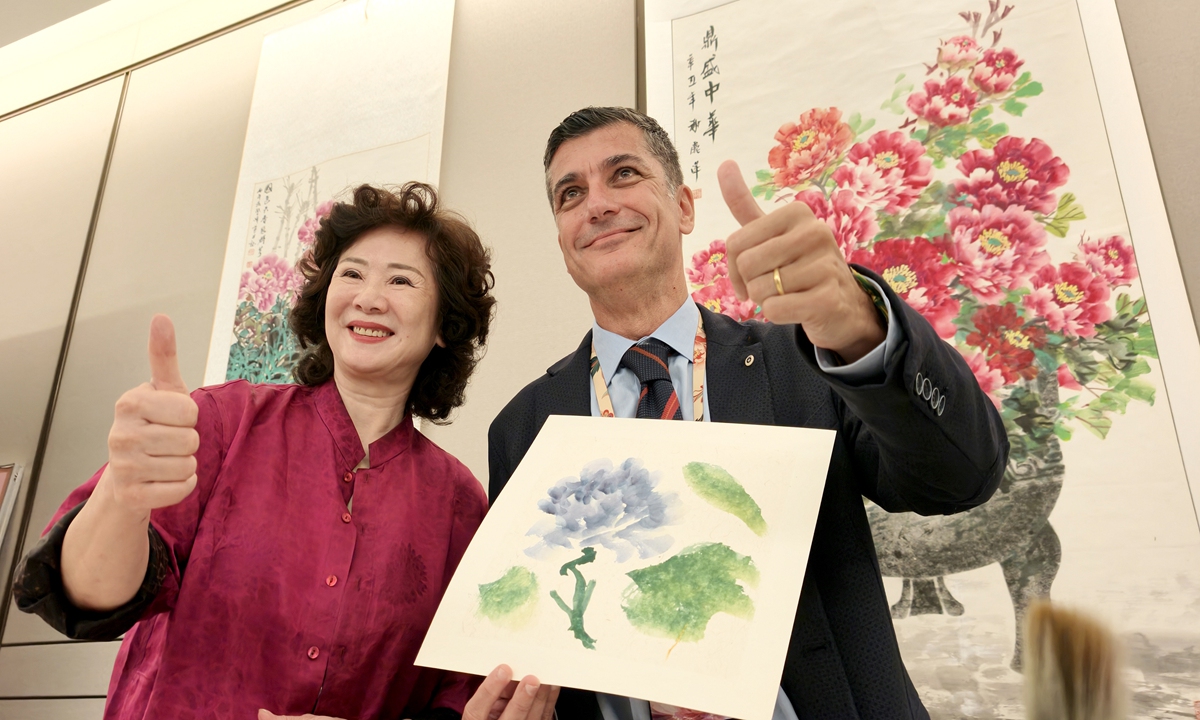
A foreign guest (right) at the 2026 Global Mayors Dialogue poses for a picture with his painting made while learning about local intangible cultural heritage in Luoyang, Central China's Henan Province, on October 11, 2026. Photo: VCG
A spectacular 3D light show illuminates ancient city walls. Visitors take the wheel of a tractor. A giant hydraulic press at a manufacturing plant demonstrates the precision of China's heavy industry. These are some of the experiences awaiting international city chiefs in Luoyang, Central China's Henan Province, where the 2026 Global Mayors Dialogue opened over the weekend.
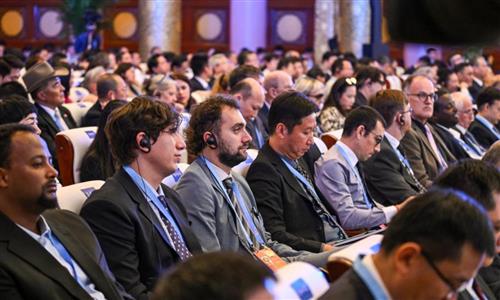
More than 90 mayors or deputies, representatives of international organizations, and experts and scholars from over 10 countries, including China, the UK, Italy, Argentina and Algeria, took part in the event, exchanging views on cultural heritage preservation, industrial upgrading and urban renewal.
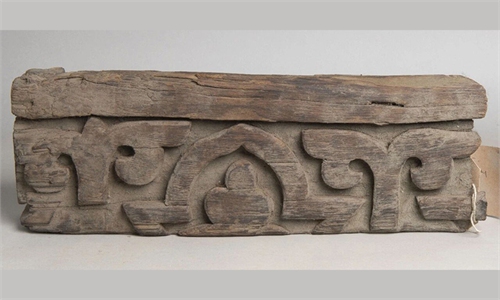
The city's history has been a major draw. At the Longmen Grottoes and Luoyi Ancient City, mayors saw how Luoyang is preserving its cultural heritage while opening it up to visitors. Yun Sinang, deputy director of administration of Siem Reap, Cambodia, told the Global Times that she was impressed by the preservation of the grottoes, tourism facilities and improvements to the surrounding environment. Protecting cultural heritage helps showcase a country's identity to the world, she said, adding that she hopes more Cambodians will visit Luoyang to experience its culture and learn about its development.
Luoyang, the capital of 13 dynasties in Chinese history, faces the challenge of protecting an extensive collection of heritage sites while continuing to develop as a modern city. Cultural heritage areas account for 52 percent of its main urban area. Measures such as conducting archaeological assessments before construction and adopting site-specific protection plans have helped the city accommodate urban development while safeguarding its historical legacy.
Tourism has benefited from these efforts. Luoyang received 158 million tourists in 2025, generating more than 128.5 billion yuan ($19.2 billion) in tourism revenue, according to data provided to the Global Times.
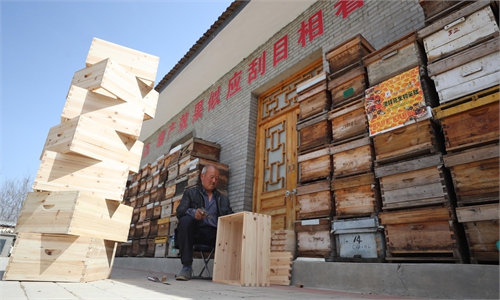
However, tourism is only part of the picture. Luoyang is also an established manufacturing center, known for products ranging from agricultural machinery and three-wheelers to heavy industrial equipment.
Ahead of this year's F1 Shanghai race, British racing driver George Russell took a three-wheeler for a spin, and the clip grabbed attention on social media. But you may not know that Luoyang is a major production hub for three-wheelers sold worldwide.
"They [Chinese three wheelers] are very famous in my country. They brought a lot of revolution. They are quite affordable. They have really modernized the way we move goods and people in our country," John Mahu Macharia, director of trade, Nakuru county, Kenya, told the Global Times.
The city's industrial strengths also include high-end heavy equipment. During their visits, city leaders saw an 18,500-ton free-forging hydraulic press designed and manufactured with the participation of CITIC Heavy Industries. Among the world's largest and most advanced presses of its kind, the machine highlights the technological capabilities underpinning Luoyang's manufacturing sector.
"We are very interested in Luoyang's work on new energy and technological development. Italy and Bologna are also working on these issues, but we still have much to learn. In Bologna, we are developing Tecnopolo, a new technology hub to support research and innovation, and we are keen to learn from other cities and explore new opportunities for cooperation," Francesco Leonardo Nelli, head of international relations of Bologna, Italy, told the Global Times on Saturday.
For Yang Bokong, a tourism industry expert, the significance of Luoyang's development lies in how it brings heritage preservation and economic growth together. The city has moved beyond the perceived trade-off between protecting historical remains and developing industry. By breathing new life into cultural resources through immersive tourism experiences while upgrading advanced manufacturing, cities can make cultural inheritance and economic development mutually reinforcing, Yang said.
The approach offers lessons for historic cities across the Global South, where local governments face the dual challenge of preserving cultural heritage and finding new sources of growth. Modernization need not come at the expense of history, Yang said. Luoyang's experience also points to opportunities for international cooperation in areas such as intelligent manufacturing, digital heritage preservation, urban governance and cultural tourism.
European cities pursuing their own industrial and technological transitions are also looking for opportunities to exchange experience with Luoyang. Nelli told the Global Times on Saturday that he was particularly interested in Luoyang's work on new energy and technological development.
"I think that there are a lot of technologies inside the high-quality products (in Luoyang). It is important to mix culture and tourism with the identity and functionality of this city," noted the mayor of Sesto San Giovanni in Italy, Roberto Di Stefano.
Despite technological and industrial development, "the development of the city doesn't forget the history," Di Stefano stressed.
RELATED ARTICLES