This image from a CCTV video released by Saudi Arabia's Media Ministry shows passengers taking cover as flames and smoke fill part of King Khalid International Airport in Riyadh, Saudi Arabia, during a strike at the airport on October 10, 2026. Photo: VCG
The King Khalid International Airport in Riyadh, the capital of Saudi Arabia, was attacked again and caught fire on Sunday, with one person being killed and 11 injured. On the same day, the King Fahd International Airport in the eastern city of Dammam was also under attack. According to Saudi Arabia's General Authority of Civil Aviation, the strike on the King Khalid International Airport in Riyadh a day earlier has killed at least 13 people and injured hundreds. The airport attacks marked a further escalation in the latest round of conflict since July between Yemen's Houthi group and the Saudi-backed Yemeni government forces. As the situation in Yemen continues to heat up, the already difficult US-Iran talks are facing an even more complicated regional environment. The conflict is also continuing to affect global energy security.Since October 5, the Yemeni government has launched an operation called "Dawn of Yemen" against the Houthis. More notable than the casualty figures is the shift in the Houthis' targets in Saudi Arabia. Their attacks have expanded from military facilities to civilian aviation hubs and oil and gas facilities. The US-based Institute for the Study of War assessed that the Houthis are continuing to attack and threaten Saudi critical infrastructure as part of a Houthi effort to degrade Saudi willingness to sustain military operations against the Houthis and accept Houthi demands. In this sense, "economic pain" has become a strategic tool for the Houthis to influence the regional geopolitical situation.
The consequences of this strategy have already spilled over on a large scale. After the attacks on Saudi airports, international oil prices rose quickly. The Strait of Hormuz and the Bab al-Mandab Strait, two key chokepoints, are both under pressure. Global energy and shipping costs are being pushed up at the same time, with manufacturing and trade among the first sectors to be affected. Several international airlines have suspended or canceled flights to Saudi Arabia and neighboring countries, and a number of countries have issued travel warnings. The cost of the conflict is no longer borne only by the parties directly involved. It is also being paid by the global economy and by countless ordinary people.
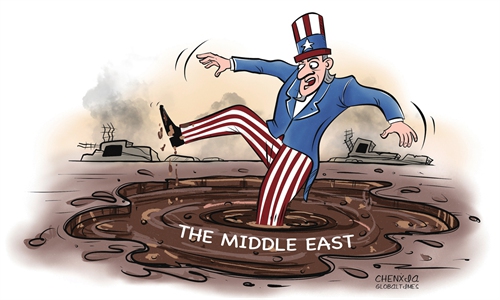
In addition, the spillover of the conflict in Yemen is reshaping the regional security landscape. Saudi Arabia, Turkey and Pakistan, under the Mecca Joint Defense Agreement, have agreed to activate "deterrence measures" and rapidly deploy military forces to Saudi Arabia. The US has said that it "may" join military operations against the Houthis. This further reduces the controllability of the conflict and raises the threshold for de-escalation efforts.
At the same time, the spillover risks from the conflict in Yemen are creating a dangerous resonance with the US-Iran talks. The talks are currently at an impasse, and the Houthis' continued attacks on Saudi airports are having several effects. First, they are tying down US attention and military resources. Washington has to weigh whether to join the strikes or avoid opening a new front. Second, Iran has been given another card that it can use to raise the stakes at any time. The more the US threatens military action, the harder it becomes to secure concessions from Iran on nuclear and sanctions issues. Third, some analysts believe that the airport attacks have caused casualties among US citizens, making a tougher stance toward Iran more politically popular in the US. In Iran, meanwhile, external pressure is often turned into a tool for domestic mobilization.
It is worth noting that diplomatic channels have not been closed. Iranian Foreign Minister Seyed Abbas Araghchi and Saudi Foreign Minister Faisal bin Farhan held a telephone conversation on Sunday night to exchange views on the recent escalation of regional conflicts and efforts to ease tensions. Saudi Arabia and Iran restored diplomatic relations in 2023 under the mediation of China. Their ability to communicate directly over the Yemen issue today shows that channels of dialogue among regional countries remain effective.
The facts have shown that military means cannot bring real peace. On the contrary, every military escalation creates more hatred, deeper divisions and a humanitarian disaster that becomes even harder to repair. According to UN agencies, more than 200,000 people have been displaced from their homes since fighting in Yemen began in recent weeks. Every additional day of fighting adds to the hardship facing ordinary people.
The Bab al-Mandab Strait carries about 12 percent of global trade. Every fluctuation in oil prices, every canceled flight and every hardship faced by ordinary people all point to the same reality: Along this passage, no one can remain unaffected. Only by moving the gun barrels away from civilian facilities can all sides have a better chance of returning to the negotiating table. This would not only help bring about a ceasefire in Yemen, but also help safeguard the security of global energy routes and economic stability.
The author is a professor of the Department of History at the School of Art and Literature, Shihezi University. opinion@globaltimes.com.cn
RELATED ARTICLES