Typhon in Japan. Illustration: Xia Qing/GT
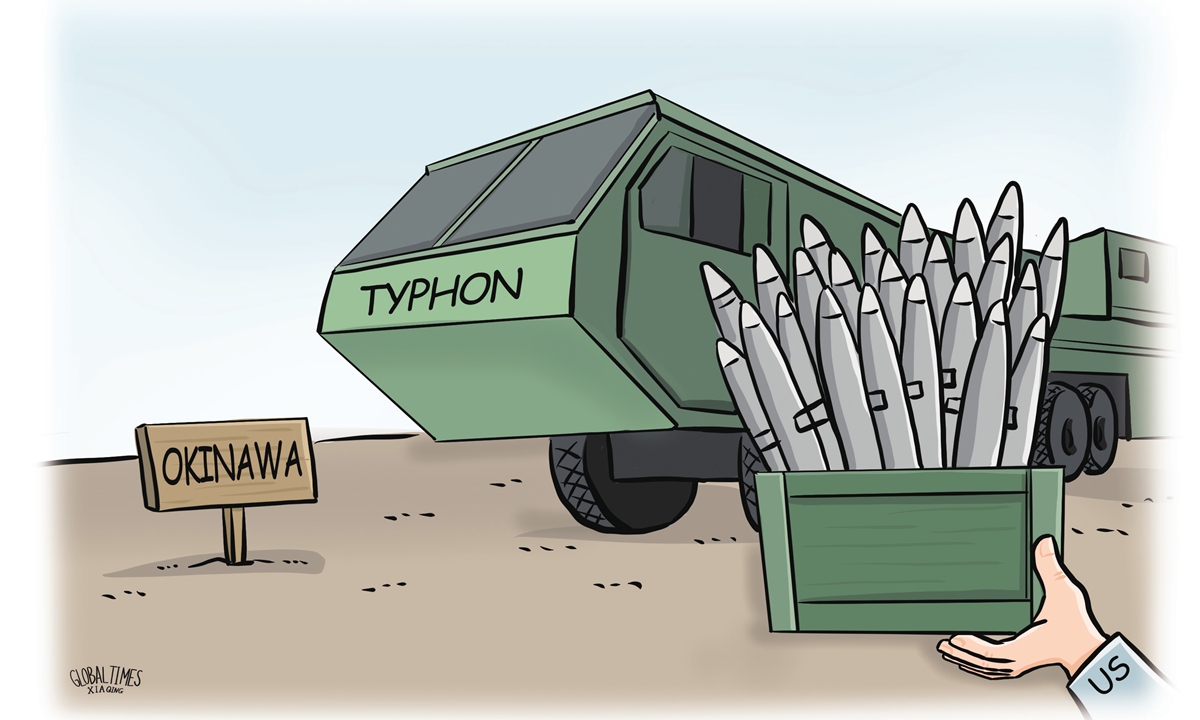
As reported by Japanese media, the US Typhon mid-range missile system has been deployed to Japan for Japan-US joint military exercises. When the drills wrap up, the system will be stored indefinitely at a key military base in Okinawa starting from mid-October.
While Tokyo and Washington maintain this does not constitute a "permanent deployment," they have not set a timeline for the equipment's withdrawal. This opaque military arrangement amounts to a de facto permanent forward deployment of the Typhon system in Okinawa, which faces the Chinese mainland and Taiwan region, turning Okinawa into a front-line outpost for Japan-US strategic offensive missiles.
According to US media reports, the Japan-US Exercise Keen Sword, running from October 19 to 29, will also deploy anti-missile systems including the Navy-Marine Expeditionary Ship Interdiction System on the "Southwest Islands."
These will form a distributed fire network with Japan's indigenous long-range ground-launched offensive missiles, showcasing a new model of pre positioned equipment storage plus flexible personnel deployment.
Officially designated as the "Strategic Mid-Range Fires" system, Typhon is a US strategic weapon. Washington has consistently sought to advance its deployment throughout the Asia-Pacific: In 2024, the system was sent to the Philippines under the guise of military drills and retained there indefinitely. In 2025, it was temporarily posted to Japan's Iwakuni Air Base for joint exercises. This year, it has again been introduced into Japan under the cover of maneuvers, with arrangements for it to remain in Okinawa.
By replicating this identical "exercise then retention" tactic from the Philippines to Japan, the US lays bare its strategic scheme to rapidly weave an intermediate-range missile fire network along the so-called first island chain.
Analysis by Japanese and US media and experts holds that Typhon deployments in Okinawa and the Philippines will reshape the military posture of the so-called first island chain. The Typhon system can strike key land-based strategic targets of neighboring countries, attack vessels sailing in waters around the island of Taiwan, the East China Sea, the South China Sea and the Western Pacific, and seal off critical waterways such as the Miyako Strait and the Bashi Channel on the so-called first island chain.
Most notably, Typhon units in Okinawa and the Philippines could mount pincer attacks on the Taiwan island from north and south, posing grave threats to warships and aircraft operating in the sea and airspace surrounding Taiwan island. Such deployments directly roil cross-Taiwan Straits and East China Sea dynamics, severely compress the security maneuver space of neighboring countries and plant major conflict risks for regional peace.
The US military has repeatedly deployed strategic offensive weapons, including Typhon, to Japan and the Philippines under the pretext of "military exercises." It then stores these systems on site after the exercises are concluded, turning a temporary presence into a de facto indefinite forward deployment. Through this "salami-slicing" approach, Washington seeks to avoid the diplomatic resistance that could follow an explicit announcement of permanent deployment.
Such forward deployments, however, go far beyond the scope of passive defense. They provide clear capabilities for "active offense" and preemptive strikes, while sharply narrowing the strategic defensive space of other countries. By directly threatening the core security interests of neighboring countries and upsetting the regional military balance, such moves are bound to provoke strong opposition and countermeasures, further intensifying military confrontation in the region.
By acquiescing in, or even actively supporting, these US moves and allowing the Typhon mid-range missile system to remain on their territories, Japan and the Philippines are effectively exposing their own people to greater risks of conflict. Such actions could trigger corresponding military countermeasures from other countries, leaving Japan and the Philippines more vulnerable to potential strikes and further heightening regional security risks.
By deploying offensive strategic weapons on allied territories, the US is not only pushing its military presence further forward, but also tying its allies more closely to its strategic agenda and reinforcing bloc-based security arrangements. This is part of Washington's broader efforts to implement its latest National Defense Strategy, building a "strong denial defense along the First Island Chain."
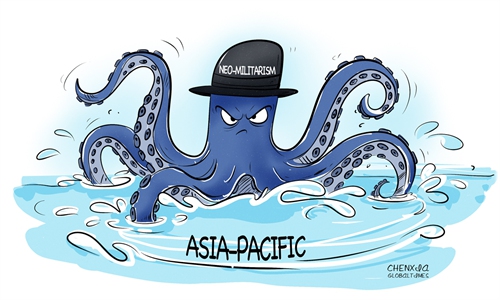
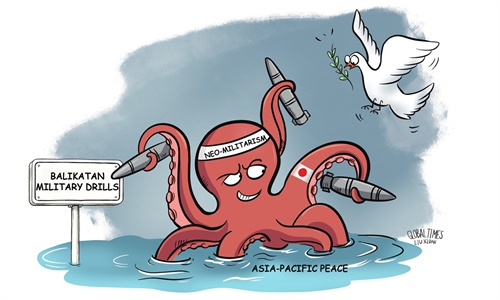
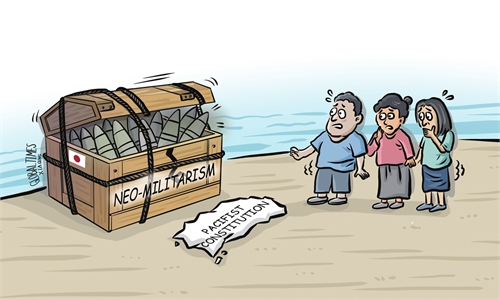
At the same time, the deployment of US mid-range missile systems in Japan could further fuel Tokyo's military expansion and strategic risk-taking. Japan may use such a deployment as leverage to seek greater freedom in developing its own military capabilities, including revising the "Three Non-Nuclear Principles," introducing nuclear-powered submarines and rebuilding its military-industrial base. These moves could further accelerate Japan's remilitarization and reinforce a renewed militarist tendency, posing serious risks to Asia-Pacific peace and stability.
The author is a Chinese military affairs expert. opinion@globaltimes.com.cn