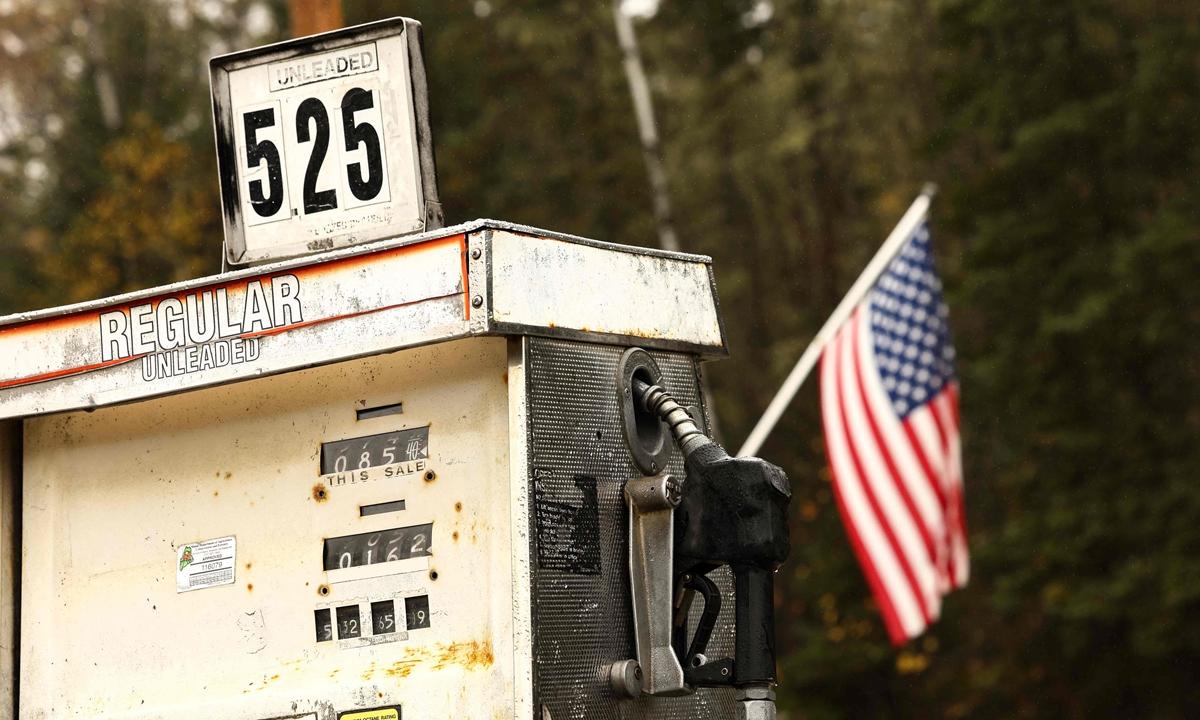
A gas pump is pictured at a gas station in Allagash, in the US state of Maine, on October 14, 2026. Photo: VCG
Recently, a dozen US senators, including six Republicans, called on President Donald Trump to rescind his diesel deal with Russia, following Trump's announcement last week that he had reached an agreement for Russia to release diesel supplies.The just-concluded US-Russia diesel deal marks a notable shift in US policy toward Russia in recent years and is widely seen as a challenge to the framework of coordinated Western sanctions against Moscow. The US adjustment reflects multiple strategic considerations, and the move will have implications for international energy prices and the Russia-Ukraine talks.
Domestically, one of the key factors behind the US-Russia diesel deal is the pressure facing the Trump administration ahead of the midterm elections. With the elections approaching, rising diesel prices have pushed up domestic inflation and put Republicans under pressure. The latest polling data show that Republicans lag behind their Democratic counterparts by 7 percentage points on the generic congressional ballot.
In US agricultural states that form a core part of the Republican electoral base, many farmers are deeply dissatisfied with high energy prices, undermining the stability of the party's support. Agricultural states and swing states are key battlegrounds for Republicans seeking votes, and public discontent over rising fuel prices continues to erode the party's traditional electoral advantage. The deal is therefore more of an emergency measure by the Trump administration to shore up its electoral prospects and ease domestic inflationary pressures.
The diesel deal is also intended to help break the deadlock in Russia-Ukraine talks and contain geopolitical risks.
The standoff between Russia and NATO in the Baltic Sea has escalated, increasing the risk of accidental clashes. The US hopes to avoid being placed in a disadvantageous position by a direct confrontation between major powers. Media reports indicate that the US envoys told Ukrainian officials that the deal to allow Russian diesel exports is part of a bid to "send a signal," draw Russia back to negotiations and "soften" Moscow's stance. This suggests that the US is attempting to use energy trade to send a conciliatory signal, reduce the risk of the situation spiraling out of control and create conditions for the resumption of Russia-Ukraine peace talks.
Meanwhile, diplomatic tensions surrounding the Russia-Ukraine conflict and between Washington and Kiev have intensified. Ukraine has proposed a 60-day cease-fire for holding a presidential election, whereas Russia has agreed only to a one-day cease-fire on election day. Washington and Kiev have also experienced friction over the Ukrainian elections.
The US government's push for a diesel supply agreement with Russia is primarily intended to serve Republican interests ahead of the midterm elections, while also taking into account the need to contain the spillover risks of the Russia-Ukraine conflict. This is a temporary diplomatic maneuver, and its impact on Russia-Ukraine peace talks remains to be seen.
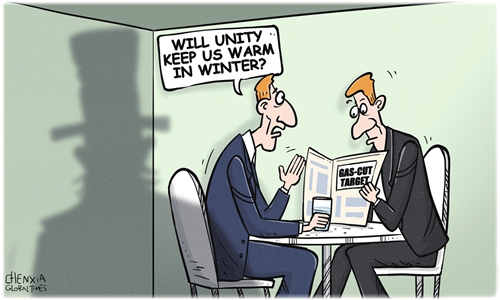
While the agreement may ease tensions between major powers to some extent and preserve room for diplomatic mediation, its longer-term negative consequences could be more pronounced. The US-Russia diesel agreement could further widen divisions within the US-European alliance. The partial easing of US sanctions may alleviate some of the economic pressure on Russia, while prompting European countries to step up their support for Ukraine.
Taken together, these factors could further complicate the deadlock in the Moscow-Kiev peace talks and reinforce the trend toward a protracted and normalized conflict.
At its core, this energy deal represents a tactical accommodation of competing interests rather than a resolution of the fundamental security issues underlying the Russia-Ukraine conflict. When the situation on the battlefield changes, this fragile energy cooperation could be disrupted at any time. The divisions within the West over its strategy toward Russia are becoming increasingly apparent, presenting a fresh test for the cohesion of the transatlantic alliance.
Against this backdrop, Europe may continue to advance its efforts to strengthen its strategic autonomy in security and reduce its dependence on US strategic arrangements.
The author is a research fellow at the Institute of Russian, Eastern European and Central Asian Studies at the Chinese Academy of Social Sciences. opinion@globaltimes.com.cn
RELATED ARTICLES