Photo: IC
For years, the US has been leading the push to sanction Russia and cut off the revenue Moscow needs to fund the war in Ukraine. Europe took that mission seriously. Now, just as Washington needs more diesel, it is turning back to Russian supplies.The Spectator, a British news magazine, called the deal a "betrayal." The Guardian warned of a fresh crisis with NATO allies, while CNN said it drove a wedge through the Western alliance.
It began earlier this month when the US announced a diesel supply arrangement with Russia, alongside a temporary easing of related sanctions. Under the announced plan, Russia will immediately supply more than 300,000 tons of diesel, followed by 500,000 tons in November, and 1 million tons immediately thereafter.
Washington made the rules. Now, Washington is making the exceptions.
Why? Observers said that with midterm elections approaching, lower fuel prices are politically attractive. Diesel powers farm machinery, trucks, construction, mining and much of heavy industry. When prices rise, costs ripple through supply chains and end up in household bills. When sanctions collide with domestic economic pressures, Washington is willing to reconsider the rules. Morality remains the slogan. Allies continue to bear the costs. National interests call the shots.
EU foreign policy chief Kaja Kallas rejected suspending sanctions on Russian diesel. Germany and the UK said they would maintain sanctions. Estonian Prime Minister Kristen Michal called the US decision a "major miscalculation."
Since 2022, Europe has worked hard to reduce its dependence on Russian energy, accepting higher costs in pursuit of broader security goals. The shift was never cost-free. Before the war, Russian supplies of natural gas, oil, and refined products were central to Europe's energy mix. Cheap, reliable energy provided European industry with a competitive edge and underpinned years of economic growth. Yet nowadays, these energy ties have been deliberately severed. Europe had to restructure its sourcing, infrastructure, and logistics. Businesses have faced rising costs and greater uncertainty, factories have moved abroad, prices have remained elevated, and the European economy has continued to suffer.
Now the US is making an exception for itself while Europe is still paying. Yet some European politicians would rather keep importing at high prices and continue repeating slogans than admit that almost completely cutting off cheap Russian energy was a self-harming decision.
The US is flexible for its own interests, while some European leaders remain ideologically committed to confrontation, refusing to consider even a pause in energy hostilities or the possibility of cooperation. This is not principle; it is a trap of their own making. If Europe stays locked in that position, ordinary Europeans will continue to pay much of the bill.
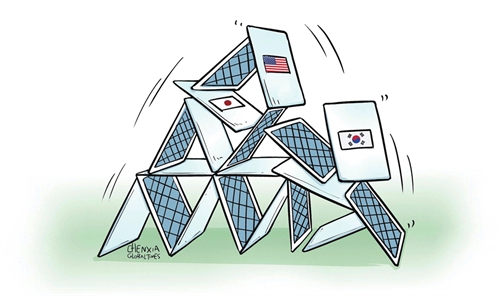
Europe's anger exposes a contradiction that has long existed but is often covered by grand slogans. The US and Europe share many interests, but that does not mean their interests will align forever. An alliance may simply mean standing together when conditions are favorable. When the wind turns, the strongest partner often has the greatest freedom to change direction, leaving others stranded.
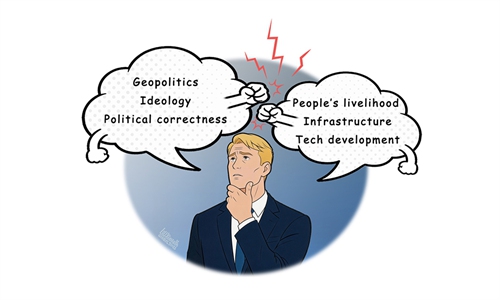
Europe now faces a choice without easy answers. If it sticks with sanctions, it must continue to bear the costs and explain to the public why those costs are still worth paying. If it relaxes sanctions, it must confront whether its earlier policy goals were wrong. Both paths carry costs. Neither will allow Europe to escape the energy crisis overnight.
But the episode offers a lesson to Europe: Energy security should be about keeping Europe running, not sticking to a political line at any cost, and it cannot depend on the assumption that another country will always act in your interests. Resilience in supply chains, strategic reserves, and diversification of sources are not optional choices; they are questions of survival. Never hand the lifeline of your energy supply to someone else - even if they call you an "ally."
RELATED ARTICLES