Rockets for China and US, bottle caps for Europe: Is Europe quietly losing the future?
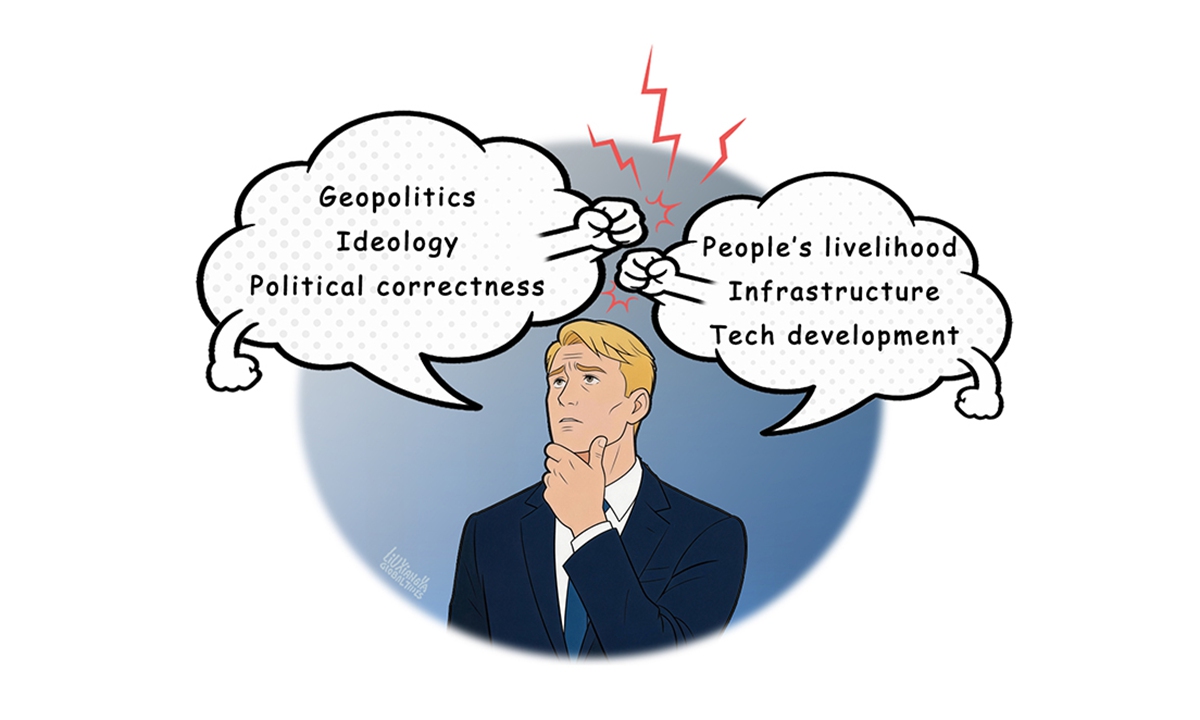
Illustration: Liu Xiangya/GT
A dividing line is emerging in today's global landscape: while China and the US race ahead in the next generation of technology, Europe remains stuck in yesterday's geopolitical struggles it can't seem to escape. Recent headlines make this clear - Europe seems to be giving away its own era of influence.
This weekend, Reuters reported that Germany is funding 50,000 attack drones for Ukraine in an order worth about €90 million ($103 million), citing a source familiar with the matter, which marks one of the biggest known purchases of drones for Kiev by a Western government.
Just a few days earlier, another German story hit hard: "Germany: June heat wave linked to 5,000 excess deaths," as "most buildings in Germany are not built with such high temperatures in mind, including many hospitals and care homes that still do not have air conditioning."
Generous abroad, struggling at home. This isn't just Germany's problem, it's a predicament that's common across Europe.
The challenge wasn't that obvious enough, until this summer's extreme heat which has tested the continent on every level: heat-related train delays or cancellations are taking place in many countries, including Belgium, Denmark, France and the US, stemming from buckling asphalt, rail deformation, onboard air conditioning failure, malfunctioning traffic lights, and signaling overheating and melting; Nuclear reactors often shut down because the bodies of water they use for cooling become too hot … Worse, national authorities in a number of European countries have reported thousands of excess deaths due to the June heat wave.
Climate resilience has become a key benchmark for governance in the 21st century. If a society fails to prioritize protecting its own people during extreme weather events, how credible is its claim of superior governance?
Sadly, for some European politicians, the one thing they cannot give up - and in some cases are even willing to invest more in - remains geopolitical confrontation.
They have made the wrong strategic choices. Consider this, Europe once enjoyed cheap Russian energy powering its industry, affordable Chinese goods keeping inflation low, and a massive Chinese market delivering fat profits to European companies. That was a golden window to strengthen its industrial base and invest in future technologies.
Instead, Europe cut itself off from Russian energy without a ready replacement, and followed the US into a "de-risking" policy toward China that hurt its own interests. The result? Skyrocketing energy costs, businesses struggling to survive, and far less money and energy left for innovation.
Now the outcome is showing, Europe is losing ground in AI, green technology, and space exploration. The continent that once led the Industrial Revolution is increasingly becoming a spectator in the technologies that will shape tomorrow.
A viral meme on X captures it perfectly: China and the US successfully recover rockets, while Europe makes sure its bottle cap never leaves the bottle. The joke stings because it's true - not just in technology, but also in mind-set.
Europe's main problem lies in deeply misplaced priorities. Its leaders remain too loud on geopolitical posturing and ideological confrontation, while domestic challenges like innovation, industrial strength, and citizen welfare seem to take a backseat.
Europe needs to adapt and break out of its rigid ideological straitjackets. It's now forced to confront this summer's scorching heat and must set aside its rigid political correctness and break free from endless political infighting. The problems are staring it in the face - they demand real solutions. A society cannot afford to pay for its political ideology with the lives of its people during extreme heatwaves.
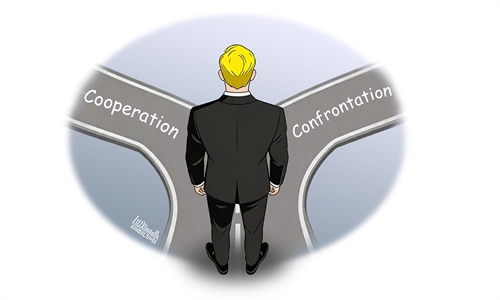
The same logic applies in diplomacy: Europe must break free from its outdated ideological constraints and decide whether to pursue win-win cooperation or cling to zero-sum confrontation. The right answer has long been clear - what it needs now is the courage to act on it.
Europe's summer has only just begun, but the real "heat" it faces may be only starting to take shape. How the region adjusts will determine not only whether it can weather this summer safely, but whether it can avoid a deeper slide in global competition.
RELATED ARTICLES