IN-DEPTH / IN-DEPTH
Exclusive: Easing the Three Non-Nuclear Principles would send a dangerous signal to the world: Nihon Hidankyo's representative
When Taboos Fade
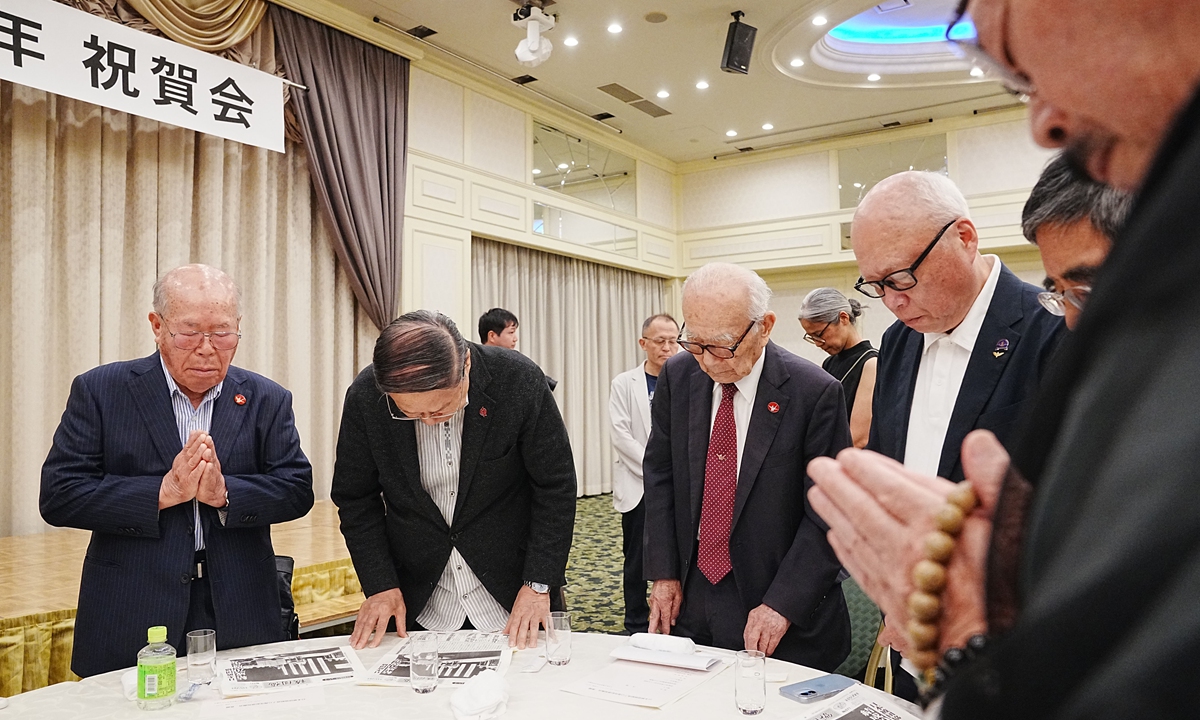
The Japan Confederation of A- and H-Bomb Sufferers Organizations holds an event marking its 70th anniversary in Nagasaki, Japan, on August 8, 2026. Photo: VCG
Editor's Note:
In recent years, a series of developments in Japan's nuclear and security policies have raised serious concerns internationally.
Japanese Prime Minister Sanae Takaichi has called for a review of the Three Non-Nuclear Principles, which have underpinned Japan's nuclear policy for more than half a century. Defense Minister Shinjiro Koizumi has openly urged Japan to set aside taboos and debate its nuclear weapons policy. The Takaichi administration also plans to include research into nuclear-powered submarines in its revised national security documents. The only country in the world to have suffered atomic bombings is now testing the waters around nuclear armament.
The Japan Confederation of A- and H-Bomb Sufferers Organizations (Nihon Hidankyo) won the Nobel Peace Prize in October 2024, bringing renewed global attention to the trauma of the atomic bombings. In an exclusive interview with Global Times (GT) reporters Xing Xiaojing and Liang Rui, Shigemitsu Tanaka (Tanaka), a co-chairperson of Nihon Hidankyo and one of the three representatives who accepted the award on the organization's behalf, stressed that any move to dilute Japan's Three Non-Nuclear Principles or discuss nuclear sharing was "absolutely unacceptable."
Such moves, he warned, would send a dangerous signal to the world that nuclear weapons might not be illegal after all. His lifelong aspiration, he said, is to build "an ordinary, peaceful world without nuclear weapons."
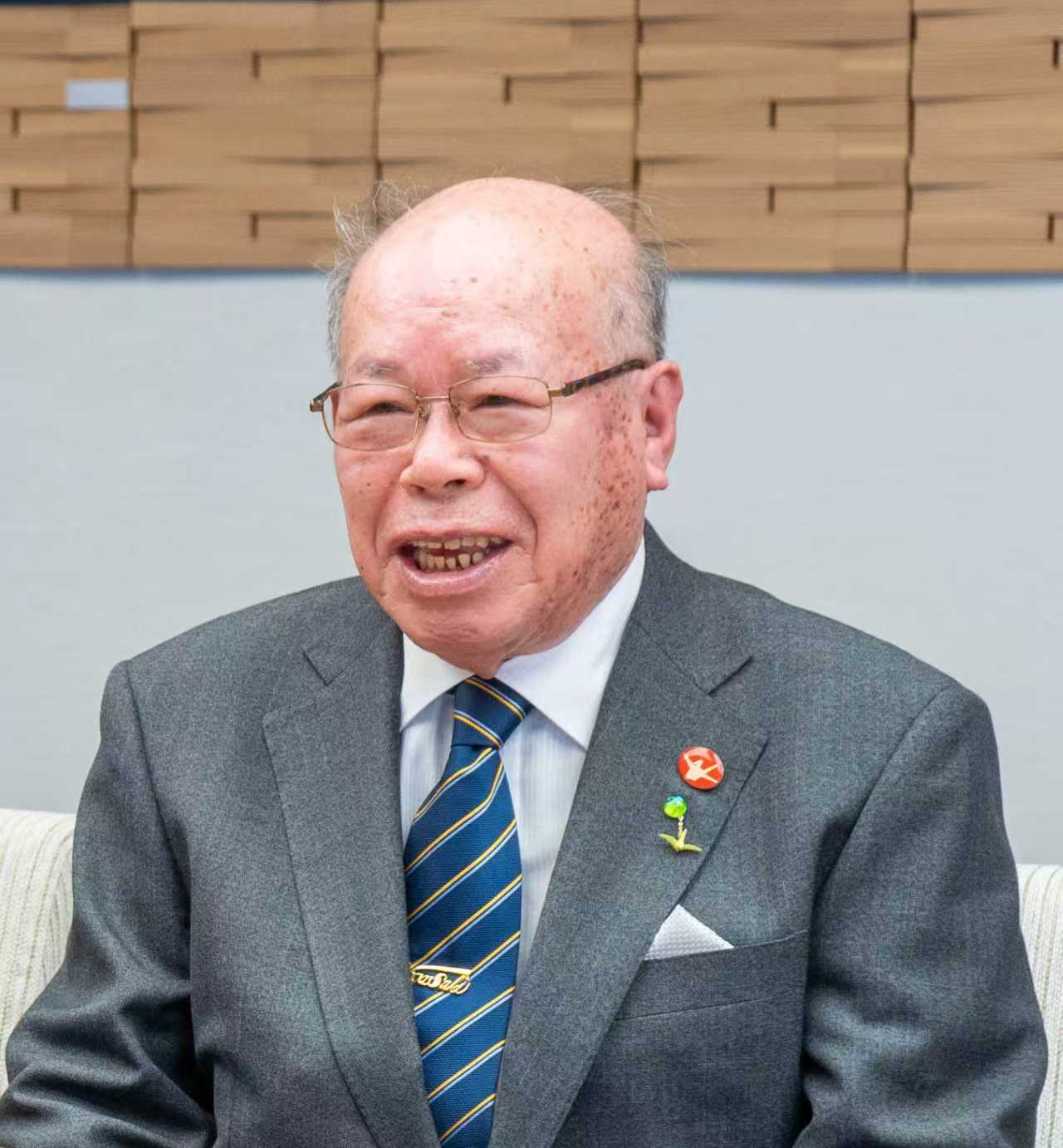
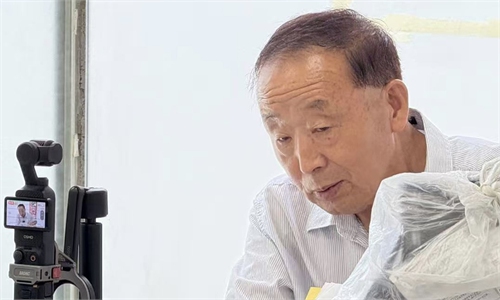
Shigemitsu Tanaka Photo: Courtesy of Tanaka
GT: Nihon Hidankyo was announced as the Nobel Peace Prize winner in October 2024. As one of the three representatives who accepted the award, how did you feel at that moment?
Tanaka: I still remember how deeply moved I was. Given the current international situation, receiving such an award filled us with a sense of responsibility: We must spread the truth about the suffering caused by the atomic bombings to a much wider audience.
Nihon Hidankyo was already considered a strong contender for the Nobel Peace Prize in the 1980s. After that, roughly every 10 years, there would be renewed talk of our organization as a leading candidate, but each time we missed out. As the years went by, we almost gave up hope. So when we learned that we had won, we were astonished.
I was 4 years old when the atomic bomb was dropped on Nagasaki in 1945. My father survived, but radioactive contamination remained in his body, and he suffered from illness for years. He died of liver cancer when I was 16, leaving my family in desperate financial straits.
At the time, the Japanese government established relief stations for only two months. Starting in September 1945, it imposed press restrictions that prohibited newspapers, radio broadcasts and magazines from publishing reports or photographs related to the atomic bombings, seeking to bury the truth about their devastation.
For a long time, Japanese media were unable to report openly on what had happened. Meanwhile, we witnessed atomic bomb survivors taking their own lives for various reasons.
Having witnessed so many human tragedies, we became determined to ensure that no one else would have to endure such suffering. That was the original impetus for our movement. When Nihon Hidankyo was founded in 1956, our guiding principles were to help survivors help themselves and to warn humanity through our firsthand experiences. It took 68 years for us to receive the Nobel Peace Prize. The honor represents international recognition of our decades of work. It has greatly encouraged us and inspired everyone involved in the movement to reject nuclear weapons.
For decades, we have worked to establish an international taboo against their use - a firm understanding that nuclear weapons must never be used.
GT: Since their formal adoption by the Japanese Diet in 1971, the Three Non-nuclear Principles have served as the foundation of Japan's nuclear policy for more than half a century. Successive prime ministers have pledged at annual memorial ceremonies in Hiroshima and Nagasaki that Japan will continue to uphold them. Yet recently, Japan presents itself as a victim of atomic bombings while continuing to expand its military capabilities and seeking to loosen its nuclear policy constraints. How do you view these developments?
Tanaka: Japan is the only country in the world to have suffered atomic bombings, so it should understand better than any other country the dangers of nuclear weapons. Yet people in this very country are calling for a review of the Three Non-nuclear Principles. There are even voices at the highest levels of the Prime Minister's Office discussing whether Japan should pursue "nuclear sharing." In our view, this must never happen.
Japan says it is the only country to have suffered atomic bombings, yet it repeatedly seeks to downplay the devastation inflicted on Hiroshima and Nagasaki. Even today, many people suffering from radiation exposure have been denied official recognition as atomic bomb survivors and therefore cannot access the medical care and livelihood assistance they deserve.
We have long called for the enactment of a law to provide assistance to atomic bomb survivors that explicitly acknowledges the state's responsibility for the war. That demand remains unfulfilled.
In my view, Japan's attempts to gradually dilute the Three Non-Nuclear Principles amount to sending a message to the outside world that nuclear weapons may not necessarily be illegal. Once Japan begins reviewing the principles and discussing "nuclear sharing," it could foster an international climate in which possessing and using nuclear weapons are seen as acceptable. This is extremely dangerous, and it is precisely why we have consistently protested and opposed such moves.
GT: You have warned that Japan is in its "most dangerous state" in more than 80 years since the end of World War II. Why do you make that assessment?
Tanaka: When war breaks out, lives are lost. Until 1945, wars of aggression launched by Japan claimed the lives of countless ordinary people across Asia.
Today, rather than learning from those lessons, Japan is accelerating its shift in security policy. Its defense budget has risen sharply in recent years, and the government plans to nearly double it within several years. Japan's military spending has already climbed to among the highest levels in the world.
Despite having a pacifist constitution, the Japanese government's current policies will only exacerbate tensions in Northeast Asia.
History shows that continued military expansion often ultimately leads to war. This pattern has been repeated time and again.
We must therefore work toward disarmament; otherwise, war will be difficult to avoid. That is why I believe Japan is in its most dangerous state in more than 80 years since the end of WWII.
GT: You mentioned Japan's pacifist constitution. The Japanese government is seeking to amend it, particularly Article 9. What is your take on it?
Tanaka: Opinion polls have shown that more than half of the Japanese public want to preserve the current constitution, which contradicts the Takaichi administration's position. We need to make this contradiction clear so that the public understands it.
I believe Article 9 is the most important safeguard against Japan repeating the mistakes of the past and falling into war again. It must be upheld.
In my view, Japan's Self-Defense Forces already violate Article 9 in practice. The constitution stipulates that Japan will not maintain armed forces or possess war potential, yet the country's military capabilities now rank among the strongest in the world.
The reality is that although the constitution has been "damaged" and left "riddled with holes," Article 9 must not be amended.
GT: Japanese accounts of history often focus on the country's own suffering, while paying little attention to its role as an aggressor. Why is it important to present the full historical truth from the perspectives of both victim and perpetrator?
Tanaka: During the war, Japan launched wars of aggression, primarily targeting China. The Japanese military committed atrocities including the Nanjing Massacre and the Pingdingshan Massacre, and conducted biological warfare through Unit 731.
Yet in Japan, textbooks devote little attention to this history of aggression. Whenever it is brought up, people are accused of embracing a "masochistic view of history." Although the Murayama Statement issued an apology for Japan's past aggression, many people are now trying to overturn it and deny these historical facts.
The far right has consistently sought to rewrite history, claiming, for example, that "the death toll in the Nanjing Massacre was not as high as commonly reported."
It would be dangerous if people who hold such historical views were once again to gain control of military power. Japan has failed to learn the lessons of war, and the "political residue" of prewar militarism continues to linger today.
Historical revisionism has never ceased in Japan. Under these circumstances, telling the full truth about history becomes all the more important.
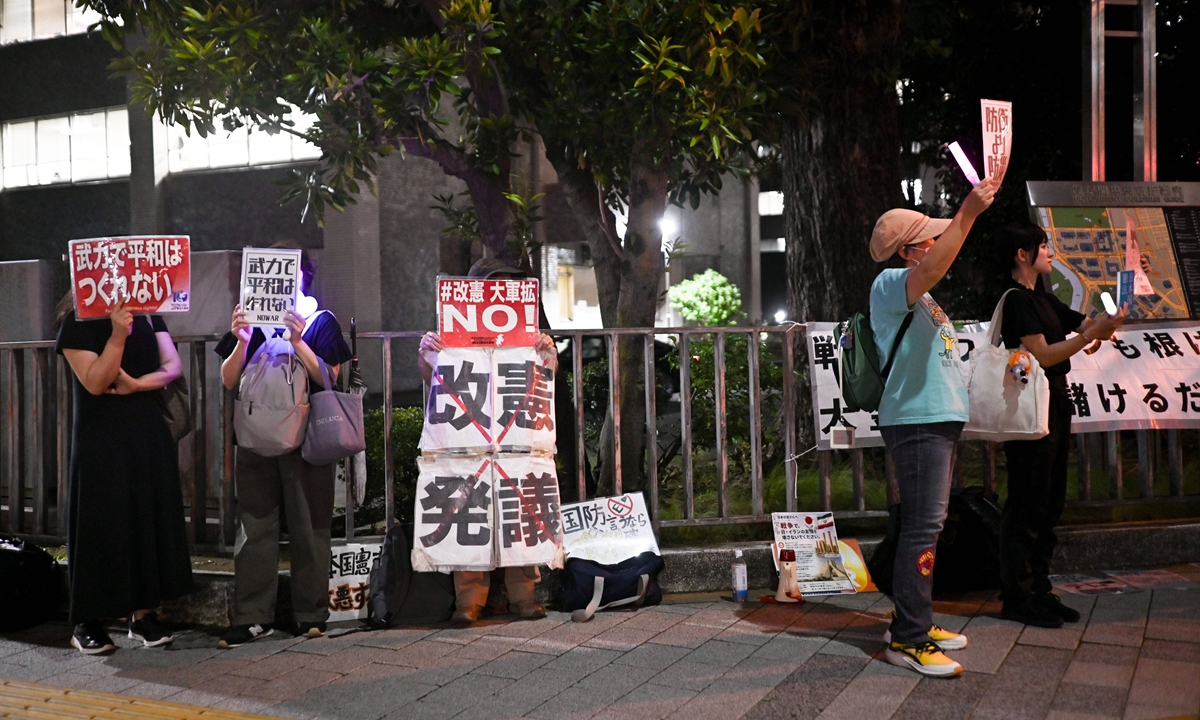
People take part in a weekly protest against constitutional amendments in front of the Prime Minister's Office in Tokyo, Japan, on September 3, 2026. Photo: VCG
GT: Given Japan's current political climate, does your organization feel a heightened sense of crisis?
Tanaka: Looking back over the past several decades, our movement has experienced both high and low points. There were times when our voices were strong, but there are also periods like the present, when our voices have been weakened. Japan's far-right parties increased their representation in the most recent election, while the Liberal Democratic Party secured two-thirds of the seats in the House of Representatives. To be frank, our anti-nuclear movement remains relatively weak.
At the same time, survivors who experienced the atomic bombings firsthand are growing old, and their memories are gradually fading. Combined with the rise of historical revisionism in Japan, this gives us a genuine sense of crisis.
In another decade or so, the surviving atomic bomb victims will all have passed away. To carry the anti-nuclear peace movement forward, we are bringing together supporters and placing the children and grandchildren of atomic bomb survivors at its center, expanding the movement and encouraging more people to join us.
GT: Eighty-one years after the war, how should Japan confront the historical truth and maintain relations with its Asian neighbors?
Tanaka: We must once again reflect on the war that ended in Japan's defeat 81 years ago. If Japan continues to build up its military, countries across Southeast Asia will become deeply concerned. Japan once made a commitment to the world that, under its pacifist constitution, it would renounce the use of force and never again wage war. The Japanese public should reconsider that commitment and make its own choices. Peace is what matters most.
China is an important neighbor of Japan, yet Takaichi has claimed that "a Taiwan contingency is a Japan contingency." Remarks like that amount to meddling in China's internal affairs, and I believe they should never have been made.
The Japanese government recognizes the one-China principle internationally. In my view, Taiwan island is an inalienable part of the territory of China, and political documents including the Sino-Japanese Joint Statement make this clear. Japan should deal with China on the basis of these treaties and statements.
When I speak with friends from other countries, particularly people from Asia, I always sincerely apologize, as a Japanese person, for the wars of aggression launched by Japan. Only then do I share my own experience as someone affected by the atomic bombing.
Asian countries should make a concerted effort to educate younger generations about this history. The people of Asia will never forget what Japan did in those years.
RELATED ARTICLES