Chinese student's displays of Japanese militarist symbols spark public outrage; source recounts how incident was handled
By Fan Wei and Published: Oct 19, 2026 10:50 AM


Photo: File picture from internet
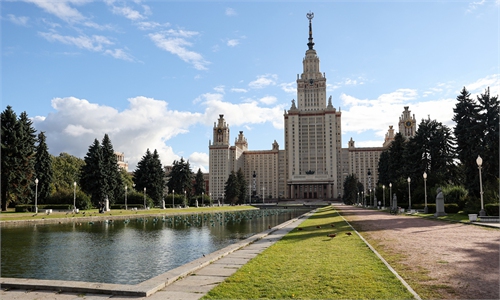
A Chinese student at Moscow State University has sparked widespread outrage after images circulated online showing him draped in Japan's Rising Sun flag - a symbol closely associated with Japanese militarism - during a university class. The incident has prompted strong protests from fellow Chinese students, while the university has pledged to investigate following complaints lodged by the Chinese Students and Scholars Association.
On October 17, the Chinese Students and Scholars Association at Moscow State University issued a statement titled "progress report on the handling of the incident involving a history student displaying a Japanese militarist flag."
According to the statement, the association took immediate action after learning of the incident, verifying the facts, communicating with senior university officials, expressing its position and demands, and reporting the matter to the Education Section of the Chinese Embassy in Russia. The association also called on students to express their concerns rationally.
A source familiar with the matter told the Global Times that the student, surnamed Chen, had repeatedly made controversial remarks since arriving in Moscow, including statements supporting "Taiwan independence."
According to the source, while attending a preparatory course at Moscow State University's Faculty of Russian Language and Literature, Chen repeatedly expressed support for "Taiwan independence" to Russian teachers. He also approached students from China's Taiwan region and made similar separatist remarks on multiple occasions.
Screenshots of Chen's WeChat account obtained by the Global Times also revealed what appeared to be a strong fascination with Japanese militarist culture.
His profile picture showed him wearing traditional black Japanese clothing, while his profile's status message featured Japanese-language lyrics from the school song of the former Imperial Japanese Naval Academy at Etajima.
According to publicly available information, the academy trained numerous Japanese naval officers who subsequently participated in Japan's war of aggression against China and the Pacific War during World War II.
Chen also reportedly posted extensive content about Japanese historical figures on his WeChat Moments, frequently using traditional Chinese characters, and displayed items associated with Japanese militarism on social media.
The source said that these activities reflected Chen's apparent admiration for Japanese militarism and his support for "Taiwan independence."
The source further revealed that Chen had previously displayed the Rising Sun flag in a classroom on October 1, China's National Day.
The source said a Russian student had also reported that Chen had brought a flag associated with "Taiwan independence" to a class on October 7 and openly advocated separatist views.
The controversy escalated on October 14, when Chen allegedly brought a military cap associated with the invading Japanese army to a class on Asian and African history and once again draped himself in the Rising Sun flag in front of other students.
Chinese students attending the class immediately expressed strong objections and demanded that Chen stop displaying the flag. However, according to the source, he refused to comply, became physically aggressive and verbally insulted fellow students in Japanese.
News of the confrontation quickly spread across the university, prompting Chinese students from other departments to gather at the classroom and demand that Chen take responsibility for his hehaviors.
"After the incident, Chinese students at the scene restrained him. Under strong pressure from fellow students, he eventually recorded an apology video, but the apology was superficial and failed to address the seriousness of his behavior," the source told the Global Times.
He also claimed that the Rising Sun flag had been given to him as a birthday present by a Russian friend and refused requests from Chinese students to hand it over or destroy it, according to the source.
The incident triggered widespread anger among Chinese students at Moscow State University, with many filing complaints with the student association under their real names.
On the day of the October 14 confrontation, the Chinese Students and Scholars Association contacted university authorities and relevant faculty administrators to report the incident, express serious concerns and convey the demands of the Chinese student community.
The association urged the university to recognize the serious nature of the incident and handle it in accordance with relevant Russian laws and Moscow State University's rules and disciplinary regulations.
According to the association, university officials responded that the student's conduct violated the institution's educational principles. The university took the matter seriously and pledged to investigate promptly and announce its findings and any disciplinary action.
The association said it would continue to closely follow the university's investigation, cooperate with university authorities and the Chinese Embassy's Education Section, and promptly inform Chinese students once an official decision is announced.
"On all matters concerning national dignity, Chinese students studying abroad must stand together in defending national interests and historical justice, without hesitation or compromise," the source told the Global Times.
RELATED ARTICLES