‘The image of China in Australia might have a 20-year lag’: former Australian non-commissioned officer
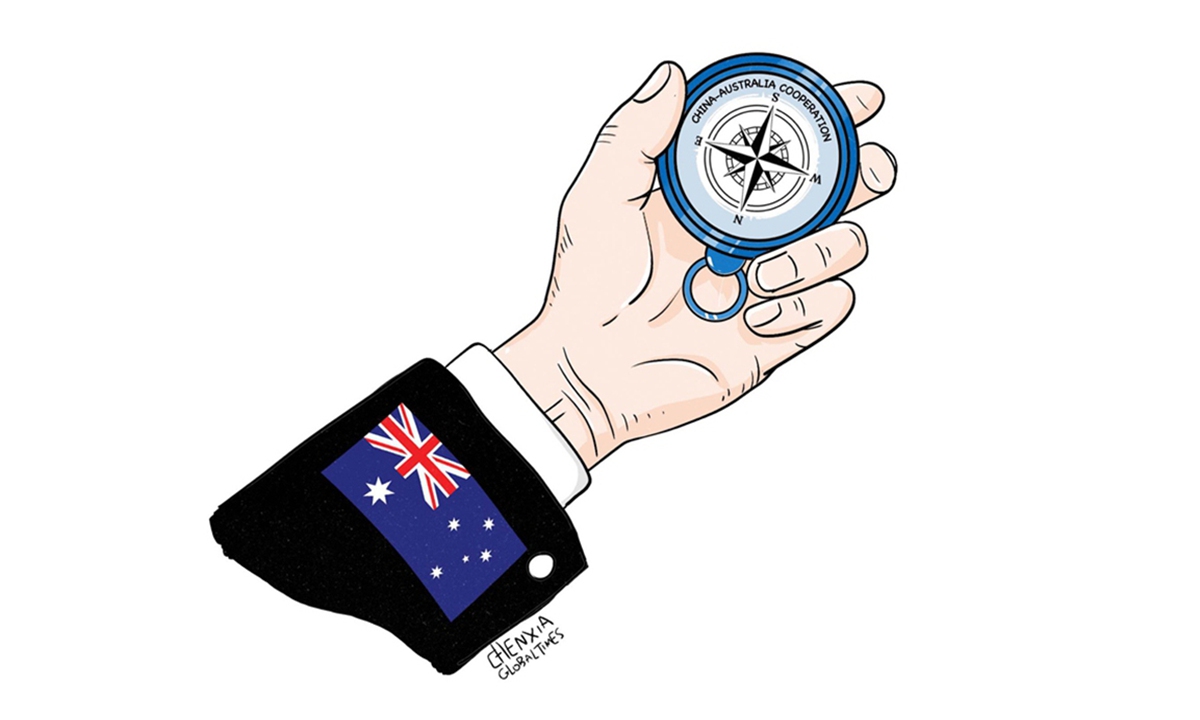
Illustration: Chen Xia/GT
Editor's Note:
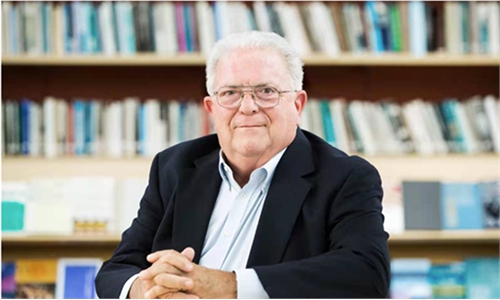
At the recent Mingde Strategic Dialogue 2026 hosted by Renmin University of China, when Global Times (GT) reporters Su Yaxuan and Ding Yazhi met Matthew Williams (Williams), he said that "for a relatively young country like Australia, we must observe the development of Chinese society, learn from it and reflect on our own experiences." Williams, a former Australian non-commissioned officer, now works as an independent correspondent and analyst focusing on international conflicts and peace.
Having witnessed the devastation of war firsthand, Williams brings a perspective shaped by both his military experience and on-the-ground reporting. How does he view the prospects for peace and development in the Asia-Pacific? What does he make of the current state of China-Australia relations?
In an interview with the Global Times, Williams reflected on the costs of confrontation, the importance of dialogue and the need to understand China beyond established perceptions. As he put it, "Healthy competition does not need to boil over into something irreversible."
GT: As an observer of international relations and an embedded observer of developments, how do you view China-Australia relations at this moment?
Williams: China and Australia have had a rocky relationship over the last several years. I don't think those years show either side at its best. I think this is what needs to be further understood, especially in the Asia-Pacific: Development in these nations should be fantastic for us all.
China and Australia have mutually beneficial markets. Your manufacturing sector requires resources exported from a country like Australia.
I believe that we need to approach problems with strategic patience and confidence. And I think there is no better country to look to as a historical case study of strategic patience and learning from ancient lessons than China. China has millennia of experience. There have been peaks and troughs.
For a relatively young country like Australia, we must observe the development of Chinese society, learn from it and reflect on our own experiences. I think it is also very beneficial for China to remain cautious.
GT: You have witnessed conflict firsthand, both during your military service and later as an independent journalist. What do you think is most important for China, Australia and other countries to avoid confrontation and maintain peace in the Asia-Pacific?
Williams: I think seeing the devastation of war changes any person who bears witness to it, regardless of whether you're a participant as a combatant, an observer as a journalist, or a civilian caught in the crossfire. It changes the way you see everyday life. It changes the way you see the remainder of your life and the world.
I think many people like me, who have seen the cost of war and the scars of war, believe that warfare should be the absolute last option.
Those outside military circles often fail to comprehend the scale of harm that the weapon systems deployed on today's battlefields can inflict once conflict erupts. We cannot step into a confrontation because it would impose an irreversible cost on civilization.
I believe that in the modern age, we must avoid shutting down dialogue and conversation. In an age when we can translate things, read books and travel to other countries, there is no excuse not to have a greater understanding of not only our friends, allies and partners, but also states with which we compete.
Healthy competition does not need to boil over into something irreversible.
GT: You have mentioned that your own perceptions of China have changed after having visited the country. What do you think of some of the negative and biased views of China in Australian public discourse today?
Williams: I think the image of China in Australia might have a 20-year lag, with some exceptions. There are Australian experts on China, such as former prime minister Kevin Rudd. People like him are encouraging Australians to look at China, read about China, visit China, and see how vastly different it is.
I don't think this is purposefully pushed by the government or the media. I think it's a misunderstanding. China has grown at an incredibly fast rate. For a country of well over 1 billion people to grow at that rate is unbelievable. It's never been seen in the world. I think the way to break down that barrier is through tourism, openness and having people come and see China for themselves.
GT: This year marks the fifth anniversary of AUKUS. Looking back over the past five years, do you believe AUKUS has genuinely contributed to Australia's development?
Williams: I have now been out of the defense force for too long to have my finger on the pulse of every single decision that has been made. I do know that AUKUS has attracted a lot of criticism, not only abroad but also at home. I live in the same region where some of these underwater vessels are being built, and questions have been raised about this. I think one of the major challenges with submarines is that these are among the most complex systems ever built. AUKUS comes at extreme costs now and can also create friction with other states within the region.
RELATED ARTICLES