China, Russia vow to deepen high-quality cooperation and mutual trust at heads of government meeting
Coordination advances multipolarity, rejects hegemonism and injects stability into an unsettled world: experts
By and Li Yu Published: Oct 21, 2026 11:44 PM

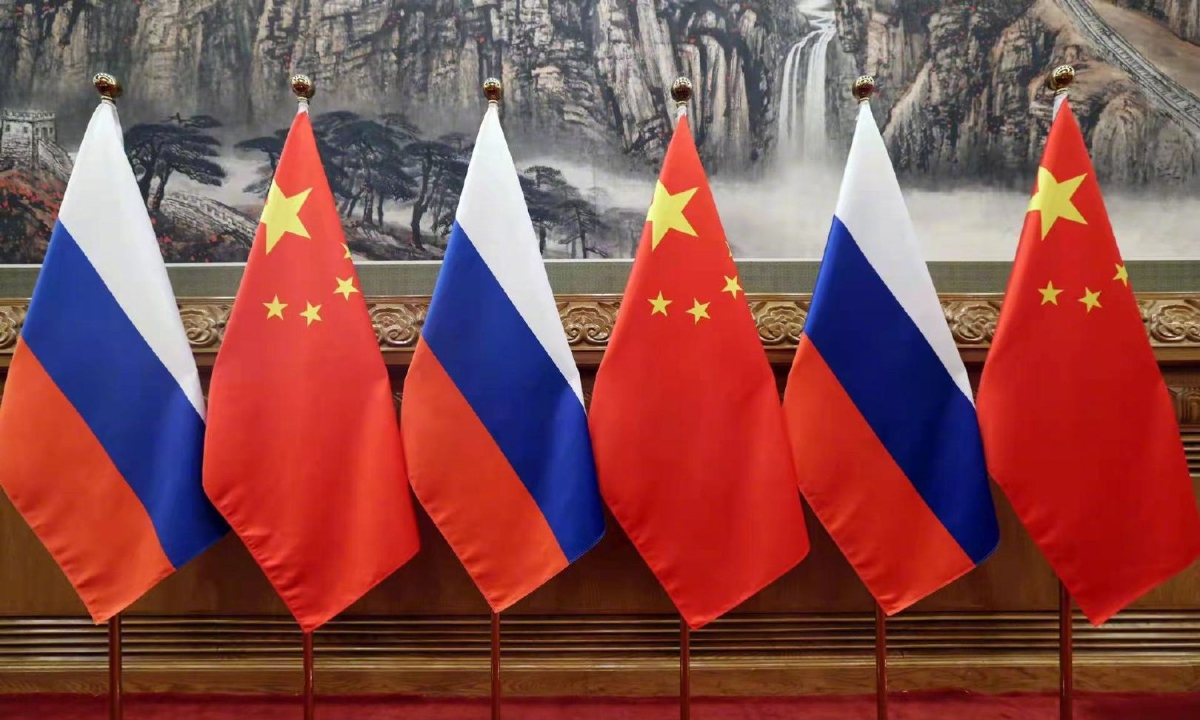
China Russia Photo: Xinhua
China stands ready to work with Russia to further consolidate political mutual trust and strengthen strategic communication and coordination for the continuous development of bilateral ties and cooperation, Chinese Premier Li Qiang said on Wednesday as he met with Russian Prime Minister Mikhail Mishustin during the 31st regular meeting of the two countries' heads of government in St. Petersburg.
Following the meeting on Wednesday, the two heads of government inked the Joint Communique, with a package of cooperation agreements on trade, aerospace, science, technology and education also reached.
According to a release by the Xinhua News Agency, both sides agreed that strategic guidance from the heads of state is an important guarantee for the steady development of China-Russia relations.
China and Russia should take the important consensus of the two heads of state as the fundamental guide, advance cooperation in key areas such as economy and trade, investment, energy and resources, connectivity, aerospace, finance and industry, foster new drivers of development in frontier areas such as artificial intelligence, biotechnology and the digital economy, jointly ensure the success of the China-Russia Years of Education, strengthen people-to-people and cultural exchanges in tourism, culture, youth and media, stimulate the vitality of local cooperation, maintain close communication and coordination on multilateral affairs, and strive for more practical outcomes, according to the release.
Analysts said the China-Russia heads of government meeting centers on delivering on the consensus reached of two heads of state and will lend key support to the high-quality upgrading of China-Russia cooperation. Meanwhile, amid a turbulent and complex international landscape, China and Russia's coordination helps steer the international order toward an equal and orderly multipolar world, reject bloc confrontation, hegemonism and unilateral sanctions, and galvanize development momentum for the Global South.
Entering a new stage
This year marks the 30th anniversary of the establishment of the China-Russia strategic partnership of coordination and the 25th anniversary of the signing of the China-Russia Treaty of Good-Neighborliness and Friendly Cooperation. The annual meeting between Chinese and Russian heads of government was launched in 1996.
During the meeting, Premier Li said that under the strategic guidance of the two heads of state, China-Russia relations are entering a new stage marked by greater achievements and faster development, the Xinhua News Agency reported.
China and Russia set a model for high-level mutual trust and high-quality cooperation between major countries and neighboring countries in the new era, Li noted.
Mishustin said the Russia-China comprehensive strategic partnership of coordination for a new era is currently at its highest level in history and has set an example for relations between countries.
Russia is willing to work with China on the basis of mutual benefit, win-win cooperation, mutual respect and good-neighborliness and friendship, to further strengthen practical cooperation in various fields and safeguard the common interests of the two countries, he added.
According to Wang Xiaoquan, an expert with the Institute of Russian, Eastern European and Central Asian Studies of the Chinese Academy of Social Sciences, the core functions of the regular heads-of-government meeting mechanism are to focus on practical cooperation, translate consensus reached by the two heads of state into actionable government policies, projects and institutional arrangements, review their implementation, and coordinate policies among government ministries and local authorities on both sides.
Wan Qingsong, an expert at the Center for Russian Studies at East China Normal University, said the mechanism provides crucial underpinning for the high-quality development of China-Russia relations. With China set to host the APEC Economic Leaders' Meeting in Shenzhen this November, this heads-of-government meeting also lays groundwork and creates more favorable conditions for a possible summit between the two heads of state.
In 2026, China and Russia have maintained frequent high-level interactions, with two heads of state holding fruitful meetings in May and August. Top legislator Zhao Leji and top diplomat Wang Yi also met with their Russian counterparts.
During Russian President Vladimir Putin's state visit to China in May, the two heads of state signed and issued a joint statement on further enhancing comprehensive strategic coordination and deepening good-neighborliness and friendly cooperation between the two countries.
The two leaders witnessed the signing of 20 cooperation documents in areas including the economy and trade, education, and science and technology. The two sides also reached 20 cooperation agreements in other fields.
Wang Xiaoquan said China and Russia uphold the principles of non-alliance, non-confrontation and not targeting any third party. They enjoy strong political mutual trust and strategic rapport, backed by a full-fledged cooperation framework and strong endogenous momentum for sustainable development.
According to the expert's observation, China-Russia practical cooperation is shifting from expansion in scale to quality upgrading. Energy, cross-border logistics and agricultural and forestry trade remain the ballast, while high-tech sectors, the digital economy, equipment manufacturing investment, local currency settlement, green and low-carbon development, as well as subnational and border cooperation have emerged as new growth drivers.
From 2023 to 2025, bilateral China-Russia trade exceeded $200 billion for three straight years, with China retaining its status as Russia's top trading partner for 16 consecutive years. Data from the General Administration of Customs of China shows that bilateral trade hit $134.175 billion in the first half of this year, a year-on-year increase of 25.6 percent.
Side by side
The latest China-Russia heads of government engagement came after their attendance of the 25th meeting of the Council of Heads of Government (Prime Ministers) of Member States of the Shanghai Cooperation Organization (SCO) in Dushanbe, Tajikistan, on Tuesday.
In his talks with Mishustin, Premier Li said that China and Russia in recent years have stood side by side and moved forward together amid a complex and turbulent international landscape, Xinhua reported.
Upon his arrival in St. Petersburg on Tuesday, Li said China and Russia's effort will not only bring greater benefits to the two peoples and inject valuable stability and certainty into world peace and development, according to Xinhua's release.
The international landscape is volatile with intensifying conflicts and fragmented industrial and supply chains, said Wan, adding that the global governance system is undergoing profound shifts.
Against such a backdrop, Russia and China enjoy broad room for coordination. The two sides can boost synergy among multilateral frameworks, pool strengths, advance regional economic and trade connectivity, and keep global industrial and supply chains stable, Wan noted.
China will host the APEC Economic Leaders' Meeting in Shenzhen this November and assume the rotating chairmanship of BRICS in 2027.
During a meeting with Chinese top diplomat Wang Yi in Baku in October, Russian Foreign Minister Sergei Lavrov said that Russia fully supports China in successfully hosting the APEC Economic Leaders' Meeting. In addition, Russia is ready to further strengthen coordination with China under multilateral frameworks including the United Nations, the G20, APEC and the BRICS mechanism to jointly uphold international fairness and justice, he said.
"By advancing cooperation, China and Russia can not only jointly fend off external risks, but also steer the international order toward an equal and orderly multipolar world, galvanize development momentum for the Global South, and reject bloc confrontation, hegemonism and unilateral sanctions," said Wang Xiaoquan.
"Their multilateral coordination serves both regional stability and global governance. It shuns bloc rivalry and provides a practical, viable pathway for cooperation in a turbulent world," the expert noted.
RELATED ARTICLES