Two faced remarks by Philippine diplomat expose Manila’s bid to exploit Taiwan question for S.China Sea interests; Political ploy will not succeed
By Published: Oct 22, 2026 01:33 PM

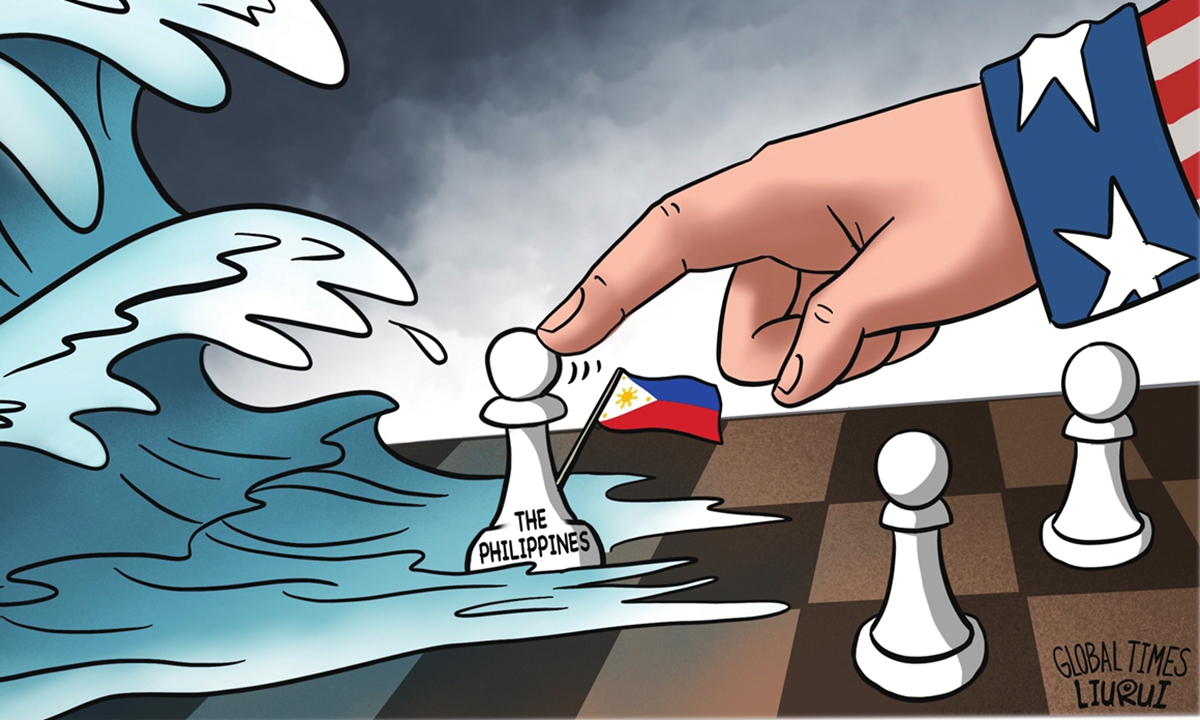
Illustration: Liu Rui/GT
A Philippine diplomat's recent remarks that the Philippines is exploring deeper cooperation with the Taiwan region on protecting undersea cables, "notwithstanding the one-China policy," expose the Marcos Jr. government's ulterior motive of playing the Taiwan card to gain leverage in the South China Sea. Such duplicitous words and actions amount to a deceptive political ploy that will not succeed, said a Chinese expert, noting that the Philippines will ultimately reap what it sows and its moves to heighten cross-Strait tensions and persist in provocations in the South China Sea will only backfire.
The Philippines is exploring deeper cooperation with Taiwan on protecting undersea cables and addressing "gray-zone" activity, "despite Manila's one-China policy." Felipe F. Carino III, Manila's deputy chief of mission in Washington, told a seminar on Wednesday this "pragmatic and practical approach" with Taiwan was necessary to protect mutual interests in the Bashi Channel between Taiwan region and the Philippines, according to a Reuters report.
Speaking to Washington's Center for a New American Security, Carino linked cable security to South China Sea tensions, but did not mention China by name. "We are exploring deeper cooperation with our friends in Taiwan," Carino claimed, adding that the Philippines was doing so "notwithstanding our one China policy," according to the report.
Asked if this cooperation could include joint patrols or accountability for vessels that disrupt communications, Carino said he did not have details, but said: "I'm sure that this is a constantly evolving cooperation, and some of the things that you mentioned may be actually coming to fruition," per Reuters.
The Democratic Progressive Party (DPP) authorities in the Taiwan region initially hyped the undersea cable issue, making false accusations against the Chinese mainland. Philippine diplomats are now exploiting it to stoke the "China threat" narrative, bolster their defenses and play the "Taiwan card" to secure US support, ultimately seeking leverage in the South China Sea, Zheng Jian, a professor at the Taiwan Research Institute of Xiamen University, told the Global Times on Thursday.
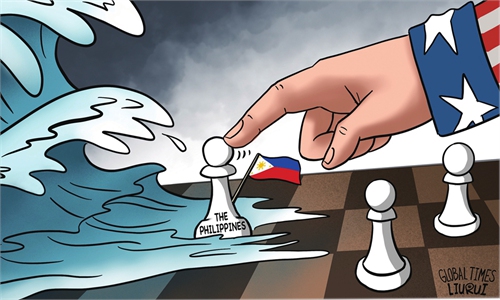
The Marcos Jr. administration is playing the Taiwan card to draw in the US, link South China Sea issues with the Taiwan question, and integrate the Philippines into the US first-island-chain defense strategy to contain China, said Zheng, noting that by paying lip services to the one-China principle while pursuing highly sensitive security cooperation with the Taiwan region, Manila seeks to conceal its intentions and evade international scrutiny.
"But such a deceptive political ploy will not succeed," said the expert.
According to a report from the Nikkei Asia on Monday, Taiwan region and the Philippines "are taking steps to boost maritime ties after decades of distance" amid rising pressure from Chinese vessels. A Taipei Times report on Wednesday noted that the Taiwan region coast guard administration donated a patrol vessel - 500-tonne-class Kinmen to the Philippines, but it will not be used in waters near Taiwan region.
Recent interactions between the Philippines and the DPP authorities in the Taiwan region reflect political calculations on both sides. However, pursuing so-called security or even military cooperation in defiance of the one-China principle crosses red lines and will inevitably draw firm opposition and countermeasures from the Chinese mainland, experts warned.
Zheng said Manila's attempts to link South China Sea issues with the Taiwan question risk drawing the Philippines into a cross-Strait conflict through its cooperation with the Taiwan region. By tying its national interests to external forces, the Philippines will ultimately bear the consequences, he said.
The Chinese mainland market remains vital to Philippine development. Yet some Philippine politicians prioritize geopolitical confrontation over economic growth and public welfare, despite widespread poverty at home. Ultimately, the Philippines will pay the price, Zheng said.
RELATED ARTICLES