Why China's reaction to Mbappé's offensive remarks is not simply 'fervent nationalism'
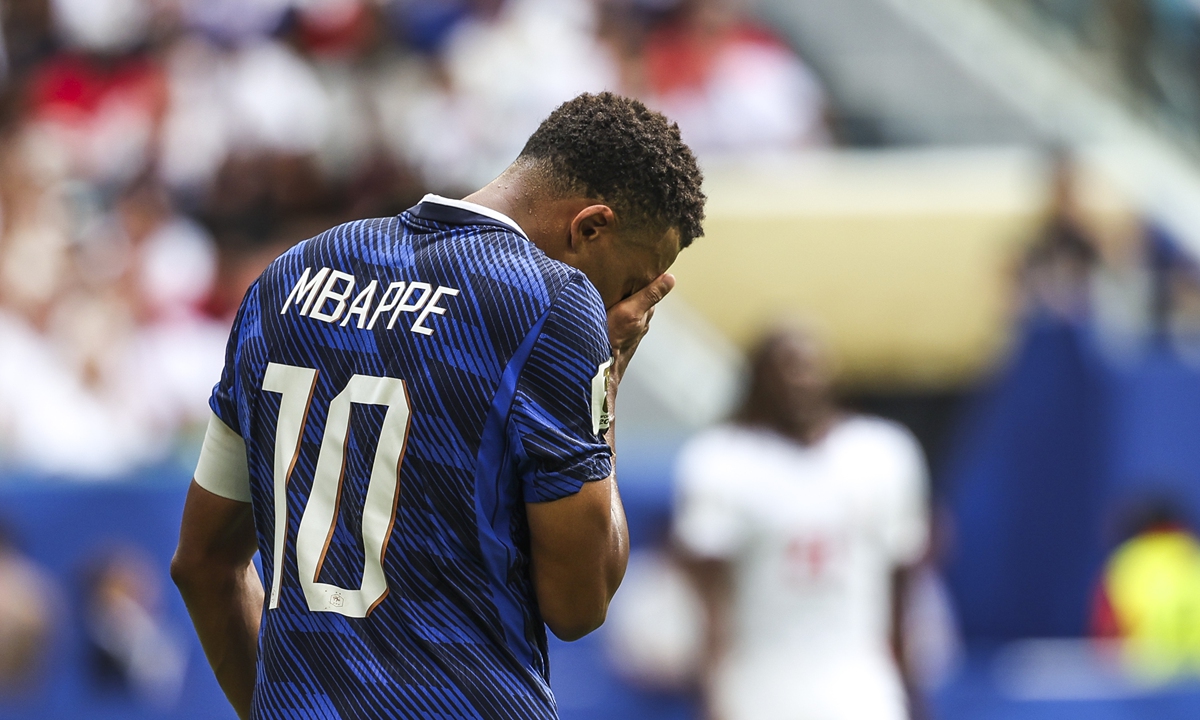
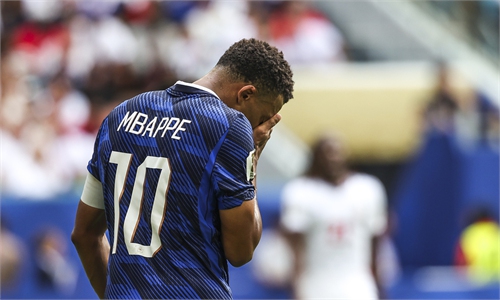
Kylian Mbappé, a Real Madrid player in Spain's LaLiga
Soon after French football star Kylian Mbappé's offensive remarks sparked widespread anger in China, some Western media outlets were quick to diagnose the Chinese public's reaction as "nationalism."Some Western commentators have dismissed the Chinese public's response as "oversensitivity" or "an inability to take a joke." NBC even claimed, "Mbappé is suddenly paying the penalty for being on the wrong side of China's fervent nationalism." Apparently, all it takes to make an insult acceptable is to label it a joke, and everyone else is expected to laugh along. The real divide lies in how different societies understand history, national dignity, and the line between humor and offense.
Does that mean history can be freely mocked in the West, founding leaders can be turned into jokes, and anyone who objects is labeled a "fervent nationalist"? China's collective memory, shaped by a century of suffering, does not follow that logic.
No country can tolerate attacks on its founding fathers; this is the most fundamental respect and norm in the international community. No society can tolerate its collective memory to be randomly insulted or joked about, even more so by a renowned celebrity. Expecting those who feel insulted to simply laugh it off is, in itself, a double standard.
Chinese internet users do not expect Mbappé to become a Chinese historian, nor do they demand that a football star in his 20s agree with every Chinese political position. But he is not just another young man. He is a global superstar who benefits significantly from the Chinese market and enjoys the support of Chinese fans. Precisely because of this, he cannot simply ignore the historical memory and cultural sensibilities of the Chinese public.
If humor is defined solely by the side doing the offending, and those who feel offended must first pass an ideological test before they can object, then this is not humor. It is a double standard dressed up as a joke.
The real question is not why the Chinese public reacted so strongly, but why some Western media outlets were so quick to label that reaction "fervent nationalism." Why are they using the controversy as an opportunity to reinforce the claim that China is somehow incapable of taking a joke in the way the West supposedly can?
That line of thinking raises a deeper question: What have Western education systems and media taught their audiences about China's history and its present-day realities? And what kind of image of China have they been creating?
When a so-called joke can casually trample on another country's founding leader while those who object are the ones blamed, the real distortion is not the Chinese reaction; it is the arrogance that one side gets to decide what counts as a joke and what counts as an insult.
RELATED ARTICLES