IN-DEPTH / IN-DEPTH
Restoring lakes and surrounding landscapes helps strengthen northern China’s ecological security barrier
A living shield
By Zhang Yiyi in Ulanqab and in Beijing Published: Oct 29, 2026 09:52 PM

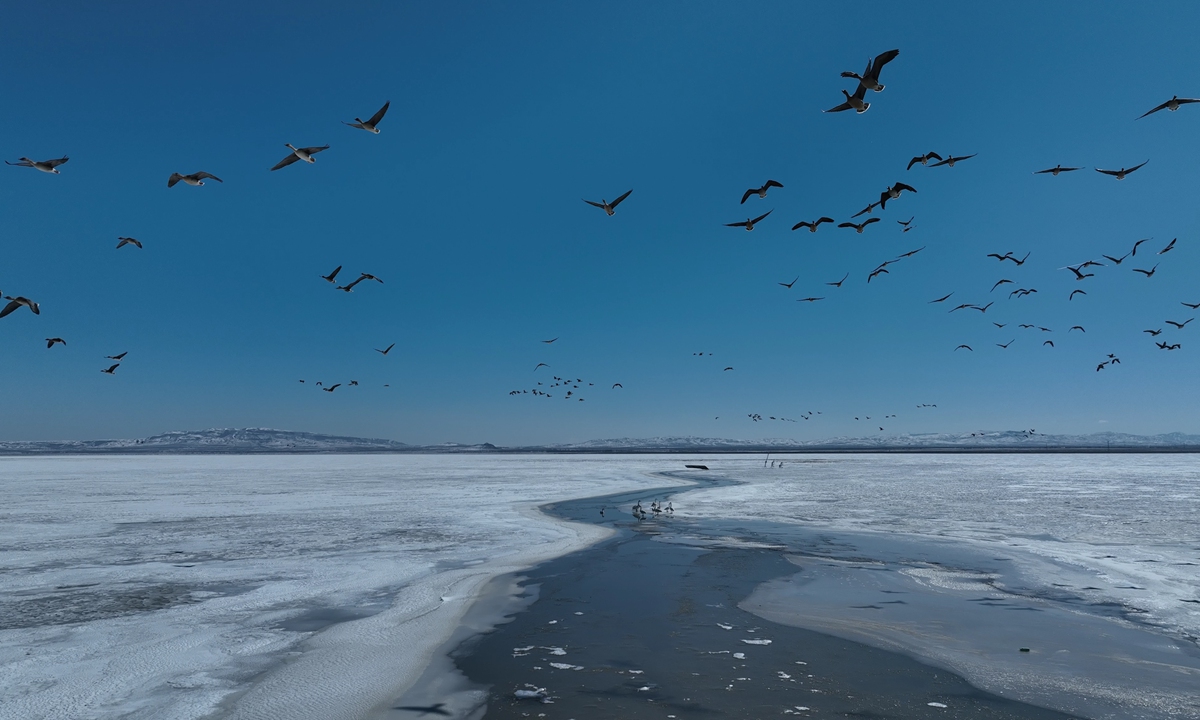
Migratory birds fly over the shores of Huangqihai Lake in Ulanqab, Inner Mongolia, in March 2026. Photo: Courtesy of Ulanqab Publicity Department
Waterbirds floated on Daihai Lake, lowered their heads to feed and occasionally took wing across its surface. Even in late October, as the weather grew colder, the lake in Liangcheng county, Ulanqab, North China's Inner Mongolia Autonomous Region, remained a feeding and resting place for birds.
"Many birds have already flown south," Yu Lei, deputy director of the county's Daihai Nature Reserve Service Center in Ulanqab, told the Global Times, pointing toward the water.
Earlier this year, the reserve recorded something it had never documented before: oriental storks nesting and breeding locally. Two nests on high-voltage pylons produced six chicks, adding a breeding record for a nationally protected species to the lake's changing ecological history.
The conditions supporting those nests have required work far beyond the shoreline. Around Ulanqab's lakes, restoration has extended into surrounding farmland, industrial facilities and neighboring regions, connecting wildlife protection with changes in how people use land and water.
Chinese President Xi Jinping stressed upholding a holistic and systematic approach to the conservation and improvement of mountains, waters, forests, farmlands, grasslands and deserts. During a recent inspection in Ulanqab, he called for promoting concerted efforts to cut carbon emissions, reduce pollution, expand green development and pursue economic growth, while unswervingly following the path of prioritizing ecological conservation and pursuing green development.
During a recent visit, the Global Times reporter found that coordinated restoration efforts were helping revive lakes and wetlands, bringing wildlife back and supporting new livelihoods for nearby communities in Ulanqab.
A place to breed
Yu remembers the details of the storks' first breeding season clearly. Each nest contained four eggs, and three chicks hatched in each. For him, their presence raised a practical question about what the lake could now provide.
"Why would oriental storks come here, and even build nests and hatch their young?" he said. "First, there has to be food - there have to be fish in the lake. Then, there has to be safety, without so much disturbance from people, before they will settle here."
He recalled a much harsher period around 2016, when fish disappeared from the lake for a time. As the water volume fell, substances in the remaining water became more concentrated and the water quality deteriorated, he explained. Fish have been recorded again since 2023, with additional species appearing in subsequent monitoring.
Daihai relies mainly on surrounding rivers and rainfall for replenishment. Local people describe the region's recurring droughts with a saying: "Nine years out of 10 are dry," Yu said. Restoring the lake, therefore, required securing water while reducing the demands placed upon it.
One major intervention brought water from the Yellow River. The river is roughly 160 kilometers away, Yu said, and the water must be lifted through three stages of pumping to reach Daihai. The emergency ecological replenishment project began supplying water in September 2022.
Conservation measures also reached the surrounding fields. About 260,000 mu, or approximately 17,333 hectares, of farmland underwent conversion from irrigated to dryland farming. Farmers adjusted their crops, replacing water-intensive maize with relatively drought-tolerant sorghum, millet and soybeans, Yu introduced.
"Previously, maize might need watering two or three times a year. Switching to these grains can save quite a bit of water," he said. Affected farmers received subsidies to support the adjustment.
Industrial water use changed as well. The Daihai power plant shifted from water cooling toward air cooling and began using treated reclaimed water for production, reducing its reliance on lake water and groundwater. Wetland vegetation restoration, village sewage treatment, livestock-pollution control and grazing restrictions addressed other pressures on the lake.
Yu now puts the reserve's bird records at 113 species, compared with 68 previously. Great bustards have arrived to overwinter every year since 2020, with about 40 monitored this October. Three red-crowned cranes also spent the winter at Daihai in January 2024.
The lake's changing surroundings have also become part of local livelihoods. A local report provided to the Global Times describes Hu Dengyu, a resident of Fujia village, who sold his 200 sheep in 2003 and bought a secondhand sightseeing boat with room for 30 passengers.
After replacing his boat over the years, he now operates one with 78 seats. Hu also helps operate a patrol boat for the reserve after the tourist season.
Yu said tourism must remain within defined limits. "Visitors cannot go wherever they like. The reserve cannot be entered freely, and tourism activities must take place in designated areas. We cannot damage the environment again by developing tourism."
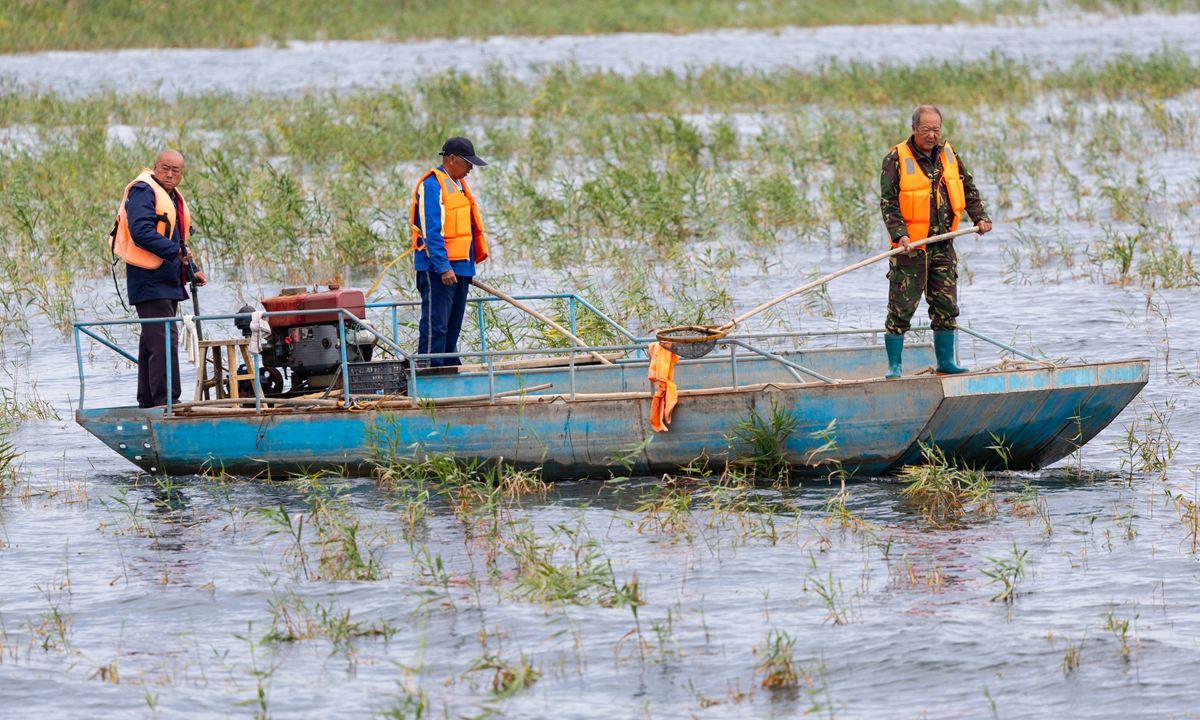
Three staff members take a boat out on Daihai Lake in Ulanqab, Inner Mongolia, on August 26, 2026. Photo: VCG
Following the water
At Huangqihai Lake, another Ulanqab wetland, wind moved through the reeds as flocks crossed the sunlit water and settled on nearby shallows. No tourists were in sight, and the sounds of wind and birds could be heard along the shore.
In 2025, villagers noticed something in the birds' beaks: fish. The sight suggested that fish were becoming more plentiful in the lake, giving local people and reserve staff another way to recognize ecological change.
Wang Shaojun, director of the Huangqihai Lake Nature Reserve Service Center, told the Global Times that, after about 27 years, fish activity was again detected in the lake in 2025. The fish found were mainly crucian carp, alongside smaller numbers of common carp and loaches after a gap of about 27 years. Fishing is now prohibited to protect the resource.
The lake had almost dried up in 2006. Even after water returned in 2012, its surface area fluctuated from about 25 square kilometers in wetter periods to less than 5 square kilometers during dry seasons. By the end of September 2026, the water covered 85.22 square kilometers, according to local briefing materials.
Reducing disturbance has been a sustained part of the work. Before the reserve was established, people lived, cultivated land, grazed livestock and operated breeding facilities within the area. As protection increased, residents were encouraged to adjust their livelihoods, with some moving into employment or business in nearby towns.
Fencing of the core protected area began in 2017. Around it, farmland was taken out of cultivation and returned to wetland, reducing agricultural inputs such as pesticides, fertilizers and plastic film. Environmental improvements in surrounding villages addressed additional sources of pollution.
Sixteen livestock farms within the reserve were dismantled or relocated. Their departure reduced both production activity and pollution sources, creating space for the wetland to recover.
The lake's connections extend well beyond the reserve boundary. Its basin crosses seven county-level administrative areas, with 11 rivers feeding the closed inland lake. Therefore, upstream vegetation, water withdrawals and pollution affect what reaches the lake basin, the Global Times learned from the local publicity department.
Increased rainfall in recent years has also played an important role in replenishing the lake, alongside restoration and water management measures. The lake's expansion reflects both changes in natural conditions and efforts to reduce pressure from human activities.
The reserve has recorded 168 bird species. Wang said protecting Huangqihai contributes to the wider task of strengthening northern China's ecological security barrier. For staff watching birds catch fish again, that task has a visible expression on the water.
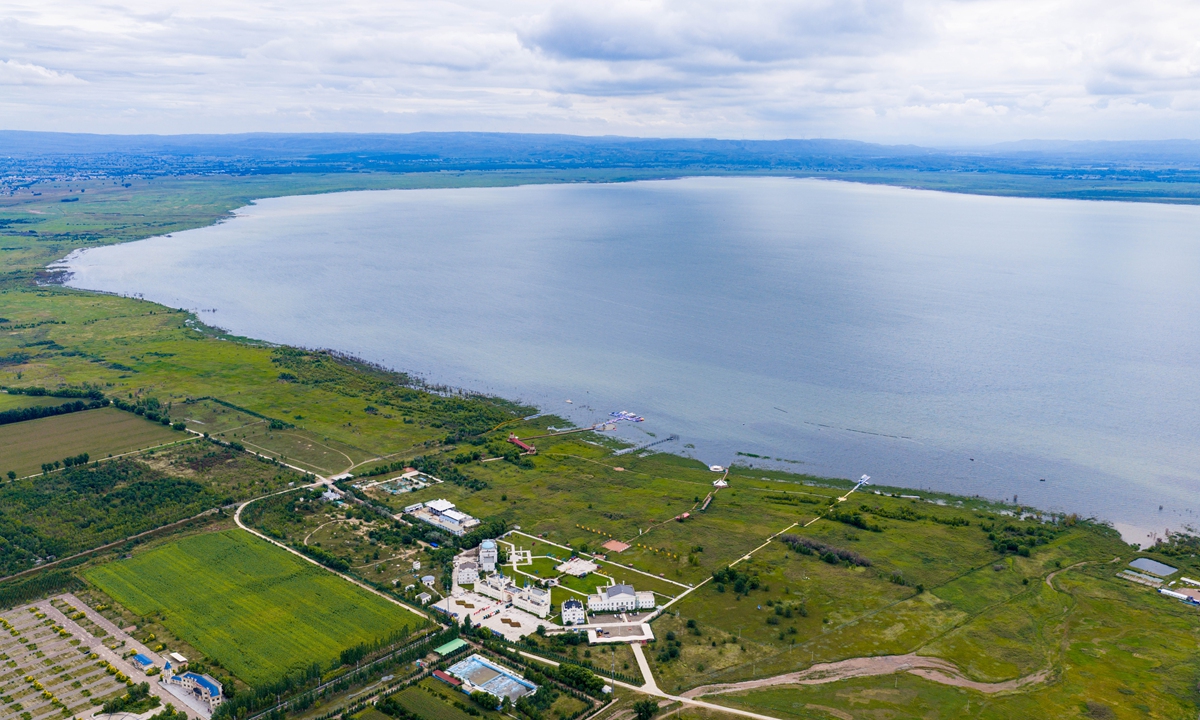
An aerial view of Daihai Lake in Ulanqab, North China's Inner Mongolia Autonomous Region Photo: VCG
Protection across boundaries
Another breeding scene appeared this summer at Chahan Naoer National Wetland Park in Shangyi county, North China's Hebei Province. Monitoring staff recorded more than 300 floating nests of black-necked grebes near the park's wooden boardwalks, the largest recorded breeding aggregation of the species in Hebei, according to the Hebei Daily.
The wetland straddles Hebei and Inner Mongolia, with national wetland parks on the Shangyi and Shangdu sides. Its wider basin crosses nine county-level administrative areas, making coordination part of the everyday work of protection.
The two parks signed a cooperation memorandum in 2025. Their arrangements include quarterly coordination meetings, joint monitoring records and public education. By mid-October, they had issued three joint monitoring records, the local publicity department introduced.
Staff from Shangyi have also been incorporated into the team of the wetland's national observation and research station. Monitoring coverage has expanded to the Shangyi park, and the two sides use drones to jointly track changes in the water surface.
That shared work is helping build a fuller account of the wetland's birds. Third-quarter joint monitoring and data-sharing recorded 202 species in the basin, compared with 79 in 2020.
On the Shangdu side, water conservation has included converting 145,300 mu, or about 9,687 hectares, of irrigated farmland to dryland farming and closing 1,551 irrigation wells within the basin. Decisions about vegetation have also taken water availability into account.
In rehabilitating degraded woodland, authorities have gradually replaced overmature, water-demanding poplars and willows with native drought-tolerant shrubs such as caragana and wild apricot.
The work reaches into village routines. In Guojiacun village, water-saving agriculture and the collection of discarded agricultural film have been incorporated into village rules and a points-based rewards system. Through environmental actions, residents can earn rewards.
Scientific surveys elsewhere in Inner Mongolia are expanding knowledge of the region's less conspicuous wildlife and plants. A three-year survey in the Inner Mongolia Helan Mountains National Nature Reserve has identified six new species - two vascular plants, three lichens and one insect - and 568 species newly recorded at different geographical levels.
The survey filled gaps in knowledge of groups including lichens and mosses, creating a biological database to support management planning and targeted restoration. These findings document organisms previously insufficiently understood.
The pressures on such ecosystems extend beyond China. The Convention on Wetlands' Global Wetland Outlook 2025 estimates that about 22 percent of global wetland area has been lost since 1970. Agricultural expansion, pollution, disrupted water flows and climate change are among the interacting pressures identified in the assessment.
The work around Ulanqab's lakes connects those pressures with practical decisions: which crops to grow, where to reduce water withdrawals, how neighboring jurisdictions share monitoring and where human activity should leave wildlife undisturbed.
Near the end of the Daihai interview, Yu pointed to an old water-lifting facility in the lake. Built when water was scarce, it had become partly submerged as the water rose. Several waterbirds were perched on it, away from people on the shore.
"If we had insisted on taking it down back then, the birds might not have this place to rest," he said. "Working with nature may be the best approach," he added, looking across the lake.
RELATED ARTICLES