Xi meets German, Swiss presidents; talks to steady ties, signal resolve to manage differences via dialogue: analysts
By Published: Oct 31, 2026 12:24 AM

Top News
Chinese President Xi Jinping on Friday held separate meetings with German President Frank-Walter Steinmeier and President of the Swiss Confederation Guy Parmelin in Beijing. During the meetings, the Chinese leader emphasized the importance of bilateral relations to China-Europe ties.
Steinmeier's state visit to China, which lasts from October 27 to 31, marks his first trip to China in nearly eight years. Parmelin's work visit lasts from October 30 to November 1.
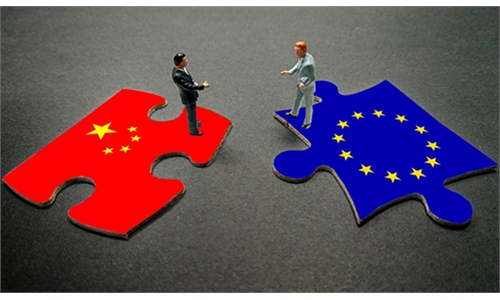
Analysts said against a backdrop of China-Europe trade tensions and rising protectionism, the leader's back-to-back meetings with two European counterparts reflect China's consistent pragmatic approach to Europe, signaling intent to manage disputes via dialogue and offset protectionism with openness, injecting stability into overall China-Europe ties.
Back-to-back meetings
In the meeting with Steinmeier, Xi said that China's policy toward Germany is consistent, stable and predictable, and China is happy to see Germany play a greater role in European and international affairs.
He expressed the hope that Germany will view China's development and its cooperation with China with an open and positive attitude, uphold a rational, pragmatic and friendly policy toward China, and adhere to mutual respect and equal treatment, which is a valuable experience for the sustained and sound development of China-Germany relations.
In the meeting with Parmelin, Xi said that Switzerland is an important partner of China in Europe, and Swiss cooperation with China has always been at the forefront among European countries. He added that free trade cooperation has become the brightest highlight of China-Switzerland relations, which fully demonstrates the political courage and responsibility of the two countries in adhering to open cooperation, and highlights the unique leading role of both sides in promoting the building of an open world economy.
China is willing to work with Switzerland to uphold openness, strengthen cooperation, promote a universally beneficial and inclusive economic globalization, and jointly inject confidence and more certainty into the economic and trade cooperation between China and European countries, as well as into global economic development, Xi said.
According to the Chinese Foreign Ministry, Switzerland was the first continental European country to sign a free trade agreement with China. 2026 marks the 10th anniversary of the establishment of the China-Switzerland innovative strategic partnership.
In August this year, Switzerland once again became the first European country to conclude negotiations with China on upgrading their free trade agreement.
After their meeting, the two leaders witnessed the signing of a protocol on upgrading free trade agreement and multiple cooperation documents in areas such as scientific research, employment and the media.
Reuters described the deal as "one of the most favourable trade deals" Beijing has granted a European country, "bucking a broader global shift towards protectionism", and contrasts with "barriers to trade put up not only by the US administration but also, increasingly, the EU."
Jin Ling, director of the Department for Global Governance and International Organizations at the China Institute of International Studies, said the latest round of China's head-of-state diplomacy carries forward China's long-standing pragmatic approach toward Europe, helping enhance mutual trust, dispel misgivings, counter outside noise, steady China-Europe relations and unlock more room for cooperation.
On the same day, the Chinese leader held talks with the leaders from two European countries to advance cooperation, which underscores the resilience of China-Europe relations, as both sides acknowledge the challenges and strive to manage differences and seek solutions, said Jiang Feng, senior researcher at Shanghai International Studies University and president of the Shanghai Regional Studies Association.
Chinese experts also noted that leaders from Germany and Switzerland, meeting with Chinese leadership on the same day, are highly representative.
As the EU's largest economy with close industrial ties to China, Germany serves as a ballast for China-EU cooperation and has played an important role in cushioning and balancing previous trade disputes between China and Europe, said Jin.
On the other hand, Jiang noted that as a neutral non-EU member, Switzerland has greater autonomy and is less susceptible to ideological overreach and securitization of issues.
"China-Switzerland ties offer a model for Europe, and Europe should see China's development and opening-up as an opportunity," said Jiang.
Opportunity and challenges
In meeting with Steinmeier, Xi said that China has always viewed the EU as a partner, and is committed to developing China-EU relations with sincerity and goodwill.
History and reality have repeatedly shown that for China and the EU, cooperation outweighs competition and consensus outweighs differences, Xi said.
He added that as long as both China and the EU stay committed to the positioning of their partnership and maintain the tone of equal-footed dialogue, differences and problems can be resolved and will not hinder further development of China-EU relations.
In a separate meeting with Parmelin, Xi said Switzerland has long played an important and exemplary role in China-Europe economic and trade exchanges. It is hoped that Switzerland will leverage its unique influence, and play a positive role in promoting an upward balance and the steady growth of China-Europe trade.
The Swiss and German leaders' China visit follows the visit made by Bernd Lange, chair of the European Parliament's Committee on International Trade. Chinese Minister of Commerce Wang Wentao told Lange in their meeting on Tuesday that China and the EU are key forces in upholding the multilateral trading system, stressing that China is not the source of the EU's problems but a partner in solving them.
Earlier this month, Wang also met with the European Commissioner for Trade and Economic Security Maros Sefcovic in Beijing, as the two sides jointly chaired the second meeting of the China-EU trade and investment consultation mechanism. The two sides agreed on a list of outcomes, including 16 specific points of consensus covering trade and investment balance, export controls, intellectual property rights and WTO reform.
Over the past 12 months, leaders from a number of European countries including France, the UK, Germany, Serbia and Slovakia have all visited China. The Chinese Foreign Ministry also announced on Friday that Austrian Chancellor Christian Stocker will pay an official visit to China from November 2 to 7.
However, trade tensions persist despite the recent progress. European Commission President Ursula von der Leyen said on October 16 that the EU would propose further restrictions on Chinese imports, arguing that the deal on hybrid vehicles would not fix the trade imbalance, Reuters reported.
Furthermore, Bloomberg reported on Monday that Brussels was planning to use "safeguard measures" to cut imports of products from sectors including chemicals, furniture and machinery from China. In response, a spokesperson of the Ministry of Commerce said on Thursday that China will take all necessary measures to safeguard its interests and the legitimate rights and interests of Chinese enterprises if the EU insists on imposing discriminatory restrictions on Chinese products.
German Chancellor Friedrich Merz was on a tour of Singapore, Japan and South Korea this week. During his visit to Singapore on Tuesday, Merz warned against full economic decoupling from China but called for reducing what he described as "unhealthy, one-sided dependencies" in supply chains, technology and raw materials, Reuters reported.
According to Jin, China-EU relations are now in a phase of overall stability amid divergences, with dialogue and dispute management as the priority.
"Amid multiple crises such as energy strains, inflation, stagnation and social discontent, Europe has recognized the value of the Chinese market. It keeps engagement with China as a baseline, but is also building policy tools to boost its bargaining power," said Jin. "That breeds uncertainty: negotiations need give-and-take, not concessions won by pressure."
Jiang Feng said the EU should follow Switzerland's example and handle China-EU trade frictions professionally, rather than politicizing or securitizing normal economic ties.
In particular, the EU needs to recognize that China-EU trade relations require a systematic, comprehensive framework, said Jiang, noting that the priority is an early restart of talks on the China-EU Comprehensive Agreement on Investment.
RELATED ARTICLES