Illustration: Xia Qing/GT
A Quad leaders' summit is scheduled to take place in mid-November during the series of ASEAN meetings in Manila. This small circle, which had been dormant for two years, has finally been dusted off and brought back from the "freezer" by the US administration.
The US calculations have never been complicated. The strategic focus of the current US administration was initially touted as a "return to the Western Hemisphere," but the US later became deeply entangled in the Middle East, causing speculation among allies that "the US is neglecting the Indo-Pacific" to continue to ferment.
Now, by choosing to hold the Quad summit in Manila on the sidelines of the ASEAN meetings, the US avoids having to invest significant additional diplomatic resources or arrange a lengthy itinerary specifically for a multilateral summit. It just sends a clear, low-cost signal to the entire Asia-Pacific region that "the US is still present."
More crucially, the US' vulnerabilities in critical mineral supply chains are becoming increasingly apparent; shortages in reserves of core materials directly impact domestic industrial security. There is an urgent need to leverage the Quad to collaborate with Japan, India and Australia in establishing an alternative supply chain.
Just last week, following a meeting of the four Quad foreign ministers in Atlanta on the sidelines of the G20 Foreign Ministers' Meeting, a statement was released, which reiterated their commitment to building reliable and open global supply chains while criticizing policies and practices that they claimed could disrupt critical industries.
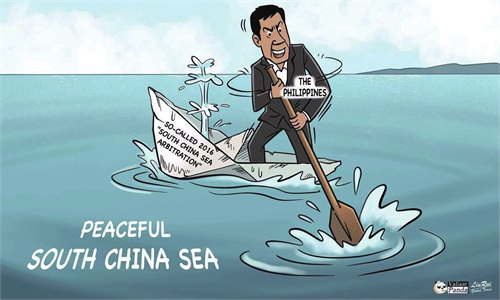
Holding the Quad leaders' summit in the Philippines, a key US ally, allows the US to demonstrate its engagement in South China Sea affairs to the region and offers an "invisible crutch" to forces like Manila that have long resorted to provocative actions regarding the South China Sea issue.
India's approach bears clear hallmarks of "balance-of-power maneuvering." Its earlier plan to host the summit fell through, essentially because Washington and New Delhi failed to strike a deal that both sides would accept. New Delhi is unwilling to jeopardize the improving China-India relationship by aligning with other nations' efforts to contain China, nor is it willing to make unilateral concessions on issues such as trade tariffs and market access.
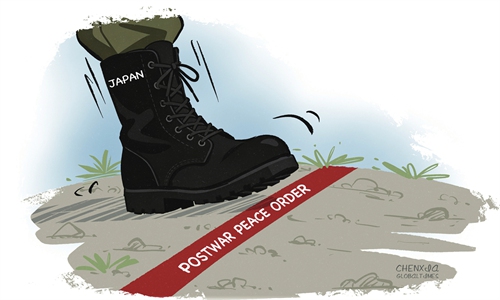
Japan and Australia are more like free riders at this ad-hoc gathering. Tokyo hopes to leverage the Quad's relaunch to advance the outward expansion of its military presence. Canberra, meanwhile, seeks to secure greater access to the US market for exports of critical minerals. With each of the four nations pursuing their own respective agendas, their gathering in Manila is fraught with irreconcilable rifts from the very beginning.
The Quad has never been a true alliance with unified goals and coordinated actions; it is more like a "loose club" where each party pursues its own interests. During the two-year hiatus, most of the cooperative projects previously promised remained merely on paper. The so-called joint supply chain system has yet to achieve any substantive breakthroughs, and maritime security cooperation has largely consisted of low-level joint exercises, making it difficult to establish sustained coordinated actions. This hastily reconvened Manila summit resembles more of a "photo-op" diplomatic event, and the actual tangible outcomes are likely to be pitifully few. Under these circumstances, the Quad summit can hardly grow into a powerful mechanism capable of effectively shaping the regional landscape.
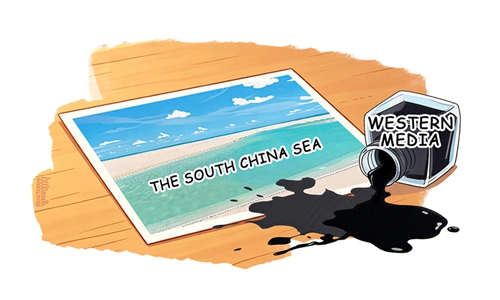
Judging from the information currently available, the South China Sea, Indo-Pacific maritime cooperation, critical mineral supply chains and energy security are highly likely to be on the agenda for this Manila summit. Many countries in the region are already on guard, wondering whether this "small circle" will use the summit as a pretext to slip provisions interfering in South China Sea affairs into the joint statement, in an attempt to impose a public opinion straitjacket on China.
China has indisputable sovereignty over the South China Sea Islands and the adjacent waters. It has consistently advocated for the peaceful resolution of South China Sea disputes through dialogue and consultation, while at the same time remaining resolute in taking firm action to curb any acts that seek to destabilize the South China Sea.
If certain countries seek to use a small-circle summit to openly demonstrate their intention to interfere in South China Sea affairs, China will inevitably oppose it resolutely. The South China Sea is the shared home of neighboring countries, not an arena for individual external forces to manipulate geopolitical games. Any attempt to internationalize or instrumentalize the South China Sea issue will ultimately backfire on those behind it.
The author is director of the Research Department at Tsinghua University's National Strategy Institute. opinion@globaltimes.com.cn
RELATED ARTICLES