Koizumi uses China, Russia as pretext to adjust nuclear policy; expert dismisses claim as recycled rhetoric
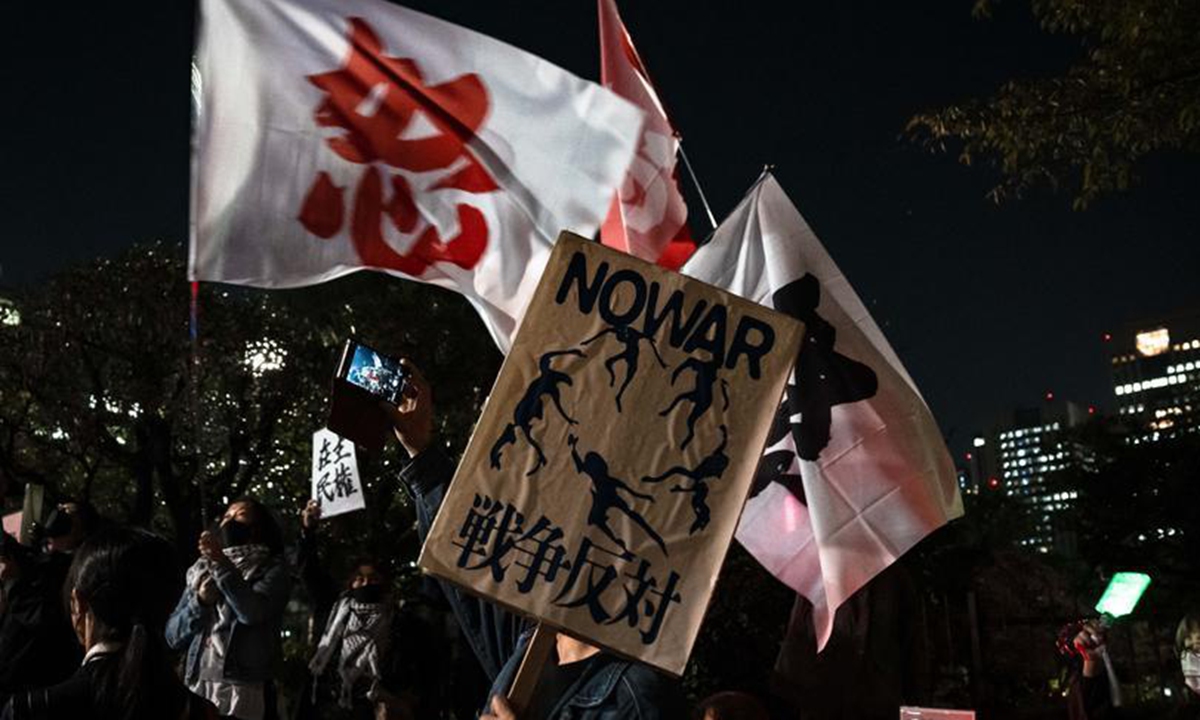
People holding signs attend a protest rally in front of the National Diet Building in Tokyo, Japan, Oct. 30, 2026. Photo: Xinhua
As the deadline approaches for Japan's dangerous push to complete revisions to the three security documents within the year, Tokyo has once again crafted justifications to enable it to adjust its nuclear policy. Japan's Kyodo News reported that Japanese Defense Minister Shinjiro Koizumi cited Chinese and Russian military activities around Japan at the seminar as grounds to call for discussions on adjusting the Three Non-Nuclear Principles. A Chinese expert dismissed the claims as recycled rhetoric that offers nothing new.
Koizumi on Tuesday reiterated his call at a seminar in Tokyo for discussions on adjusting the Three Non-Nuclear Principles, given that the Japanese government plans to revise the country's three key security documents by the end of this year, Kyodo News reported on Wednesday.
Koizumi said that in the course of updating the three security documents, it is necessary for society as a whole to share a common understanding of the nuclear threat. He also seized on China's and Russia's military activities around Japan in recent years to peddle Japan's narrative of a nuclear threat, claiming the need to foster an environment in which necessary security policies can be discussed candidly and without preconceptions, according to the report.
"Even with the various constraints, I hope we can at this stage make the revisions that best reflect the realities of the situation," Koizumi said.
Lian Degui, director of the Center for Japanese Studies at Shanghai International Studies University, told the Global Times on Wednesday that Japan once again wants to signal to the outside world its intention to adjust its nuclear policy, using external security conditions as a pretext to hint that Japan has the "right to develop nuclear weapons" to protect its own security. Citing perceived threats, Japan also recycles familiar arguments to justify such nuclear policy shifts, Lian added.
In addition to discussing revisions to the Three Non-Nuclear Principles, Koizumi also took a positive stance at the seminar about discussion of possessing nuclear-powered submarines, claiming that he hopes all parties would engage in extensive discussions on how to advance the relevant work going forward, according to Kyodo News.
Lian said that by grouping the acquisition of nuclear-powered submarines and revisions to the Three Non-Nuclear Principles within the same security framework, Japan is pursuing a strategy of gradually eroding the bottom line of Japan's post-war nuclear policy.
Tokyo's approach is not to overturn the Three Non-Nuclear Principles wholesale in one stroke, but to prioritize testing the waters on revising the clause that would "permit the introduction of nuclear weapons into the country," thereby breaking through existing constraints step by step, Lian noted.
Japanese Prime Minister Sanae Takaichi's administration has recently made a series of moves concerning nuclear policy. After Koizumi repeatedly said that "no options are ruled out" in discussions on introducing nuclear-powered submarines, Takaichi told parliament in October that the government would seriously consider the possibility of the Self-Defense Forces acquiring such submarines in a "concrete and realistic manner."
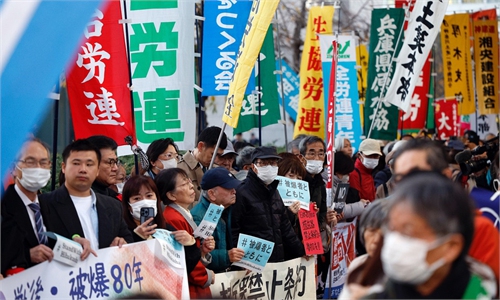
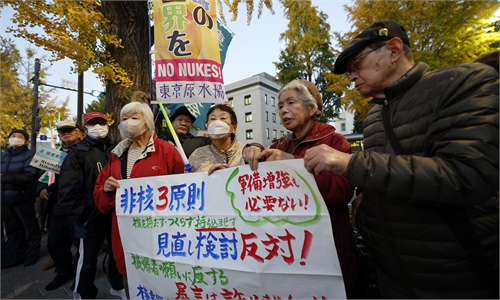
These worrying moves have met with pushback from the Japanese public. Nearly 10,000 Japanese citizens gathered in front of the National Diet Building in Tokyo on Friday evening to protest moves by Takaichi's government to revise the country's nuclear policy and expand its military capabilities, the Xinhua News Agency reported.
Japan is due to finalize the revisions to its "National Security Strategy" and two other security-related documents this year, Nikkei Asia reported. As the deadline approaches, Tokyo will seize every opportunity and pretext to marshal public-opinion justifications and set the stage for the year-end revision, Lian said.
If the Takaichi administration continues in office, Japan's overall defense policy will undergo a marked shift, one that would jolt the security order in East Asia and the long-standing pacifist consensus within Japan, the expert warned.
RELATED ARTICLES