Hinting China would ‘exploit Japan's vulnerability’? Japan's disaster management chief should have some shame
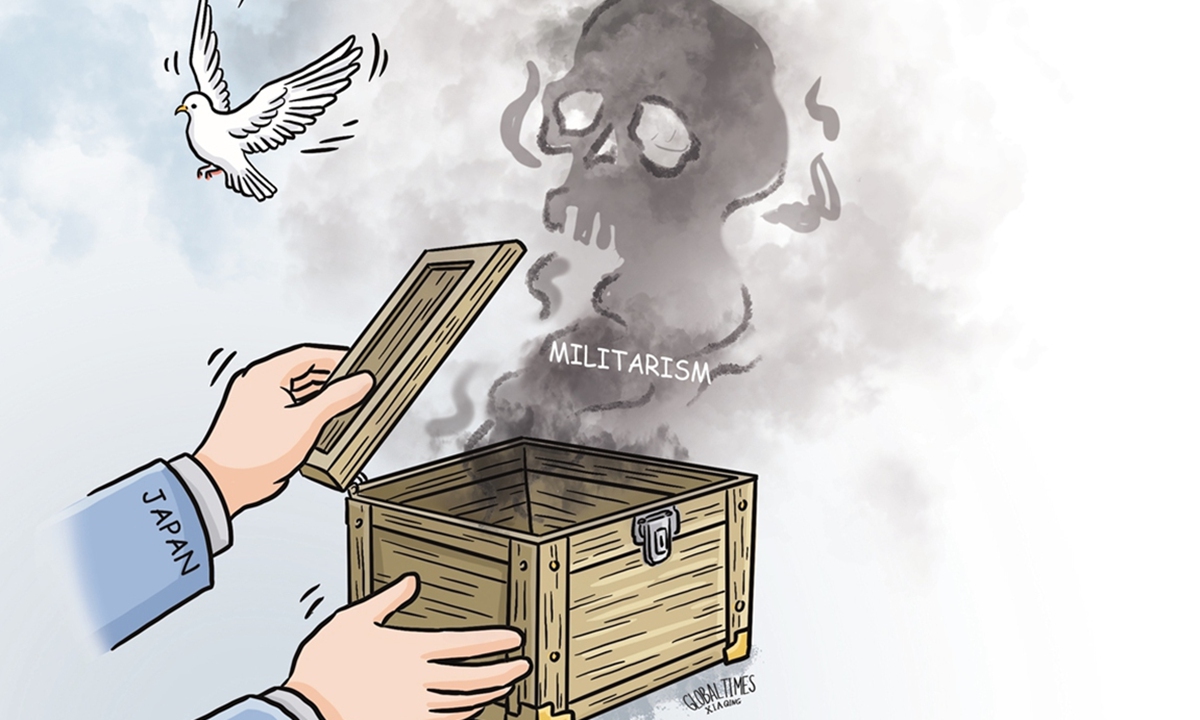
Illustration: Xia Qing/GT
Japan's newly established National Disaster Management Agency under the government of Sanae Takaichi recently began operations. Given that Japan is an island nation frequently struck by natural disasters, setting up such an agency is reasonable. However, at a press conference, disaster management minister Goshi Hosono suggested that Japan's weakened state in the aftermath of a disaster could provide an opportunity for another country to exploit its vulnerability and launch an attack. "I'm not naming any specific country," he added.
However, Hosono's remarks were widely interpreted by media as a veiled reference to China. For a disaster management minister to focus less on disaster preparedness but instead dwell on the possibility of someone "taking advantage of Japan's vulnerability" reveals a bizarre line of thinking. More importantly, it exposes Tokyo's growing impatience to press ahead with military expansion. Even many Japanese social media users were quick to push back, recalling that following the devastating Great East Japan Earthquake and tsunami on March 11, 2011, China was the first country to dispatch a rescue team to Japan and the last to withdraw it. China also provided emergency assistance, including 380 million yen in grant aid and 20,000 tons of fuel, while Chinese citizens organized donation campaigns of their own.
Historically, it's Japan that has repeatedly taken advantage of others in their moments of vulnerability. On multiple occasions in modern history, Japan launched acts of aggression against China when the latter was weakened by major natural disasters and other crises. In 1931, China was struck by the catastrophic Yangtze River floods, an unprecedented disaster that affected 200 million people across eight provinces and left nearly ten million homeless. It was precisely when China's defenses were weakened that the Japanese Kwantung Army seized the opportunity to launch the September 18 Incident. Perhaps Hosono can come up with such an absurd line of reasoning, one that would never even occur to many Chinese people, because he is all too familiar with Japan's own historical conduct and instinctively projects it onto China.
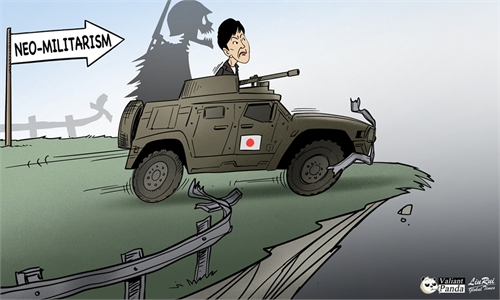
Yet what deserves greater vigilance is not this recycled "China threat" rhetoric. On the surface, the National Disaster Management Agency is tasked with developing disaster mitigation plans, coordinating emergency responses and addressing geological disasters. However, against the backdrop of claim that "Taiwan contingency" could constitute a "survival-threatening situation" for Japan, the nationwide disaster management network, extending across all prefectures and reaching ordinary citizens, is quietly being repurposed. The mobilization capabilities originally designed for evacuations, emergency accommodation, supplies distribution and maintaining public order are gradually being redirected toward "mobilizing society in the name of security against China." Beneath the guise of disaster preparedness lies a framework for nationwide mobilization in service of security objectives. Japan's real aim is not simply disaster prevention, but the advancement of "neo-militarism" under the banner of disaster management.
This year marks the 80th anniversary of the promulgation of Japan's pacifist constitution. Right-wing forces led by Takaichi are racing to seize the current political window to push constitutional revision, attempting to add an "Article 9-2" explicitly enshrining the constitutional status of the Self-Defense Forces, thereby removing the constraints of Article 9 at the constitutional level. On one hand, they are pushing for constitutional revision; on the other, they are building a unified, nationwide disaster mobilization command structure. These two tracks reinforce each other, forming a fast lane for Japan's pursuit of "neo-militarism."
Asian neighbors must remain highly vigilant against these moves, which use "disaster preparedness" as a pretext for military expansion. After all, "neo-militarism" is not merely a disaster for humanity, but a disaster for civilization itself.
RELATED ARTICLES