Egyptian guide Abbas Sayed tells how BRI helps transform his life and connect two great civilizations
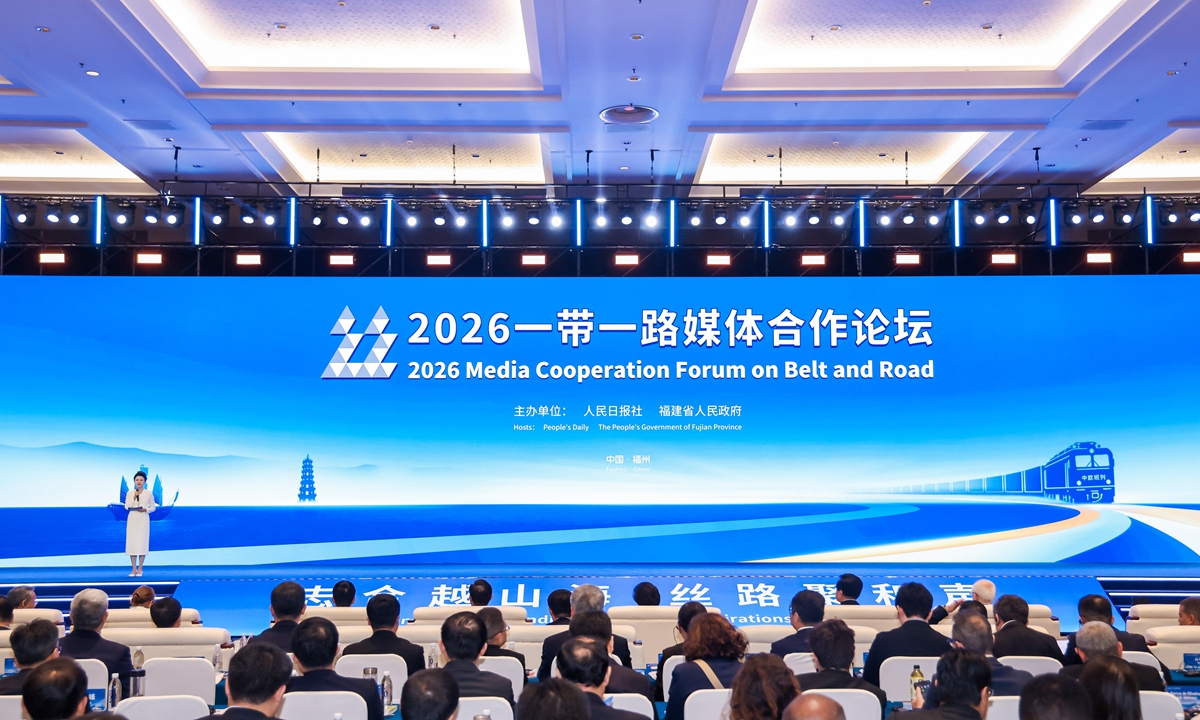
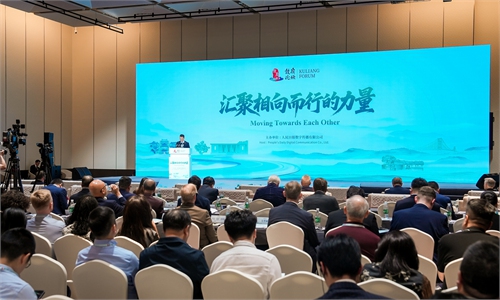
The 2026 Belt and Road Media Cooperation Forum is held on November 3, 2026 in Fuzhou, East China's Fujian Province. Photo: Courtesy of organizers
A playful question caught Abbas Sayed, a Chinese-speaking Egyptian tour guide, off guard - or at least it seemed that way at first. Asked his age using an old-fashioned Chinese expression that even native speakers rarely say in everyday conversation, Sayed understood it immediately and replied, without hesitation, that he was born in 1984. His immediate response, revealing his command of Chinese, was genuinely impressive.The 2026 Belt and Road Media Cooperation Forum opened on Tuesday in Fuzhou, East China's Fujian Province, bringing together more than 200 foreign delegates representing 182 media outlets and institutions from 100 countries, as well as international and regional organizations. Sayed numbered among them.
From entering a Chinese-language classroom in 2002 to visiting China twice in 2026, Sayed's journey has unfolded alongside the development of the Belt and Road Initiative (BRI). A People's Daily profile published three years ago captured his feelings in its headline: "My life has been enriched by the Belt and Road Initiative."
The story behind those words began more than two decades ago.
A bold beginning
"My family always told me that Chinese was the most difficult language in the world. But I wanted to prove that if you dare to try and believe in yourself, no challenge is insurmountable," Sayed told the Global Times.
In 2002, he enrolled in the Chinese Language Department at Ain Shams University in Egypt. Three months later, he made an unusual decision: to stop speaking Arabic, his native language, for a while.
"My classmates didn't want to speak Chinese with me because it was too difficult. That was fine. I just talked to myself," he recalled.
At the time, he had no career plans in mind. "I had no expectations or specific goals. Finding a job that required Chinese was extremely difficult back then. I just wanted to prove that I could master one of the world's most difficult languages."
After graduation, he worked as a tour guide and set himself an ambitious goal: to one day serve as a guide for the Chinese president. He later joined the Chinese Embassy in Egypt and frequently gave presentations at the China Cultural Center in Cairo, introducing Chinese culture to Egyptian children in a room known as the "China House."
In 2012, a People's Daily reporter photographed him sharing Chinese stories at the center. The picture was published under the title "Discovering China Here" - an early recognition of his efforts to bring the two cultures closer.
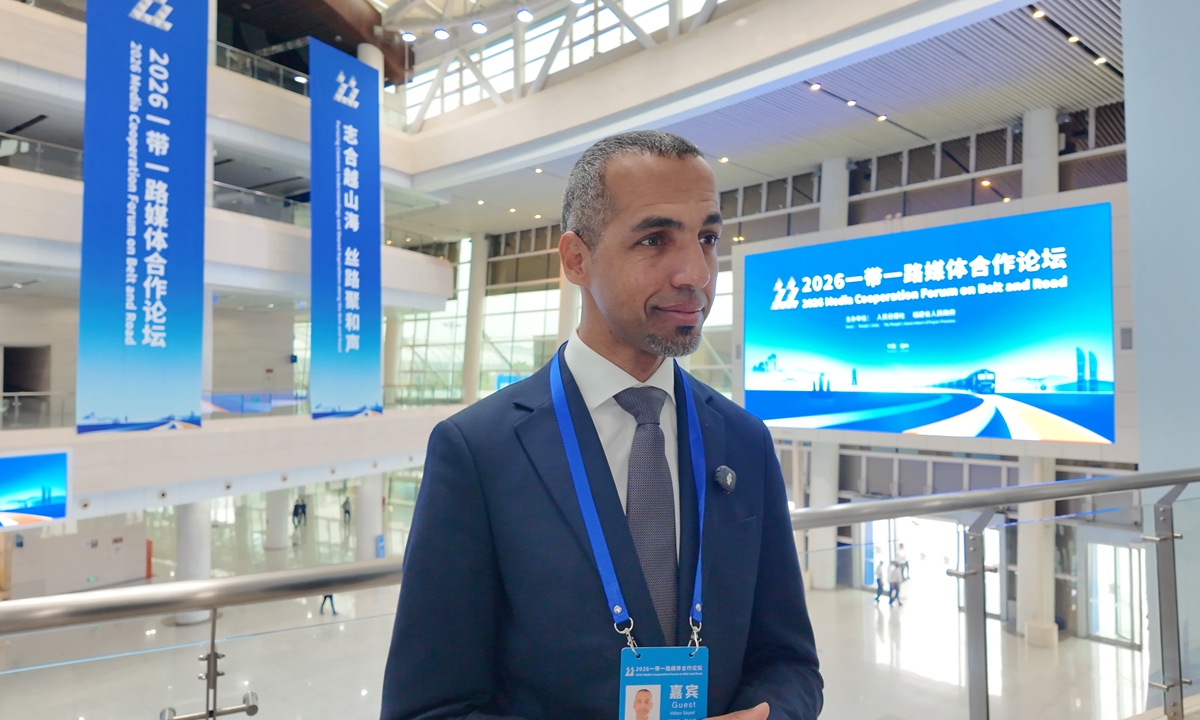
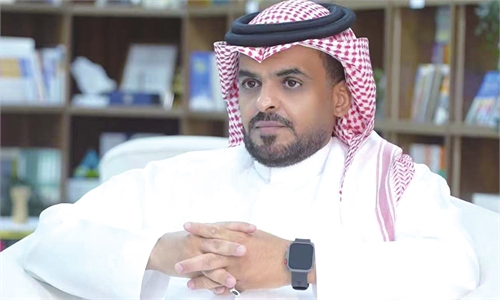
Abbas Sayed Photo: Yu Jiayin/Global Times
A turning pointFor Sayed, the real turning point came in 2013, when China proposed the BRI.
"Without the Belt and Road Initiative, I wouldn't be in China today," he said.
In 2026, he visited China twice, first for a BRI youth training program and then for the media cooperation forum in Fuzhou.
As China-Egypt cooperation expanded, Chinese also became an increasingly valuable professional skill in Egypt. Sayed cited the Central Business District in Egypt's New Administrative Capital, a flagship project linking the BRI with Egypt's Vision 2030, as an example. Construction began in 2018 under a Chinese construction company.
"Because of this project, people who could speak Chinese could find work as translators," he said. "Without the BRI, our opportunities might have remained largely limited to tourism. But now they extend to industry, trade, transportation and infrastructure."
Sayed's own career has evolved alongside these changes. He now guides Chinese visitors through Egypt's pyramids and introduces them to the civilization of the pharaohs. Drawing on historical references familiar to Chinese travelers, he makes ancient Egyptian history more accessible. When introducing China to Egyptians, he takes a local perspective to help them better understand Chinese culture.
A language he once learned simply to challenge himself has become the foundation of a career connecting people from two countries.
Finding common ground
Throughout the interview, Sayed repeatedly returned to one word: connection. But he noted that connecting with others begins first with understanding oneself.
"When I was at university, many people couldn't understand why I kept speaking Chinese. I told myself to accept who I was and keep going," he said.
Over the years, he has also learned to embrace his imperfections and shortcomings, becoming more open-minded and confident.
During the interview, when introduced to the Chinese expression "ziqia," which describes a sense of inner harmony and consistency, Sayed immediately wrote it down.
He sees this idea as relevant to the BRI itself. "People first need to understand themselves. Only then can they reach out to others and build connections between countries. You have to find yourself before you can understand the BRI," he said.
His approach to cultural exchange has also evolved. Beyond introducing ancient Egyptian civilization, he now hopes to present a fuller picture of modern Egypt while drawing connections between China's ancient heritage and contemporary development.
In September, another long-held dream came true: He served as a guide for the Chinese president. Later, the People's Daily published a third profile of him, documenting his journey from 2012 to 2026.
The experience also gave Sayed a broader ambition: He hopes the BRI will inspire more people like him to become bridges between cultures.
"I have always seen myself as just one representative. There are many others like me. I hope more young Egyptians will learn Chinese, and more young Chinese will take up Arabic. I want to see young people build bridges in their own ways. That is how the next generation can bring civilizations closer," he said.
Bridges beyond borders
At the Fuzhou forum, Sayed met fellow media professionals from the UAE, Saudi Arabia and Europe, whose encouragement strengthened his determination to inspire more young people to take part in cultural exchanges.
"The BRI needs more people like me who can build connections. We need more 'Abbases' to move forward," he said.
As Sayed said in his forum speech, "When people talk about the BRI, they often think of major projects, trade routes, ports and high-speed railways. But today, I want to talk about its human dimension - the real arteries that connect the hearts and minds of our two peoples: media and cultural exchanges."
More than two decades ago, the young man introducing China to a handful of Egyptian children in the "China House" could hardly have imagined sharing his experience at an international forum in Fuzhou.
Today, his journey shows how a language, a personal ambition and growing opportunities for cooperation can bring two peoples closer. And his story is still being written.
RELATED ARTICLES