Why China-India energy cooperation matters
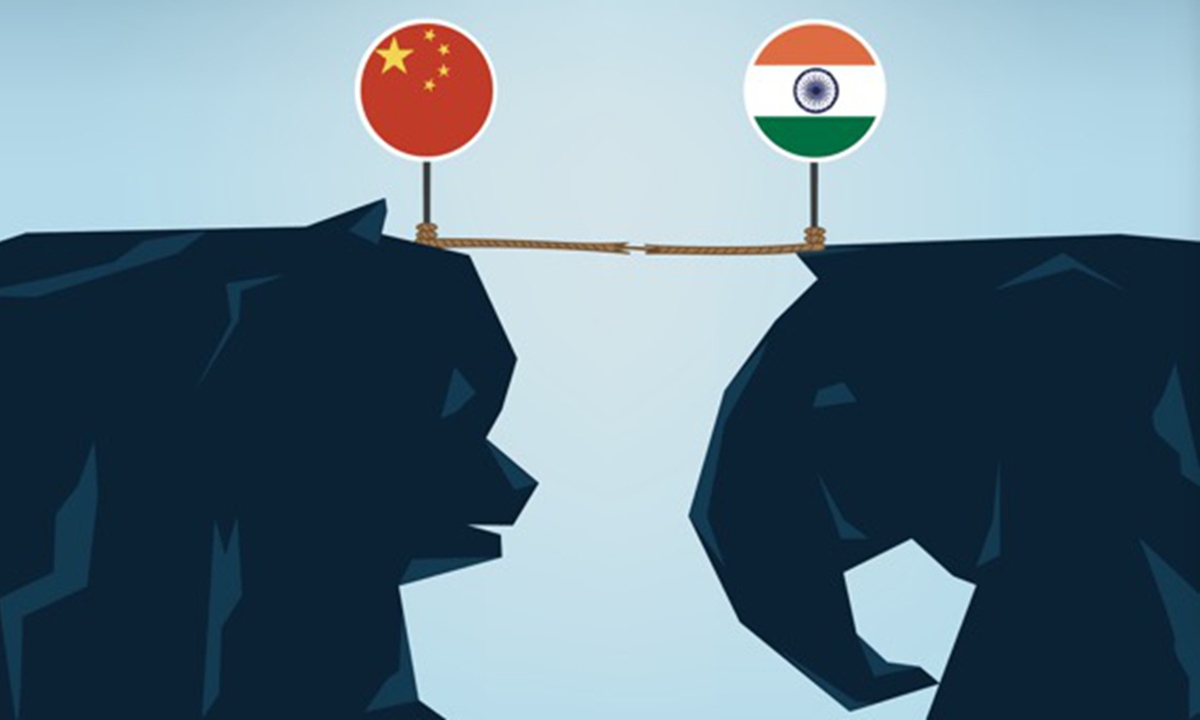
China, India Illustration: GT
The US-Israel-Iran conflict, alongside incidents involving vessels near the Strait of Hormuz, has heightened shipping risks and added uncertainty to the global energy outlook. Against this backdrop, a recent meeting in Beijing between Vikram Doraiswami, India's ambassador to China, and Wu Junli, chairman of PetroChina International, deserves closer attention. Earlier, Dai Houliang, chairman of China National Petroleum Corporation, also met India's Union Minister for Petroleum and Natural Gas Hardeep Singh Puri in New Delhi. These meetings gave the two sides opportunities to discuss market developments and better understand each other's concerns, underscoring the value of diplomatic engagement and practical cooperation amid growing uncertainty.
China and India are among the world's largest crude oil importers. For both countries, stable and affordable energy supplies are essential to economic stability and sustained growth. Supply disruptions or sharp price increases could increase import bills and inflation, raise business costs and undermine market confidence. Ongoing instability in the Middle East further highlights the importance of resilient supply chains and secure shipping routes.
Recent Indian media coverage illustrates the practical interdependence of the two markets. The Indian Express reported earlier this year that China has cut down on its crude oil imports amid the Strait of Hormuz crisis, blunting the oil shock for India and other Asian refiners.
India's energy procurement has also faced considerable external pressure. Since the Ukraine conflict began, Washington has repeatedly pressured India over its purchases of Russian oil, linking the issue to tariffs and trade talks. Subsequent shifts in tariff measures, including the imposition of additional duties and the granting of exemptions, have added uncertainty in India's energy planning. Regular exchanges and pragmatic cooperation between China and India could broaden their supply sources and market options, contributing to greater stability in the regional energy market.
China and India have already identified areas for energy cooperation. At the Sixth China-India Strategic Economic Dialogue in 2019, the Energy Working Group identified renewable energy, clean-coal technology, smart grids and grid integration, smart meters, and e-mobility as areas for collaboration. The dialogue has not reconvened since 2019, limiting continuity at the working-group level. Energy issues have nevertheless featured in multilateral discussions such as BRICS. Recent bilateral meetings in New Delhi and Beijing could help restore regular communication.
China's influence on global energy markets reflects not only its vast consumption and import demand, but also its investment, equipment manufacturing and technological innovation. The International Energy Agency has noted that China has been instrumental in bringing down costs worldwide for solar PV, with multiple benefits for clean energy transitions. Meanwhile, India's renewable energy market is also expanding. Combining China's supply-chain and technological strengths with India's growing market and demand for clean-energy applications could support technical exchanges, joint research and commercial cooperation, while advancing the global clean-energy transition.
Solar and wind power, energy storage, grid management and energy efficiency offer practical areas for cooperation. The two sides could conduct joint research, technical exchanges, industry partnerships and pilot projects tailored to local conditions. Such efforts could test viable models and foster projects with both commercial value and social benefits.
Cooperation on conventional energy is equally important. Government departments, state-owned oil companies, refiners, shipping companies and market participants in both countries could hold regular consultations on supply risks, transport and insurance constraints, refining needs, and emergency preparedness. When market volatility intensifies, timely exchanges could help governments and businesses adjust procurement, shipping and production plans, strengthening supply-chain resilience and supporting economic stability.
Beyond bilateral cooperation, China and India could coordinate through BRICS and other multilateral forums to support open trade, secure maritime routes and ensure stable, predictable energy flows. They could also work together to establish a standing dialogue among Asia's major energy importers to develop shared positions on fair access to global markets and strengthen energy-importing countries' voice in global governance. Such coordination could help foster more balanced and resilient energy markets.
Energy cooperation offers a practical entry point for broadening engagement between China and India. Recent meetings have opened the way to further exchanges and could lay the groundwork for wider consultations among Asian energy consumers. Sustained communication and steady progress on practical cooperation could strengthen both countries' energy planning, create opportunities for businesses and researchers, and give global markets greater predictability.
The author is an associate professor and coordinator at the China Center for South Asian Studies, Sichuan University. opinion@globaltimes.com.cn
RELATED ARTICLES