Shanghai signs deals, Washington signs sanctions: 25 years after China joined the WTO, the world sees two logics
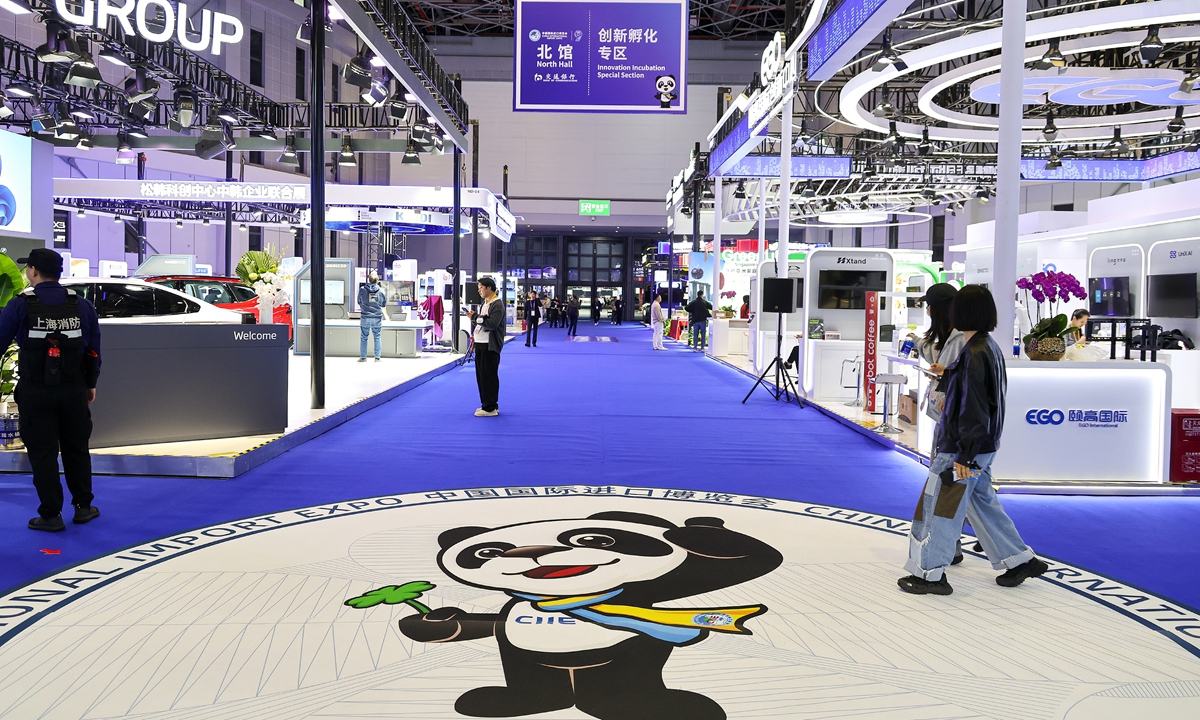
CIIE Photo: VCG
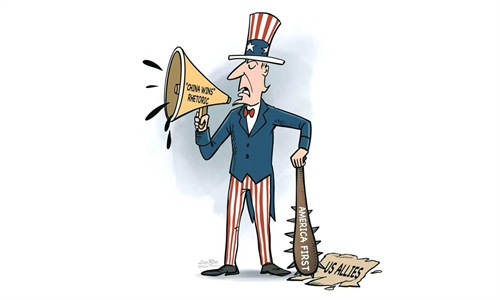
On the 25th anniversary of the decision to admit China to the WTO at the Doha Ministerial Conference, the US-China Economic and Security Review Commission (USCC) posted a tweet claiming that "years of engagement and pressure failed to change Beijing's approach." It accused China of "distorting global markets, eroding US manufacturing, and undermining American businesses" through protectionism.
Interestingly, on the very day this tweet was posted, the 9th China International Import Expo (CIIE) concluded in Shanghai. The expo drew participants from 162 countries and regions, with exhibition space exceeding 440,000 square meters. The total value of intended transactions reached $85.45 billion, a 2.3 percent year-on-year rise, and 485 new products made their debut at the event.
China has demonstrated through concrete actions that its market remains open. This is not just a slogan; it is a window of openness that continues to swing wide for the world.
On this side of the window are orders, product debuts, and the sincerity of an open market. Customs data from November 10 speaks volumes: In the first 10 months of 2026, China's exports grew by 17.6 percent year-over-year, while imports rose by 23.6 percent - with imports growing 6 percentage points faster than exports.
On the other side of the window, the picture could not be more different. The EU's Carbon Border Adjustment Mechanism (CBAM) officially entered its paid implementation phase this past January. Meanwhile, citing "overcapacity" and "forced labor," the US has successively launched Section 301 investigations against 60 economies, including China, and ramped up tariff barriers, building ever-higher trade walls.
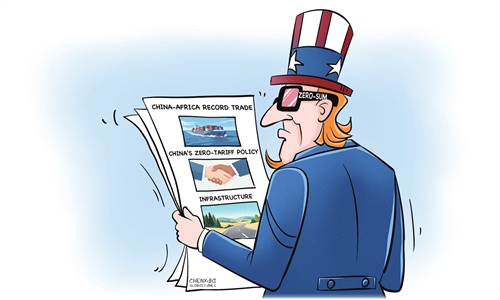
This exposes a reality: For certain countries, the "free trade" they seek comes with a precondition - they must win. Once they find themselves losing, the rules can be changed, tariffs can be imposed, and investigations can be launched. The "rules-based international order" is nothing more than a euphemism for "my way or the highway."
"The wave of openness at the CIIE coexists with and plays out against the trade barriers erected by the US and the EU - a microcosm of the most significant contradiction in global trade today," Li Yong, an executive council member of the China Society for WTO Studies, told the Global Times on Wednesday.
"The original intent of trade rules should be to drive the qualitative and quantitative growth of trade and promote the free flow of goods, rather than to artificially create obstacles or erect exclusionary barriers," said Li.
Twenty-five years since China's accession to the WTO, who is actually honoring their commitments, and who is changing the rules?
For China, the answer is found in the exhibition booths at the CIIE; for the US and EU, the answer lies in Section 301 and CBAM.
China has generated $85.45 billion in import orders during the CIIE, fulfilling its commitment to openness through market dividends. Since joining the WTO, China has reduced its overall tariff rate to 7.3 percent, eliminated all foreign investment access restrictions in the manufacturing sector, implemented zero tariffs on 100 percent of tariff lines for all least-developed countries with which it has diplomatic relations, and expanded its zero-tariff treatment to cover all 53 African countries with which it has diplomatic relations.
Li stated that the most authoritative and objective measure of whether an economy is adhering to its multilateral commitments upon accession to the WTO is the organization's long-term official assessment. Over the years, the WTO's overall evaluation of China's fulfillment of its WTO obligations has consistently been highly positive, demonstrating that China has fully and even exceedingly fulfilled its accession commitments and strictly adhered to multilateral trade rules. The US side's statements are entirely one-sided and constitute a smear campaign that does not reflect the facts.
Since China joined the WTO, the concept of openness has evolved. A high-level opening-up has never been a mandatory obligation for any single country, but rather a multilateral responsibility that all WTO members should uphold.
Over the past 25 years, China has delivered tangible outcomes including $85.45 billion worth of CIIE deals to prove that openness delivers win-win results. Some countries, by contrast, resort to trade barriers to show their priority is not whether rules are fair, but whether they remain on the winning side.
The world has clearly seen two sets of logic at play: One is focused on making the pie bigger, the other on snatching others' share of the pie. One is signing trade deals; the other is imposing sanctions. The lights have dimmed in Shanghai's exhibition halls, yet the doors remain open. The tweets from Washington have run their course, yet more locks keep being added.
Which logic will stand the test of time? The market is already casting its vote with orders.
RELATED ARTICLES