Experts dismiss 'silent military drills' hype, say 'Taiwan independence' provocations are real risk
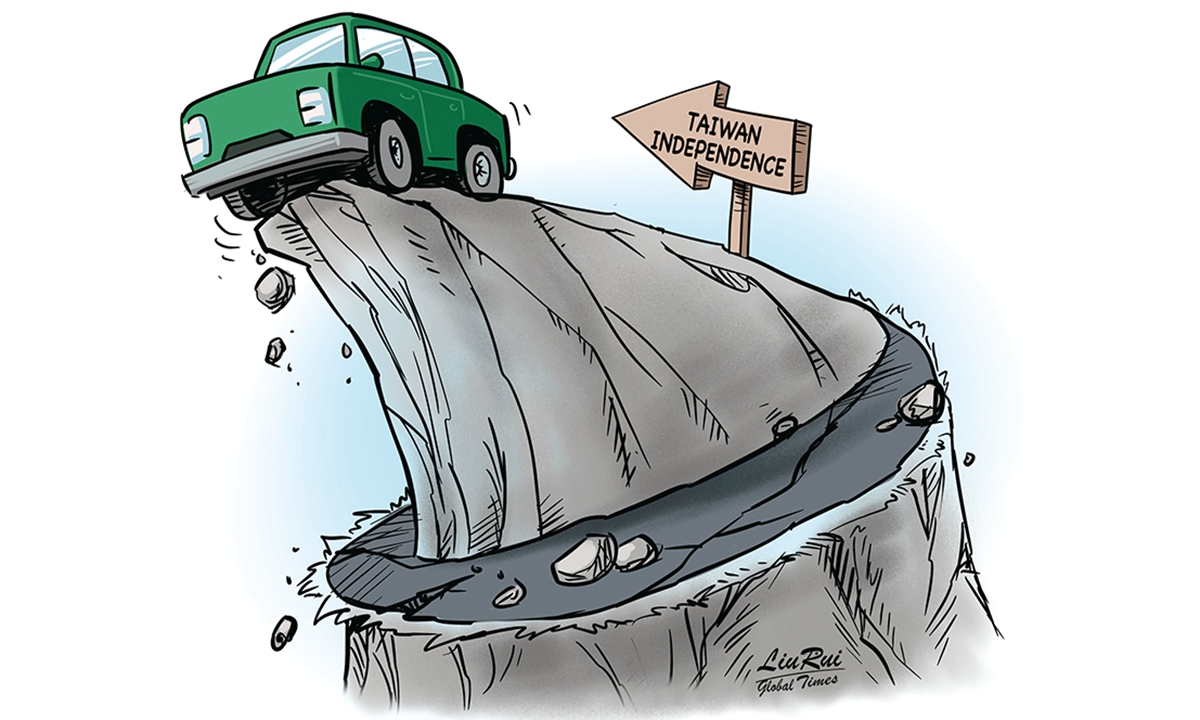
Illustration: Liu Rui/GT
Some Taiwan regional media outlets and political figures have recently hyped the PLA's maritime activities and amplified the narrative of so-called "silent military drills" in a politically calculated attempt to stoke public fears.
Chinese mainland experts told Global Times that the PLA has full authority to decide whether and when to conduct military exercises and whether to release information about them, stressing the real risk of conflict comes entirely from the provocations of "Taiwan independence" separatist forces.
Head of the regional defense authority of Taiwan Koo Li-hsiung, claimed on Tuesday that the Liaoning aircraft carrier group and other vessel formations were conducting area denial drills in the Western Pacific, claiming that the activities were intended to exert military deterrence and undermine peace and stability in the Indo-Pacific region, according to Taiwan's military news agency.
Taiwan regional media report also cited Joseph Wu, a die-hard "Taiwan independence" secessionist, who on Tuesday last week claimed that more than 100 PLA Navy and China Coast Guard (CCG) vessels were operating in the western Pacific.
The PLA has full authority to decide whether and when to conduct military exercises and whether to release information about them. Such decisions are made independently based on its own defense needs and the situation across the Taiwan Straits, some observers noted.
The routine maritime patrols by PLA naval vessels and law enforcement patrols conducted by the CCG are legitimate arrangements within China's sovereignty, which are reasonable, lawful and beyond questioning.
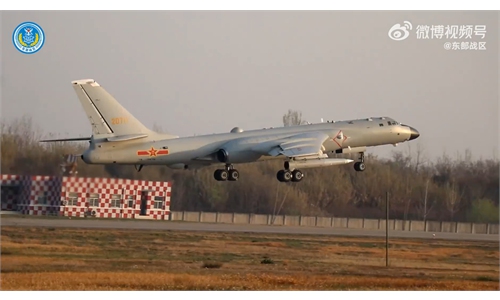
China's Ministry of National Defense spokesperson has previously said that the Liaoning carrier group's training in relevant waters of the Western Pacific is an annual routine drill by the Chinese military, aimed at testing and improving the carrier group's far-sea combat capability. It does not target any specific country or party and complies with international law and practice.
Certain forces in Taiwan island have deliberately portrayed legitimate activities, which have been clearly characterized by the authorities and conducted as part of routine training arrangements, as some kind of "mysterious, unannounced military drills." Their repeated speculation and sensationalization around this fabricated concept are essentially aimed at stoking public fears, experts said.
Military affairs expert Zhao Xiaozhuo told the Global Times that military exercises do not always need to be publicly announced or given specific code names.
Relevant military exercises are aimed at separatist forces seeking "Taiwan independence," Zhao said, adding that opposing separatism is key to safeguarding peace across the Taiwan Straits.
Zhang Jiadong, a professor at Fudan University's Center for American Studies, said many training and patrol activities do not require public announcements or official codenames.
The root cause of risks across the Taiwan Straits, however, lies not in the mainland's routine military training but in continued provocations by "Taiwan independence" forces. As long as separatist adventurism is abandoned, the two sides have a basis for maintaining peace and stability, and ordinary people in Taiwan need not become overly anxious about routine military exercises, Zhang said.
RELATED ARTICLES