New evidence of the Japanese troops’ biological and chemical warfare crimes in China unveiled
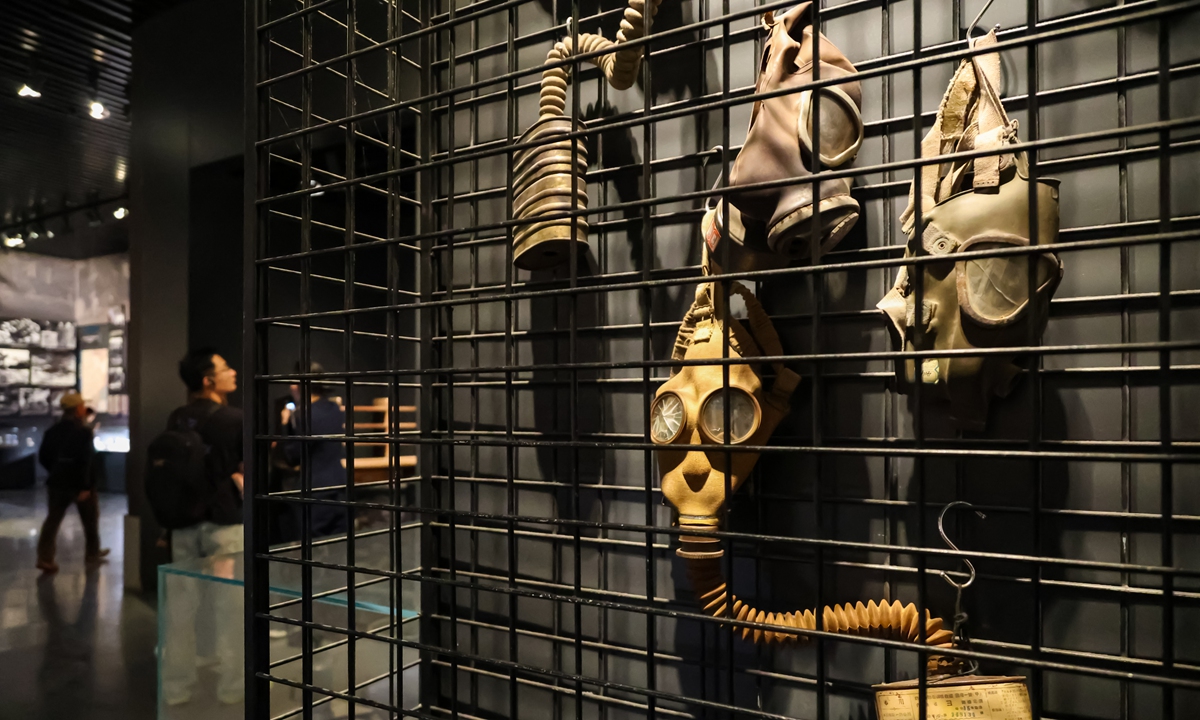
An exhibit depicting gas masks and other equipment used by Unit 731 at the 9.18 History Museum in Shenyang, Northeast China's Liaoning Province Photo: VCG
Marking the 80th anniversary of the opening of the International Military Tribunal for the Far East, or the Tokyo Trials this year, dozens of Chinese experts and scholars unveiled new evidence, discoveries and research findings on the Japanese military's biological and chemical warfare crimes in China, Xinhua News Agency reported on Thursday.
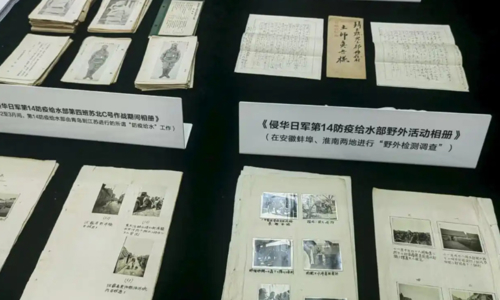
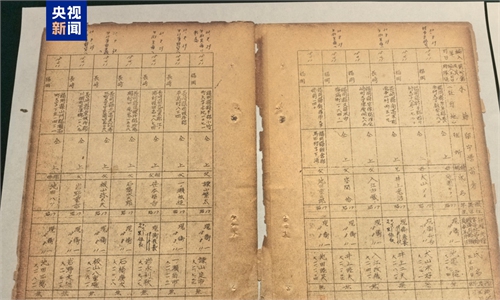
Jin Shicheng, a curator at the Exhibition Hall of Evidences of Crime Committed by Unit 731 of the Japanese Imperial Army, unveiled new findings from Unit 731 and Unit 516 archival records, revealing how Unit 516's "residual affairs cleanup unit" was tasked with handling matters in the aftermath of Japan's defeat.
According to Jin, the roughly 70-member unit was responsible for transporting, burying and abandoning chemical weapons before the main Japanese forces retreated. Records about the unit's members may offer clues to the burial sites of chemical weapons left behind by the Japanese military, potentially offering a breakthrough in locating the weapons.
As the first post-World War II tribunal specifically established to try Japan's biological warfare crimes, the Khabarovsk Trial filled a gap left by the Tokyo Trials, which failed to bring the members of Unit 731 to justice for their atrocities.
Gong Wenjing, director of the international research center on Unit 731 at the Harbin Academy of Social Sciences, said that cross-referencing archives from China, the US, Japan and Russia has strengthened the body of evidence documenting the Japanese troops' biological warfare operations.
Declassified Russian archives on the Khabarovsk Trial, historical materials handed over by Russia to China, together with declassified US documents and Japanese historical records, are gradually helping piece together the full picture of the Soviet Union's trial of Japanese war criminals responsible for biological warfare.
Modern biotechnology is unlocking evidence from physical remains. Soil tests by Chinese researchers have provided biological evidence that Unit 731 conducted anthrax weaponization research in the area around the Sifang Building area of its former headquarters.
Wang Meng, a history professor at Wuhan University, outlined two key research findings. Victims' remains unearthed at the former Japanese army medical school site in Tokyo bore widespread signs of cutting, drilling and brain surgery, demonstrating the Japanese military's cruel human experiments. Cholera toxin genes detected in the skull remains of 41 victims unearthed at Jiuhua Mountain in Nanjing have provided further evidence of Japanese military human experiments in East China.
As Japanese right-wing forces seek to downplay, distort and even deny the crimes of the Japanese Imperial Army's bacteriological and chemical warfare during its invasion of China, participating experts hold that in-depth exploration of archival materials is key to building a body of evidence and refuting historical nihilism.
Global Times
RELATED ARTICLES