China EU Photo:VCG
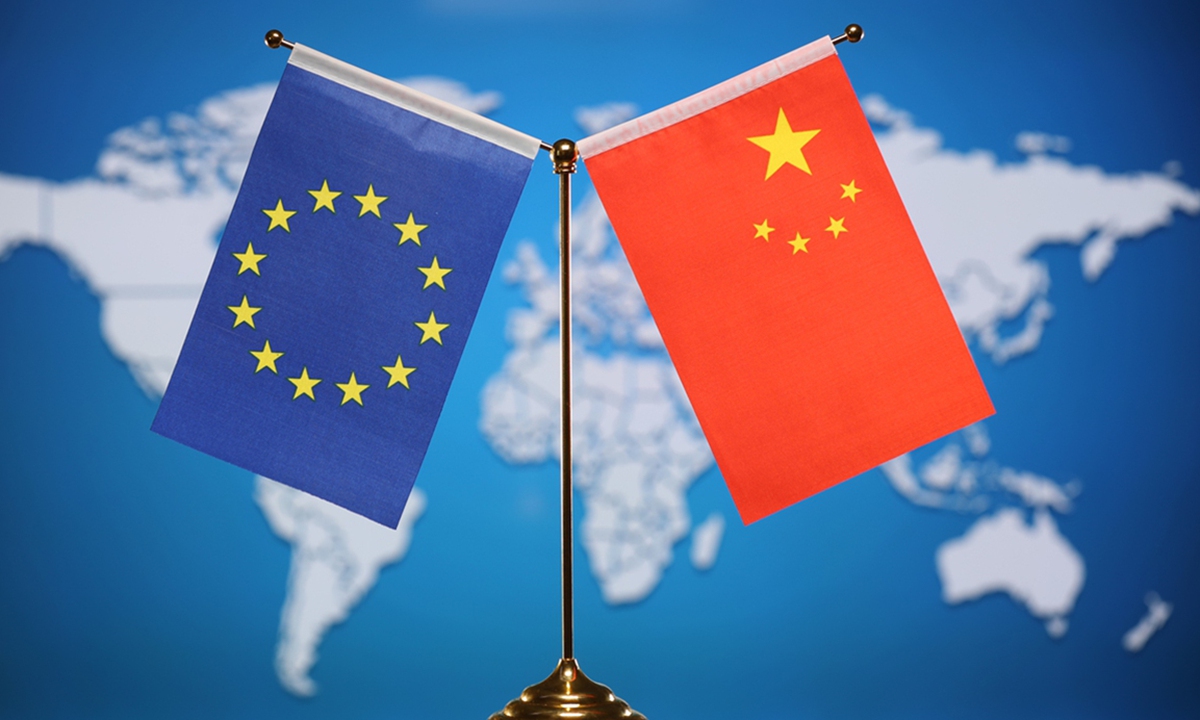
At the second meeting of the China-EU trade and investment consultation mechanism held recently, China and the EU reached an agreement covering trade and investment balance, export controls, intellectual property rights and WTO reform. Yet, even as the two sides make progress through dialogue, Brussels has adopted a so-called "dual-track approach" in its policy toward China: engaging in dialogue on the one hand, while preparing to introduce new restrictions on the other.
This dual-track approach reflects the contradictory approach of the EU, which seeks to maintain its extensive and mutually beneficial economic and trade relations with China while simultaneously pursuing its geopolitical "strategic autonomy," compelling it to align itself with certain US policies toward China.
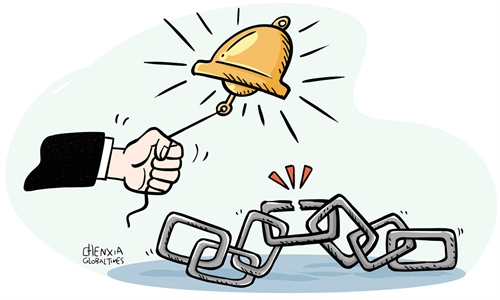
Many critics, including Chinese officials, some European businessmen, independent economists and myself, take a negative or sceptical view of this practice. The EU's dual-track approach is a convoluted, self-interested policy designed to maximize its gains, balance competing forces and justify its position to the US. In economic and diplomatic practice, however, it faces the uncomfortable reality of logical inconsistency and policy effects that cancel each other out.
Seeking cooperation on political and global issues while imposing economic restrictions severely undermines bilateral trust. This strategy of "wanting to have it both ways" is difficult to implement in practice and could risk triggering a trade war, as such practices are often regarded as provocative. If excessive restrictions provoke reciprocal countermeasures, Europe's export sector will ultimately pay the price.
The debate over the so-called "China Shock 2.0" remains divisive among international economists and politicians. However, the negative consequences of restricting Chinese products are already becoming apparent. In recent years, the EU has increasingly resorted to trade defense instruments such as anti-subsidy investigations and customs duties. Such protectionist measures could prove counterproductive.
Restricting affordable Chinese green products would raise costs for the EU's much-desired "green transition" and its carbon neutrality goals. Tariffs could also increase supply chain costs for European companies such as BMW and Volkswagen, which have substantial investments and production facilities in China, while risking provoking Chinese countermeasures against European exports. Moreover, shielding domestic industries from competition risks weakening their incentives to innovate and improve efficiency, ultimately undermining Europe's long-term competitiveness.
A stable economic relationship between China and the EU matters well beyond the two sides themselves. As two of the world's leading economies and major centers of growth, they are fundamentally important to the global economy. Stronger ties between the two sides can help sustain the multilateral trading system, drive global recovery and address shared challenges. They can also help counter the tide of protectionism, strengthen global supply chain resilience, stimulate cross-border investment and trade, generate spillover benefits for third parties, promote reform of international financial and trade institutions, and build a more balanced multipolar system of checks and balances.
Therefore, the priority for both sides now is to turn dialogue into practical results. First, the EU and China should implement the 16 points of consensus reached at the meeting in October, make full use of the working groups and promote the swift delivery of measurable practical outcomes through mechanisms such as electric vehicle price undertakings and dialogue on the regulation of foreign subsidies. Both sides should uphold multilateralism and the rules-based international trading system, and make full use of high-level communication channels, such as the forthcoming ministerial video conference in January.
A transparent communication mechanism for export controls and regulatory compliance should also be established. The "green channel" for export licences for rare earths and permanent magnets destined for Europe should be processed; policy coordination and transparency concerning licences for dual-use goods should be improved; and exchanges of information between governments and companies should help reduce misjudgements and compliance costs.
The EU should avoid artificially restricting normal economic and trade exchanges with China, including those involving hybrid vehicles and related industries. China, for its part, can combine increased imports with improvements to the business environment to promote more balanced growth in bilateral trade.
Several sectors provide particularly strong potential for restoring constructive economic and trade cooperation. These include new energy and the green, low-carbon transition, as well as the electric vehicle and battery supply chains. The two sides should hold in-depth dialogue on electric vehicle price undertakings, trade in hybrid vehicles and related matters, while exploring supply chain collaboration and the mutual recognition of standards. It is also important to intensify practical cooperation on addressing climate change, research and development in green technologies, and the circular economy.
Ultimately, the EU should not view its response to China as a high-stakes gamble. Striking a balance will test the EU's political wisdom and judgment while profoundly influencing the global green transition and patterns of international trade. Cooperation, rather than pressure, should remain the foundation of China-EU relations.
The author is an Italian expert on international affairs and Honorary Professor at the Peking University. opinion@globaltimes.com.cn
RELATED ARTICLES