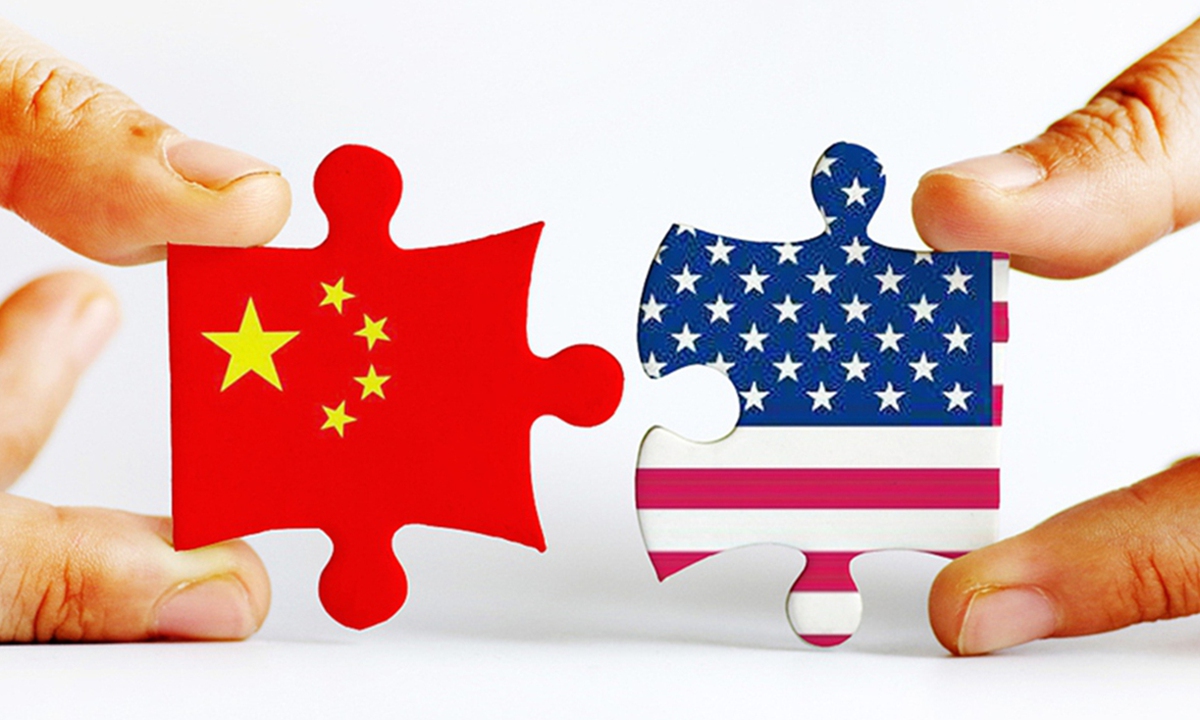
China US Photo: VCG
With the clock ticking down toward the 2026 APEC Economic Leaders' Meeting, a call between the Chinese and US foreign ministers dominated media coverage on Thursday, which zeroed in on the priorities each side emphasized and whether a potential China-Russia-US trilateral meeting would take place on the sidelines of next week's meeting.
Chinese analysts said these differing priorities reflect the fact that while both sides seek to stabilize relations, they still have different considerations on specific issues, and how to address each other's concerns on equal terms is a question to be resolved in the future. Washington is seeking to use this year's APEC meeting to advance its own priority agenda, and appears to believe that, if this trilateral meeting materializes, it would be an opportunity to showcase diplomatic gains, they added.
Reciprocity the next test
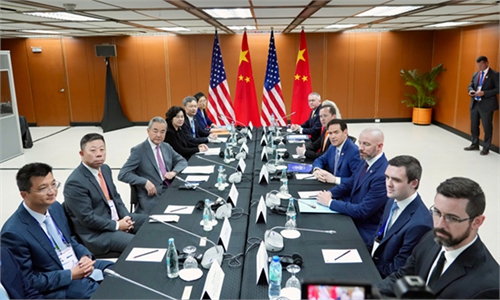
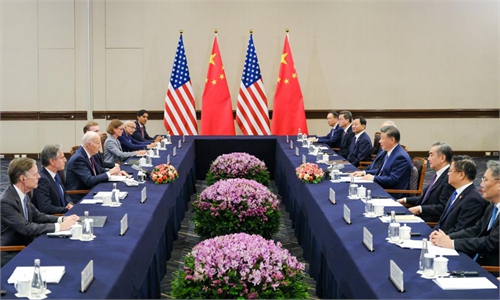
Chinese Foreign Minister Wang Yi on Wednesday held phone talks with US Secretary of State Marco Rubio. The two sides had an in-depth exchange of views on China-US relations and the interaction between the two heads of state, Xinhua reported.
During the talks, Wang, also a member of the Political Bureau of the Communist Party of China Central Committee, said that the two heads of state agreed to enrich the connotation of a new vision of China-US relations, providing clearer strategic guidance for exploring a correct approach for the two countries to get along with each other.
China's Foreign Ministry described the phone talks as "positive and constructive" in a statement published on Wednesday. The US State Department readout also noted that the two recalled the leaders' "commitment to a constructive relationship of strategic stability on the basis of respect, fairness, and reciprocity."
Yang Xiyu, a senior research fellow at the China Institute of International Studies, told the Global Times on Thursday that this call sends a positive political signal. It reflected a shared desire on both sides to build on the progress achieved at the previous leaders' meeting and to keep advancing China-US relations.
Following the building of a constructive China-US relationship of strategic stability, the call demonstrated a common willingness to inject more substantive content into that relationship through concrete cooperation and effective management of differences, and to ensure that it truly takes root and delivers tangible results, Yang added.
While China and the US share an intent to yield practical results under the framework of a constructive China-US relationship of strategic stability, their priorities over its specific components diverge.
The stable momentum of China-US relations has not come easily and is the two major countries' rational choice based on their respective and common interests, Wang said, according to the Chinese Foreign Ministry's statement.
China, having maintained a stable and consistent policy toward the US, is willing to strengthen communication and cooperation with the US side, properly handle differences and sensitive issues, support each other in hosting the 2026 APEC Economic Leaders' Meeting and the G20 Summit, and work to bring a constructive China-US relationship of strategic stability into effect and deliver results, Wang said.
Yang said China's core concern is the Taiwan question, and it demands that the US honor its commitments and strictly abide by the three China-US joint communiques. In the economic and trade sphere, China is likewise concerned about US trade-restrictive measures and supply chain stability, he added.
Wang's emphasis this time on properly handling differences and sensitive issues can also be understood as an early diplomatic signal aimed at prompting the US to take potential risks seriously and to strengthen communication and management before problems arise, Zhang Jiadong, a professor at the Center for American Studies, Fudan University, told the Global Times.
The US readout said that "they agreed on the importance of meaningful leader-level conversations to advance goals such as peace and denuclearization, including at any potential trilateral leaders meeting with Russia."
Reuters reported that "China's earlier readout of the call between [US Secretary of State Marco] Rubio and Wang made no mention of talks on denuclearization or a trilateral summit with Russia."
Zhang said that the divergent priorities laid out by China and the US stem from their respective roles and diplomatic objectives at the APEC meeting in Shenzhen. As the host, China's key priority is to create conditions for productive exchanges among leaders and advance global peace and stability, he said, adding that the US, by contrast, seeks to leverage this diplomatic gathering to push forward its own priority agendas.
Within a constructive China-US relationship of strategic stability, the two countries should build up results by proceeding incrementally, said Yang, stressing that China has maintained consistency and continuity in its policy toward the US, which also creates conditions for the two sides to identify areas of cooperation.
Trilateral meeting in focus
Apart from the bilateral ties between Beijing and Washington, some foreign media are closely watching the prospect of a trilateral encounter involving China, Russia and the US at next week's APEC gathering. From November 1 to November 12, Chinese Foreign Ministry spokespersons have taken five related questions, with consistent responses: "China is in communication with relevant parties regarding a meeting between the three heads of state."
The US readout said that they agreed on "any potential trilateral leaders meeting with Russia." In a Thursday report, Bloomberg led its headline with the prospect of the trilateral talks, noting that the US-China call "adds momentum" to a potential summit with Russia.
Zhang said Washington's push for the potential China-Russia-US leaders' meeting partly stems from its desire to notch up diplomatic wins on the global stage and project its diplomatic clout.
A trilateral meeting would carry substantial political symbolism, especially amid the current international landscape and the backdrop of US domestic politics. Both Russian and US leaders may seek to project diplomatic influence through such an encounter, according to Zhang.
The US may also hope the potential gathering can reinstate relevant dialogue mechanisms and put guardrails around risks tied to US-Russia relations and the Ukraine conflict, preventing the situation from spiraling out of control, said Yang.
Should trilateral talks take place down the line, they must be guided by the principle of addressing each side's concerns on a reciprocal basis, Chinese experts noted.