IN-DEPTH / IN-DEPTH
An 11-year-old Red Army soldier’s survival story reveals a caring spirit that endures today in a village doctor’s medicine kit
Warmth That Lasts
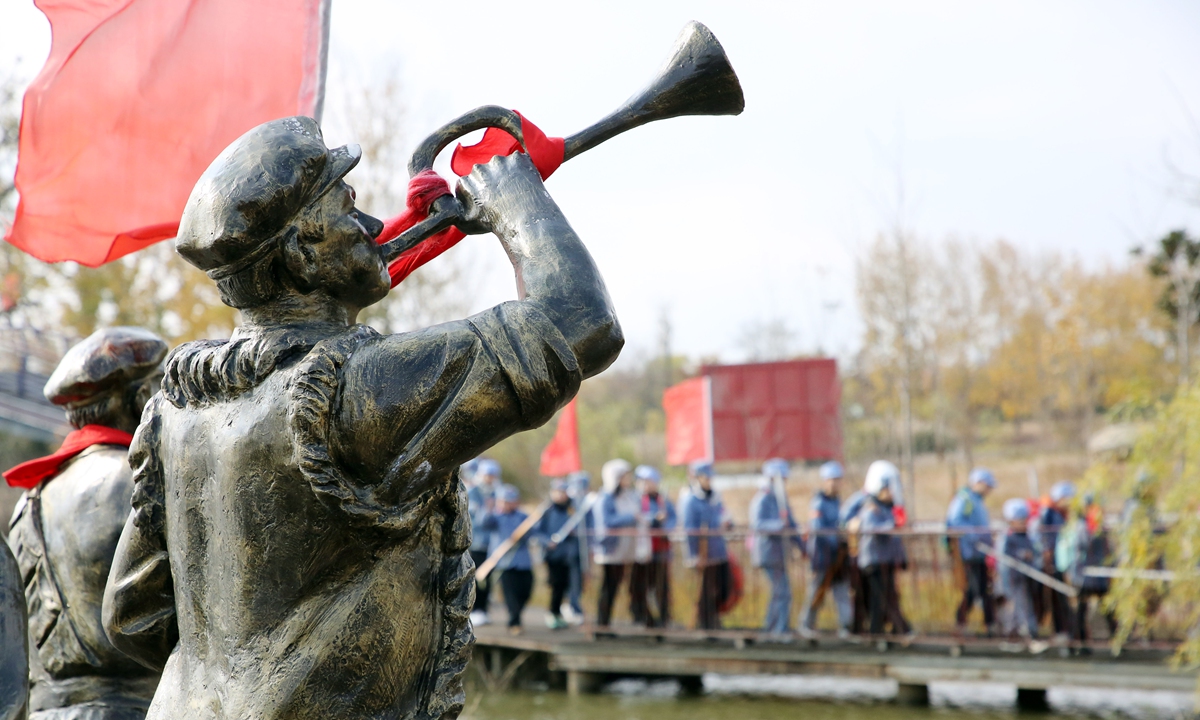
Children take part in a hiking march during a revolutionary education activity in Lianyungang, East China's Jiangsu Province, on November 18, 2026. Photo: VCG
Editor's Note:
The Long March was a military maneuver carried out by the Red Army (forerunner of the People's Liberation Army) from 1934 to 1936 that laid the foundation for the eventual victory of the Communist Party of China (CPC).
Each generation has its own "long march," and they should proceed in their own way. The year 2026 marks the 90th anniversary of the victory of the Long March. To explore its historical significance and enduring relevance, the Global Times launches the series "Journey: when post-90s meets 90th anniversary." Through personal memories, the descendants of Long March veterans reflect on the original ideals of the marchers and pose questions to today's youth. The post-90s respond with their own stories tied to the Long March spirit.
The second installment traces the story of Wang Xinlan, a young Red Army soldier who survived the Long March thanks to the care of her comrades. Her daughter, Xiao Xia, shares the lessons she has drawn from her mother's experience, while 1990s-born village doctor Yang Haitiao reflects on how the story inspires her own work in bringing healthcare to rural communities.
When 11-year-old Wang Xinlan, one of the youngest participants in the Long March, collapsed along the way, her fellow Red Army soldiers refused to leave her behind.
Wang had contracted typhoid fever just two weeks after the Fourth Front Army began its march. Her fever grew worse, and with no medicine or professional medical care available, those around her feared she would not survive.
Her comrades made a makeshift stretcher from branches and carried her for about a month. Eventually, Wang regained enough strength to get back on her feet.
Nearly a century later, Wang's daughter, Xiao Xia, still remembers the story as one of the most defining chapters of her mother's life.
"From the age of six, my mother was practically risking her life alongside adults in the revolutionary cause," Xiao told the Global Times. She added that she has long been struck by her mother's courage and resourcefulness, as well as the solidarity that made her survival possible.
Never left behind: A child on the Long March
Born into a family of scholars, Wang was drawn to the prospect of a new society in which everyone could enjoy a more equal and fulfilling life.
In the spring of 1935, following a battle along the Jialing River, the Fourth Front Army began its Long March. Wang, then just 10, joined a force of approximately 100,000 soldiers and personnel setting out on the arduous journey.
"The army was so enormous that you couldn't see either its head or its tail," Xiao recalled what her mother had told her. "My mother kept looking for her older brothers, sisters and other relatives in the sea of people, but how could she possibly find them?"
Wang was then assigned to a publicity troupe. Their instruments were not guns but clappers, gongs, cymbals, flutes and drums. They carried them on the march and performed for the troops, while also going onto the battlefield to help evacuate the wounded.
Too young to carry the injured herself, Wang helped older troupe members guide lightly wounded soldiers to safety. To keep up with the group, she was constantly running.
But only about two weeks into the march, Wang contracted typhoid and developed a high fever. Her fellow members took turns carrying her. As her condition deteriorated, she lost her hair and eyebrows, and eventually became so weak that she could no longer open her mouth.
With no medicine or professional medical treatment available, Peng Daohua, a woman in the troupe, chewed her own limited food into small pieces and managed to feed it to Wang by opening her tightly clenched jaw. Slowly, Wang began to recover.
Surviving the illness, however, was only the beginning. The army was suffering heavy losses, food was scarce and the troupe members were struggling to carry themselves, let alone a seriously ill child. Some suggested leaving Wang with a local family.
A leader of the Fourth Front Army insisted that no matter how difficult it gets, Wang must be carried forward. The order settled the matter. Wang's comrades continued carrying her for about a month, until she regained enough strength to walk.
"My mother rarely spoke to her children about the suffering she had experienced. It was only as I grew older that I began to appreciate the weight of those memories," Xiao said.
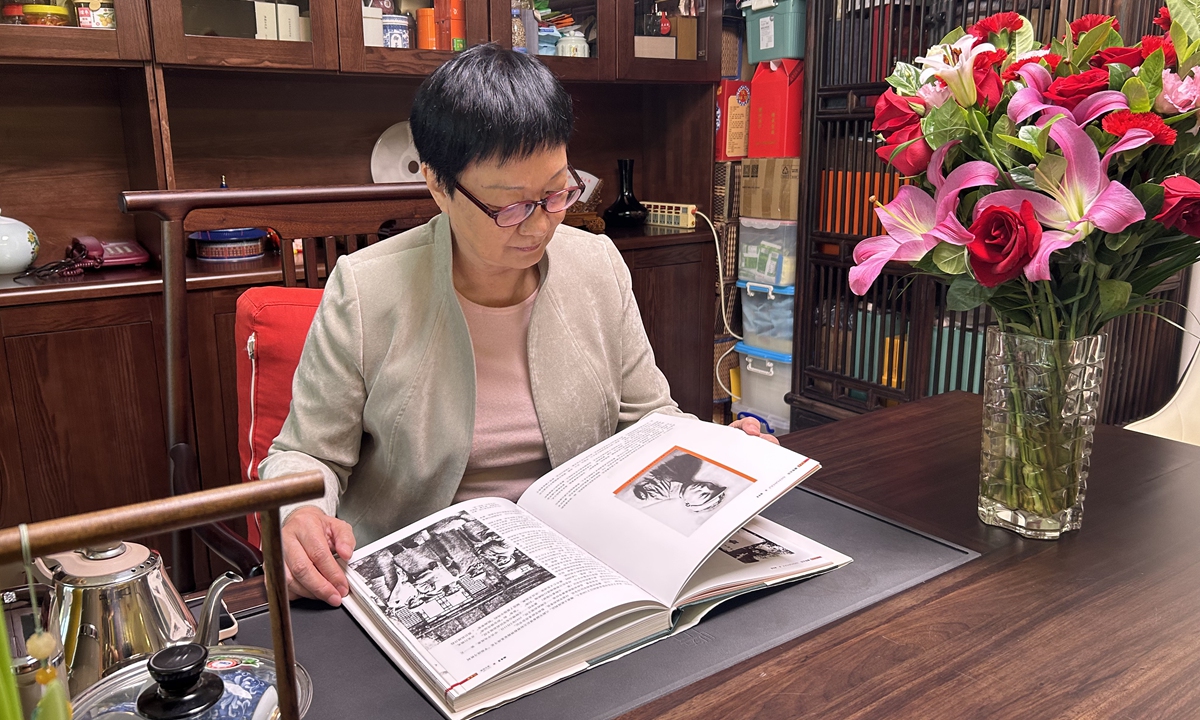
Xiao Xia Photo: Liang Rui/Global Times
Giving history a voice
Although Xiao's parents rarely spoke directly about the hardships they had endured, their values were conveyed through the way they lived and the things they did every day, she said.
Growing up in such an environment, she gradually developed a strong sense of responsibility. With a doctorate in ophthalmology and years of experience in medicine, Xiao has come to see her mother's experience through the lens of her own profession. To her, every life is precious, regardless of a person's background or status.
During the Long March, she said, the soldiers were all moving toward a common goal, and they understood that every comrade mattered. The determination not to abandon anyone, even under the most difficult circumstances, is a lesson that remains relevant today.
Her sense of responsibility has taken on a new form since her retirement. Born in 1953, Xiao has devoted more time in recent years to studying the history of the Red Army and collecting historical materials. Drawing on her family's experiences and her growing knowledge of the Long March, she began independently giving lectures across China to share its history and spirit.
"Perhaps I am working even harder at this than I did as a doctor," she said. "People like us are already in our 70s. If we don't tell these stories now, some things may never be passed on. I treasure every opportunity to give these talks, and I cherish every audience I meet."
Xiao was invited to speak at a university's opening ceremony in September. She saw it as an opportunity to bring the history closer to students at a pivotal moment in their lives.
"I felt that, at this important crossroads as they begin university, I needed to tell them what kind of path lies ahead of them, and how precious the life they enjoy today really is," she said.
To help students relate to the history, Xiao often draws attention to the ages of the young Red Army soldiers.
"Today, when I speak to young people, I tell them that 90 years ago, there was a group of young people, some 18 or 19, others just 13 or 14. Some were not even as tall as the rifles they carried, yet they took up arms against those who sought to invade and destroy the Chinese nation," she said.
"What were they fighting for? They dreamed of a society where ordinary people could live in peace, raise happy families, send their children to school and work toward a better future. They never got to see the life they envisioned, but that vision was what gave them the courage to risk everything. Their hopes helped make today's reality possible. Shouldn't we cherish that?"
Xiao told the Global Times that she has seen audiences respond emotionally to these stories. Whether she is speaking to students or officials, listeners often become visibly moved, with some shedding tears even before her lectures are over.
"To me, that means the stories have reached their hearts. They have become seeds of the same spirit, ready to be carried forward and spread further," she said.
A different generation, a shared responsibility
Like Xiao, others continue to find meaning in the Long March beyond its place in history. "I've come to better understand the profound sacrifices that were made, the extraordinary sense of unity and community that carried people forward, and the enduring spirit that continues to shape China's people, culture and development today," Zhavier Harris, a manager from a US non-profit social service organization, previously told the Global Times after retracing the Long March.
For Yang Haitiao, a village doctor born in the 1990s, the story of Wang offers a particularly personal perspective on what responsibility and care can mean in practice.
In Jiedi village, nestled among the green mountains of Gannan Tibetan Autonomous Prefecture in Northwest China's Gansu Province, more than 130 households are scattered across the area, making access to medical care a challenge. For Yang, the decision to stay and serve the community was clear.
"Living in the city, I might not make much of a difference. But people here need me more," she told the Global Times.
When she first took over from the village's previous doctor, however, the responsibility felt daunting. With only a secondary vocational school education, she often worried, while looking at villagers' health records, that her medical knowledge was insufficient. Rather than allowing that uncertainty to hold her back, she began attending training courses and studying medical textbooks in her spare time. She eventually earned a college diploma in clinical medicine through a self-study program.
But Yang gradually realized that improving village healthcare could not depend on one doctor alone. "If I'm the only one who knows about health, it won't make much difference. People need to become more aware and take responsibility for their own health," she said.
An opportunity came in April 2023, when the China Women's Development Foundation helped launch a healthy village program in Jiedi village. The program provides support ranging from village doctor training and clinical guidance to chronic disease management and medicine donations.
Inspired by experts who emphasized that villagers should become active participants in safeguarding their own health, Yang recruited five local women as volunteers and established five health mutual-aid groups, each with seven to nine members. The groups now hold one or two activities every month.
The groups have also connected Yang with a wider network of medical experts. When she encounters unfamiliar or complicated cases, she can seek professional advice remotely, helping her provide better guidance to patients.
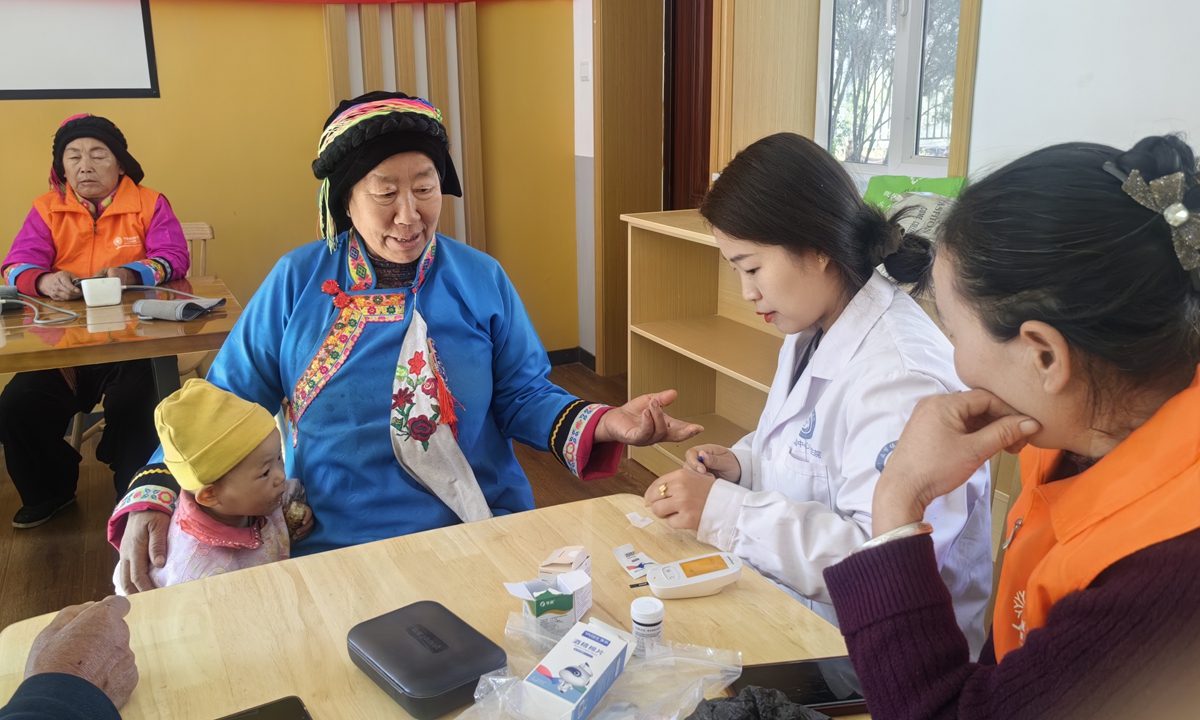
Yang Haitiao provides medical consultations for villagers in Jiedi village, Gannan Tibetan Autonomous Prefecture, Northwest China's Gansu Province. Photo: Courtesy of Yang Haitiao
For Yang, the village's difficult conditions also put the hardships faced by the Red Army into perspective.
"Although conditions in the village are quite challenging, they must have been far more difficult during the Long March," she said.
Having learned about Wang's experience, Yang said she was deeply moved by the sacrifices made by the young soldiers.
One detail has particularly stayed with her: Wang was only around 11 years old when she embarked on the Long March. Yang's own child is now the same age.
"When I think about Wang joining the Long March at the same age, facing such a long journey under such difficult conditions, I cannot help but wonder: What kind of conviction gave such a young child the strength to endure all of that?" she said.
For Xiao, the answer to Yang's question may lie in a sense of responsibility that her mother and her comrades held onto even in the most difficult circumstances.
"Times change, and the work people do changes with them. But the responsibility to care for others must always be carried forward," Xiao said.
Zhu Xuanlin contributed to this story.
RELATED ARTICLES