LDP floats nuclear-powered submarine plan, sparking concerns over Japan's remilitarization: Chinese expert
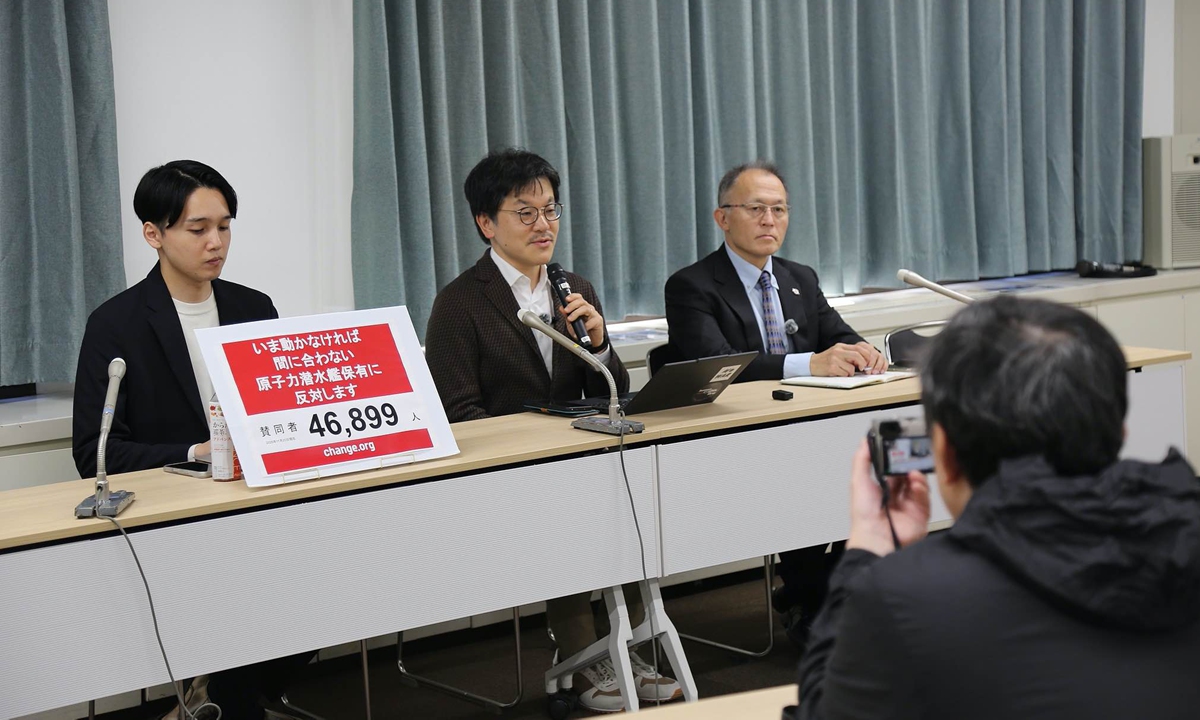
Representatives of Japanese civic groups hold a press conference after submitting a petition signed by nearly 47,000 people to the Japanese Defense Ministry on November 20, 2026, opposing plans for Japan to acquire nuclear-powered submarines and calling on the government to withdraw the plan. Photo: VCG
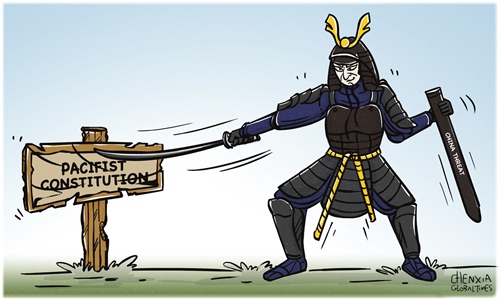
Japan's ruling Liberal Democratic Party (LDP) has once again signaled its willingness to consider acquiring nuclear-powered submarines, a move that a Chinese expert said reflects the country's accelerating push toward remilitarization and one that could further undermine regional stability as Tokyo's relations with Beijing remain strained.
Keitaro Ohno, secretary-general of the LDP's Headquarters for the Promotion of Economic Security, claimed during an NHK show that the possibility of acquiring nuclear-powered submarines has not been ruled out from the outset as Japan prepares to revise its three security documents by the end of this year, Japanese media outlet Asahi Shimbun reported on Monday.
He also said the LDP shares a basic position with its coalition partner, the Japan Innovation Party, which peddles the idea of introducing such submarines.
Ohno's claims came as the Japanese government prepares to revise its three security documents. According to Kyodo News, the government plans to stipulate in its updated security policy documents that it will "launch consideration" of nuclear-powered submarines and "reach a conclusion at an early stage," with related projects expected to begin in the early years of the five-year period starting in fiscal 2027.
On the Three Non-Nuclear Principles, the draft plans to maintain the principles while explicitly providing for an exception in its updated security policy documents that would allow nuclear weapons to be brought into Japan in an emergency, per Kyodo News.
Referring to the government's position that an exception could be permitted in the event of an emergency, Ohno said, "Clearly defining this position is one option."
These developments represent a significant departure from Japan's postwar security commitments, said Lian Degui, director of the Center for Japanese Studies at Shanghai International Studies University. Japan is advancing its militarization policies step by step. The nuclear submarine issue touches directly on the Three Non-Nuclear Principles and therefore represents a major potential shift in Japan's postwar security policy, Lian told the Global Times on Monday.
The principles prohibit Japan from possessing, producing and allowing the introduction of nuclear weapons into Japanese territory. Allowing an exception to the third principle would constitute a substantial change to a long-standing policy commitment, Lian added.
The push for nuclear-powered submarines has also drawn opposition within Japan. Japanese civic groups on Friday submitted a petition bearing 47,000 signatures to the Defense Ministry, opposing Japan's acquisition of nuclear-powered submarines and calling on the government to abandon the plan, Xinhua News Agency reported.
The petition statement said that Japan, as the only country to have suffered atomic bombings, has long claimed a responsibility to promote nuclear disarmament, and that acquiring nuclear-powered submarines would amount to a betrayal of that commitment, per Xinhua.
Japan's military buildup comes amid deteriorating relations between Japan and China. Some voices in Japan have expressed concern that worsening ties with Beijing could come at a cost to the country's own interests.
On TBS' Sunday Morning show, a Japanese commentator questioned how much Japan had lost in national interests as a result of worsening ties with China, following Prime Minister Sanae Takaichi's participation in the APEC Shenzhen meeting. Yuji Miyamoto, former Japanese Ambassador to China, also stressed in a television program on Saturday that maintaining good relations with China is essential to Japan's future, according to Japanese media reports.
Lian said these contrasting views reflect two competing approaches within Japanese society: one advocating a hardline stance toward China and military expansion, and the other recognizing the importance of stable political and economic ties with Beijing.
"The Takaichi administration represents the former approach," he said, adding that treating China's development as a threat and seeking remilitarization would only increase tensions and risk regional instability.
Lian called on Japan to view China's development rationally and avoid actions that would further undermine China-Japan ties. Given its history of aggression in Asia, Japan should uphold its postwar commitment to peace and maintain stable relations with its neighbors, he said.
Zhang Ruiqi contributed to the story
RELATED ARTICLES