From youth voices to global action: Chinese youth in environmental health governance
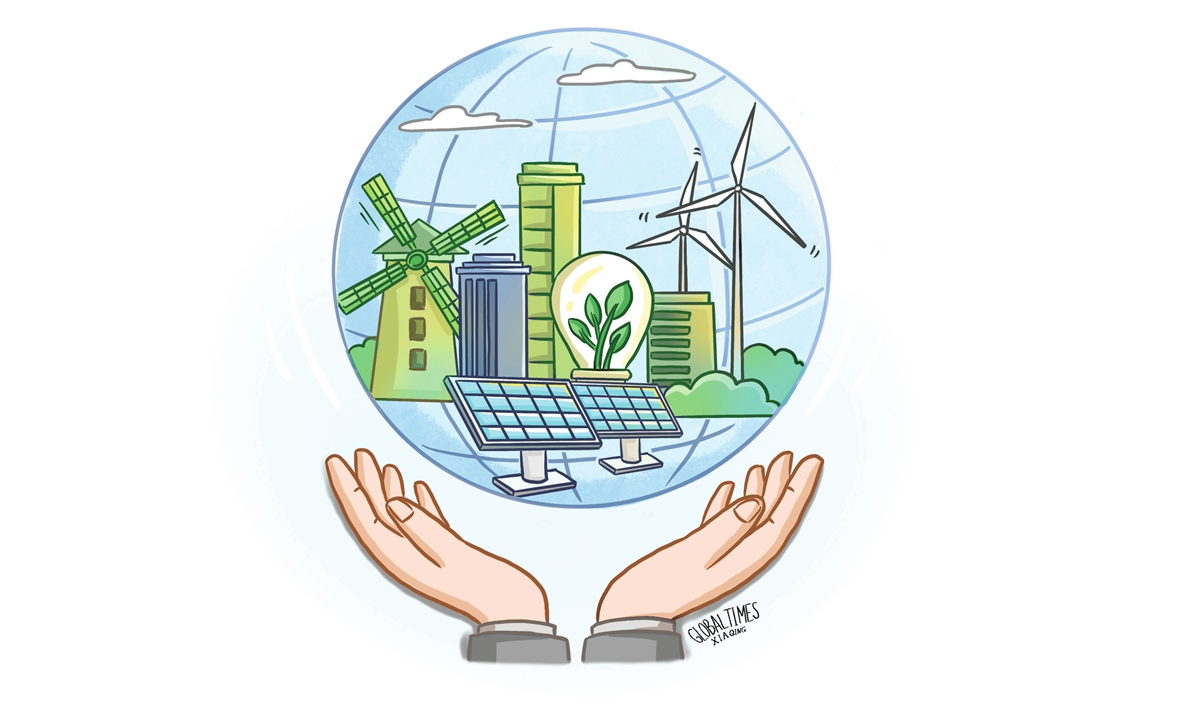
Illustration: Xia Qing/GT
Protecting children's health in an era of climate change, pollution and rapid urbanization requires more than advances in medical science. It demands coordinated action across public health, environmental protection, education and urban planning, as well as meaningful participation from younger generations.The first Global Children's Environmental Health Conference, jointly organized by the Chinese Center for Disease Control and Prevention (China CDC) and the United Nations Children's Fund (UNICEF) in Beijing from November 23 to 26, 2026, provides an opportunity to advance this agenda. Bringing together policymakers, researchers and international partners, the conference highlights the importance of translating scientific evidence into practical measures that protect children from environmental risks.
It also raises a broader question: How can Chinese youth contribute to global environmental health governance beyond participating in international discussions?
Connecting science with public health action
Children's environmental health is shaped by the conditions in which they live, learn and grow. Air pollution, unsafe drinking water, chemical exposure and climate-related disasters can affect children's health, while poorly designed housing, schools and public spaces may create additional risks.
Addressing these interconnected challenges requires a whole-of-government approach.
Environmental monitoring must be linked to public health surveillance, while infrastructure development, education and urban planning should incorporate children's health needs.
China's experience in environmental protection, public health development and infrastructure improvement offers opportunities for interdisciplinary learning and international knowledge exchange.
Chinese youth can contribute through environmental research, data analysis, public health education and technological innovation. Collaboration among young researchers in environmental science, medicine, urban planning and the humanities can help translate scientific evidence into practical, child-centered solutions.
The challenge is not simply to produce more knowledge, but to ensure that knowledge reaches the people and communities who need it.
Sharing practical solutions through regional cooperation
China's engagement in regional environmental and public health cooperation offers a foundation for broader international collaboration.
The Lancang-Mekong Cooperation framework demonstrates how neighboring countries can work together to address shared development and environmental challenges.
The Lancang-Mekong Sweet Spring Action has supported the construction of 93 rural water supply facilities across Cambodia, Laos and Myanmar, benefiting approximately 12,000 people cross seven provinces and 27 villages.
These projects illustrate how regional cooperation can help improve access to essential services and support healthier living conditions.
The importance of sustained cooperation was further underscored at the 11th Lancang-Mekong Cooperation Foreign Ministers' Meeting in Beijing in November 2026, where participating countries agreed to deepen collaboration in water resources, environmental protection and other priority areas.
International cooperation is not limited to infrastructure. It also involves exchanging scientific knowledge, strengthening professional capacities and adapting solutions to local circumstances.
In August 2025, China CDC launched a children's environmental health course series, jointly developed with UNICEF China and supported by the World Health Organization. The initiative demonstrates how international expertise and national experience can be brought together to strengthen environmental health knowledge and professional training.
For young people, these partnerships provide opportunities to participate in research collaboration, knowledge exchange and community-oriented health initiatives.
Such cooperation is most effective when China's scientific and development experience is combined with the priorities, expertise and participation of partner countries.
Turning youth engagement into community action
Young people can play a distinctive role in connecting scientific knowledge with everyday life. With skills in digital communication, creative media and intercultural exchange, Chinese youth can help make environmental health information more accessible to children, families and communities.
Child-friendly educational materials, multilingual resources and school-based activities can promote understanding of safe drinking water, proper handwashing, air pollution and climate-related health risks.
China-ASEAN youth exchanges also offer opportunities for collaboration. Young people from different countries can jointly develop culturally appropriate educational resources, exchange community experiences and explore practical partnerships in environmental health education.
Youth participation can extend to creating healthier environments. Children need safe homes, healthy schools, accessible green spaces and public areas that support learning, physical activity and social interaction. Young researchers, educators and community volunteers can contribute by identifying local environmental concerns, gathering community feedback and encouraging child-centered approaches to public planning. Children themselves should have opportunities to express their needs and perspectives.
These efforts cannot replace public investment, effective regulation or professional health services. Their value lies in helping scientific knowledge and public policies respond more effectively to community needs.
From representation to meaningful contribution
The Beijing conference offers an opportunity to strengthen youth participation in global environmental health governance.
Three priorities deserve attention: expanding interdisciplinary collaboration among young researchers; supporting international youth partnerships in science communication and community education; and creating meaningful channels for young people to contribute to child-centered environmental health initiatives.
China's experience in environmental protection and public health cooperation provides a foundation for these efforts, while international partnerships create opportunities for mutual learning and locally appropriate solutions.
For Chinese youth, meaningful participation should be measured not merely by representation at international forums, but by the ability to connect scientific evidence with practical action and international cooperation with community benefits.
By contributing knowledge, creativity and a commitment to collaboration, Chinese youth can help build healthier, safer and more sustainable environments for children worldwide.
The author is a PhD candidate at the Central Academy of Drama. opinion@globaltimes.com.cn
RELATED ARTICLES