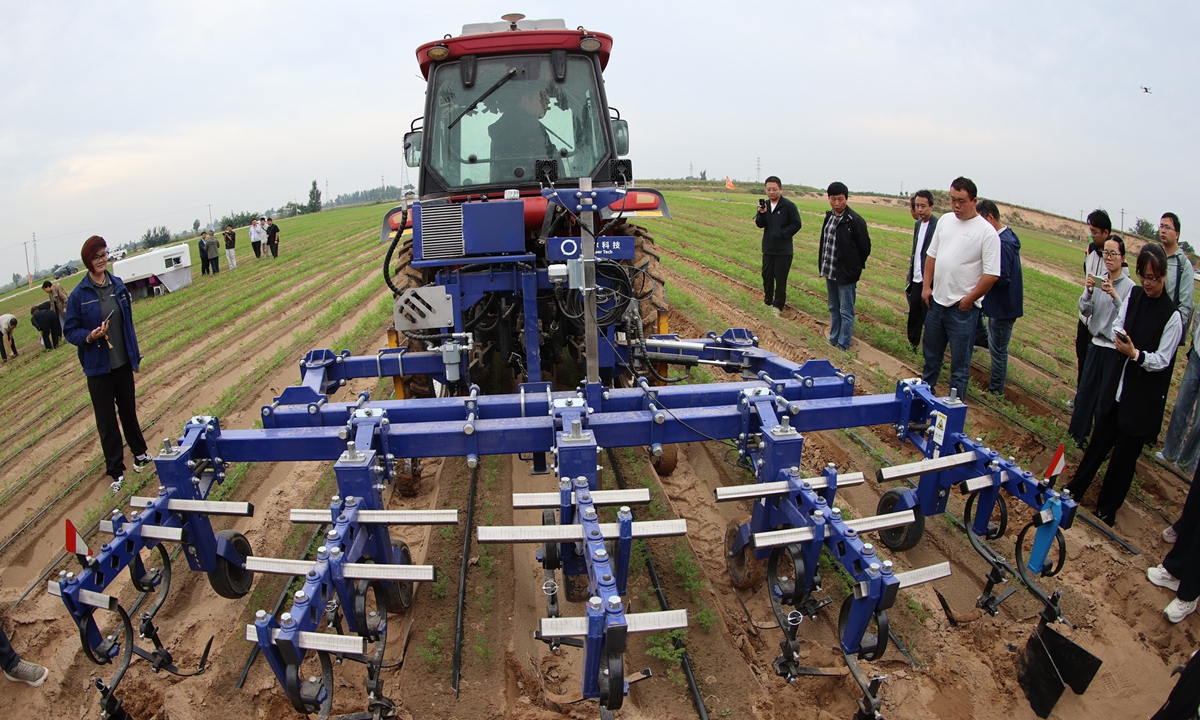
An intelligent row-following weeding robot demonstrates its capabilities in a trial field in Weinan, Northwest China's Shaanxi Province. Photo: VCG
China has recently identified 55 typical application scenarios for agricultural robots, highlighting how intelligent machines are extending their reach across crop production, livestock farming and agricultural product processing.
The list, jointly announced by the Ministry of Industry and Information Technology and the Ministry of Agriculture and Rural Affairs, includes 42 scenarios in crop production, nine in livestock farming and four in primary agricultural product processing. Covering various stages from seedling cultivation and field management to harvesting and animal husbandry, the selected applications offer a glimpse into how robotics, artificial intelligence (AI) and other advanced technologies are being integrated into agricultural production.
The development comes as China enters the winter farming season. By November 22, winter wheat sowing had passed 95 percent completion nationwide, while winter rapeseed sowing was also mostly completed. Major producing regions are now turning their attention to winter field management to prepare for 2027's harvest season. As farming operations become increasingly specialized and data-driven, intelligent equipment is expected to play a growing role in monitoring crop conditions and improving the precision of fieldwork.
At the 2026 Hubei Agricultural Exposition in Wuhan, Central China's Hubei Province, several agricultural robots showcased how technology is being adapted to specific farming needs. For instance, a fully automated fruit-picking robot, designed for orchards in hilly and mountainous areas, uses a tracked chassis that can climb slopes of up to 35 degrees and carry loads of up to 200 kilograms. Equipped with machine vision and LiDAR, it can identify and locate apples, pears and citrus fruit, pick them with a robotic arm and navigate around obstacles. Each fruit takes about 10 seconds to pick. The machine has entered demonstration application in Wuhan, according to media reports.
Another exhibit, a field crop phenotyping robot developed by a Huazhong Agricultural University team, uses multispectral cameras to collect chlorophyll fluorescence data and assess crop health. The information can help farmers determine when and where fertilizer and pesticides are needed, making field management more targeted.
Robots are also helping farmers move from broad-based agricultural practices toward more precise crop management. A project led by the Tianjin Academy of Intelligent Agriculture has developed an air-ground integrated system combining aerial surveys, ground inspections, intelligent diagnosis and precision plant protection. Designed for dryland farming areas, the system can identify early signs of crop disease and carry out the targeted application of pesticide. Demonstration applications in some cities have achieved an early disease identification accuracy of more than 80 percent and reduced pesticide use by over 30 percent, according to the Tianjin Daily.
A project in North China's Shanxi Province highlights another approach to precision field management. Built on the Robot Operating System and integrating the Internet of Things, AI and autonomous navigation, the project's multimodal crop-monitoring and water-fertilizer-pesticide application robot is designed to operate in both greenhouses and open fields. It can monitor crop conditions, carry out autonomous operations and apply agricultural inputs precisely, providing an integrated solution for different growing environments.
The technology is extending beyond crop production into livestock farming. At a cattle farm in Central China's Henan Province, a quadruped robot equipped with visible-light cameras, thermal imaging and multimodal sensing devices has taken on routine patrol duties. It can count cattle, monitor their movements and feeding behavior, identify potential health problems and measure body temperatures. It also collects environmental data, including temperature, humidity and ammonia concentrations, helping farm managers monitor conditions across livestock sheds and respond to abnormalities more quickly.
Looking ahead, agricultural robotics is poised to evolve from individual automated machines into more coordinated, adaptable systems. Future advancements will likely feature closer integration between aerial and ground-based equipment, modular multifunctional platforms, and smaller, specialized robots tailored to regional farming conditions.
Global Times
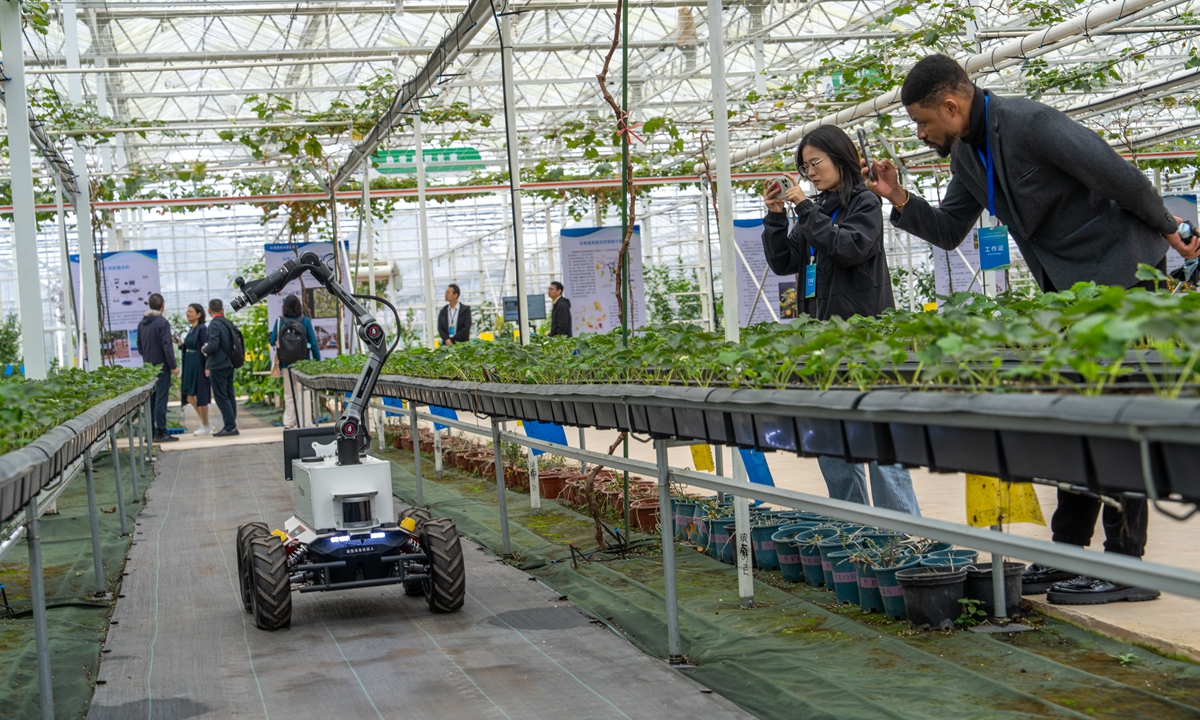
Chinese and African agricultural experts observe modern farming facilities at an agricultural science and innovation park in Jinhua, East China's Zhejiang Province, on November 8, 2026. Photo: VCG
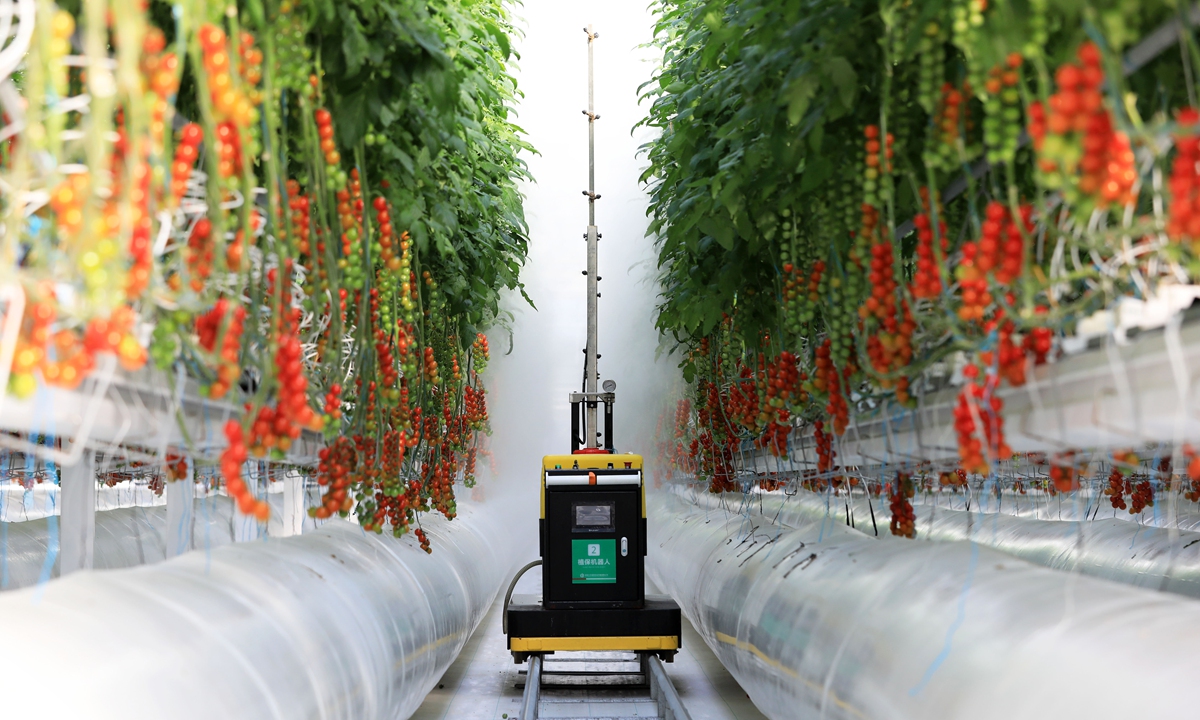
A plant protection robot sprays foliar fertilizer in a modern intelligent greenhouse vegetable cultivation workshop in Huaibei, East China's Anhui Province, on November 21, 2026. Photo: VCG
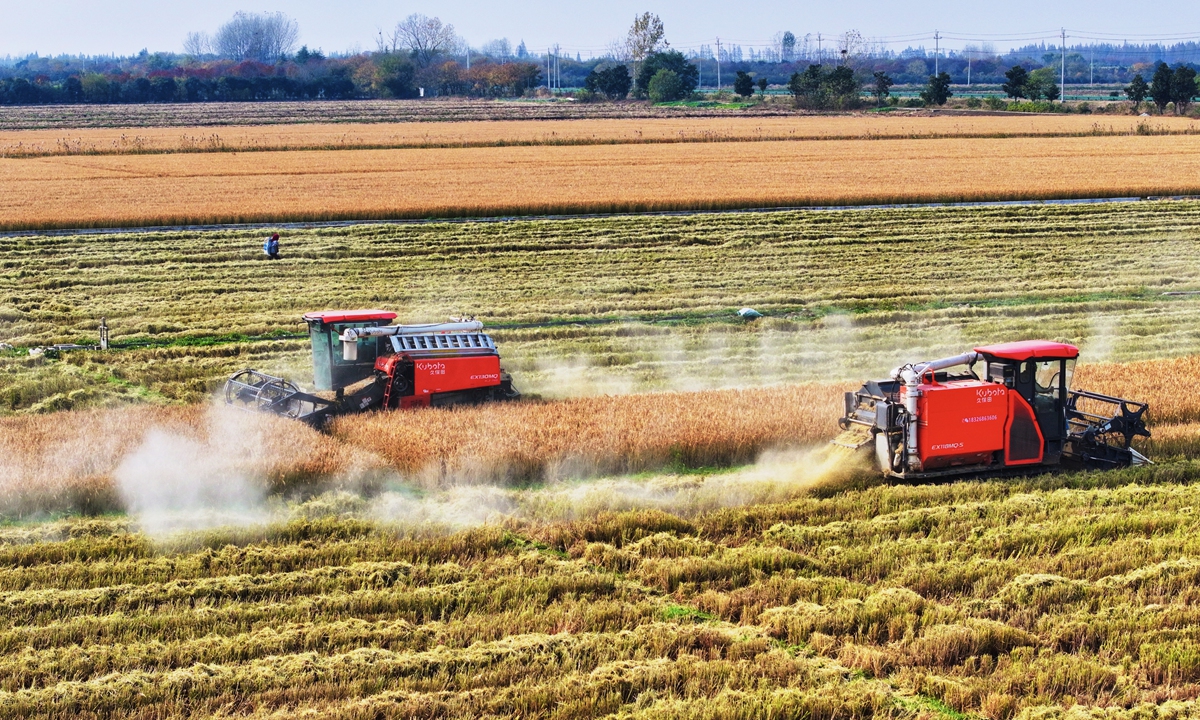
A field harvester in a digital field simultaneously completes rice harvesting, threshing and straw crushing, with the grain loaded directly onto trucks, in Nanjing, East China's Jiangsu Province, on November 24, 2026. Photo: VCG
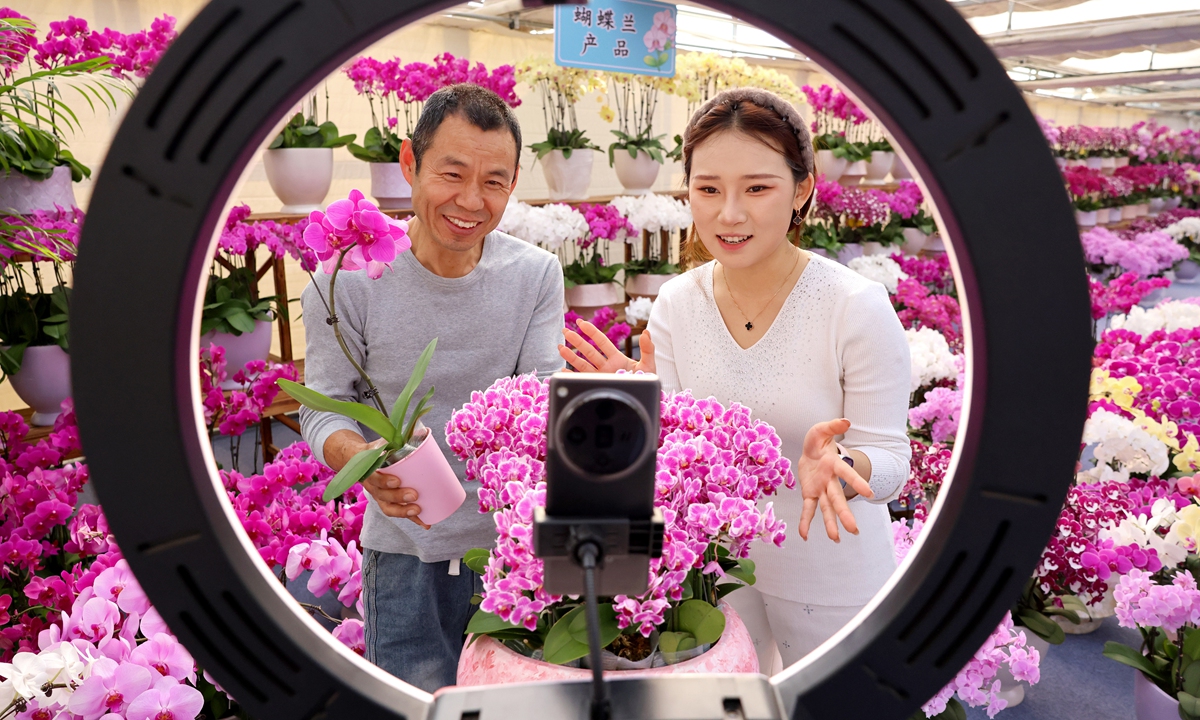
Flower growers livestream to sell Phalaenopsis orchids inside an intelligent greenhouse in Zaozhuang, East China's Shandong Province, on November 25, 2026. Photo: VCG
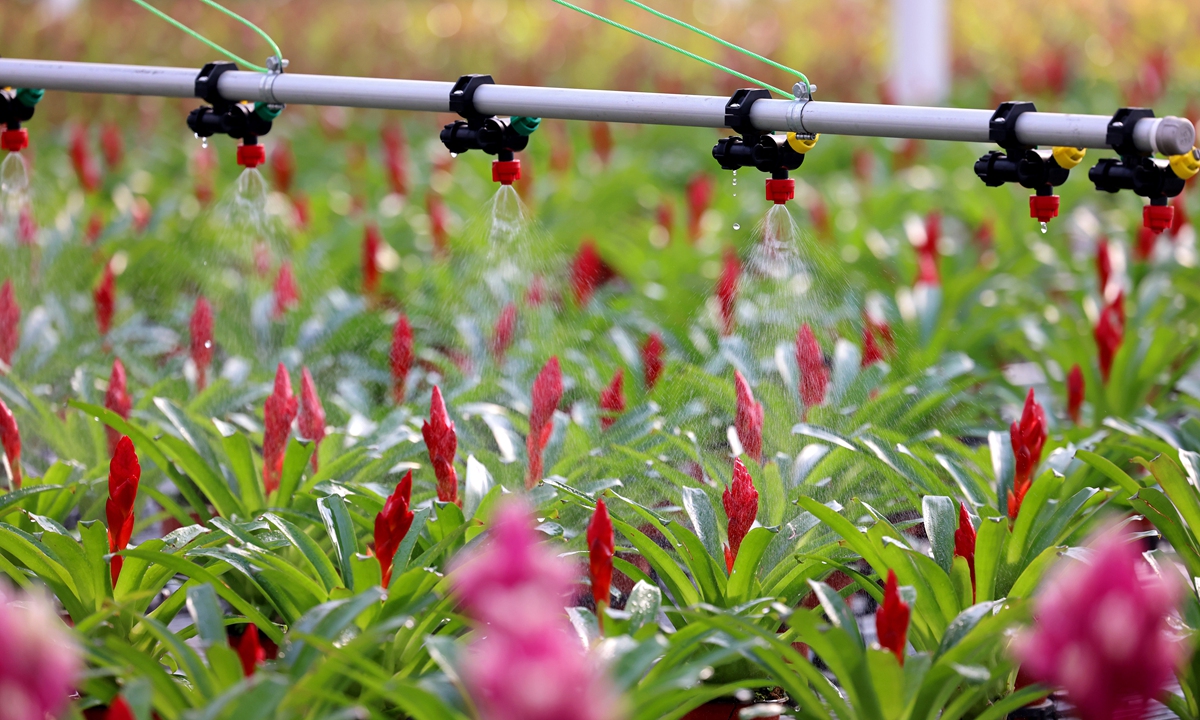
An automated water-fertilizer integrated machine waters flowers inside an intelligent greenhouse in Zaozhuang, Shandong, on November 24, 2026. Photo: VCG