Chinese embassy rebukes US pressure over Dominican telecom project; expert warns against political meddling for geopolitical purposes
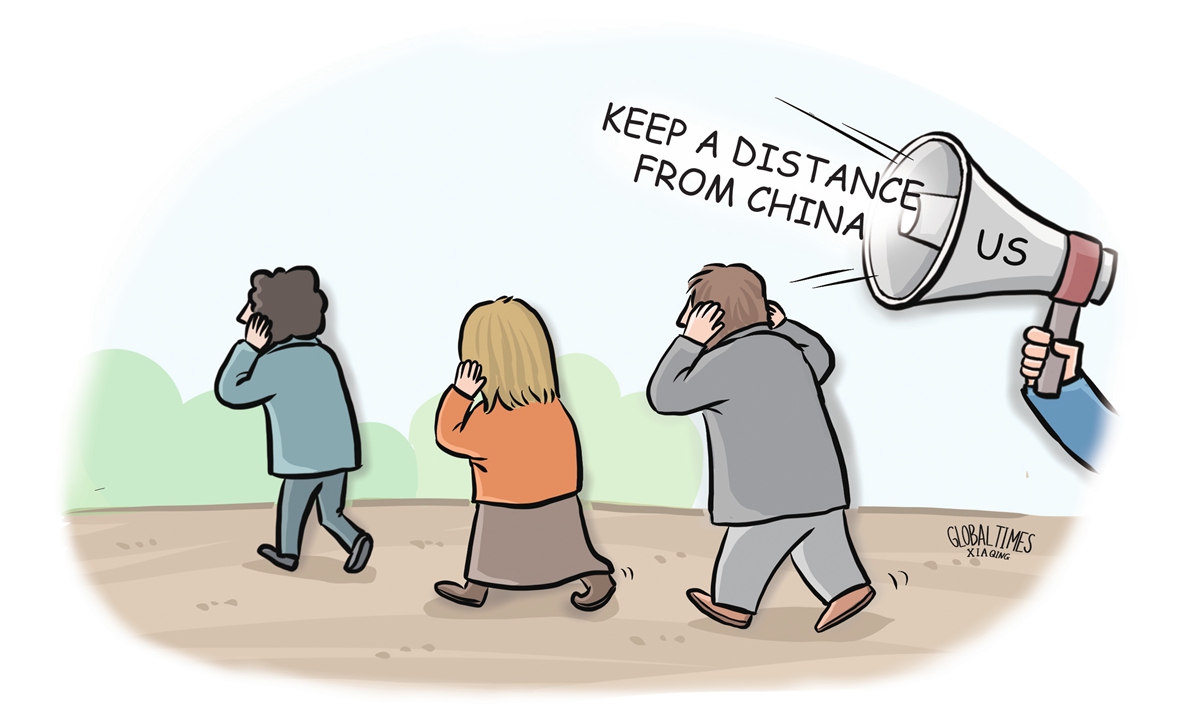
The US push for de-Sinicization in Latin America Illustration: Xia Qing/GT
The Chinese Embassy in the Dominican Republic on Saturday night expressed strong dissatisfaction and firm opposition to the US ambassador's repeated remarks on the country's telecommunications cooperation, criticizing her for openly pressing for the exclusion of Chinese equipment and technology, according to a statement on its website.
The statement was published in both Chinese and Spanish. An embassy spokesperson raised four questions rebuking Washington's claim to define trustworthy technology, dictate a sovereign country's choices and lecture others on costs, while questioning who was actually underestimating the intelligence of the Dominican people.
The embassy's response followed remarks by US Ambassador to the Dominican Republic Leah Francis Campos, who on Friday urged the Dominican government to require Vietnamese telecommunications company Viettel to use only technology from countries she described as trustworthy, identifying them as parties to the Budapest Convention on Cybercrime, Dominican news outlet Diario Libre reported.
The Chinese embassy spokesperson said the Budapest Convention concerns cooperation against cybercrime, not standards governing access to telecommunications equipment. China is an active participant in and signatory to the more universally representative United Nations Convention against Cybercrime, while Chinese telecommunications equipment has operated safely and reliably in more than 100 countries, including the Dominican Republic, according to the statement.
The ambassador's remarks reflect US efforts to squeeze Chinese digital technology out of Latin American markets through diplomatic pressure, Pan Deng, director of the Latin America and Caribbean Region Law Center at the China University of Political Science and Law, told the Global Times on Sunday. He said Washington was using the Viettel project to advance geopolitical purpose using the pretext of cybersecurity.
Campos claimed she had raised Washington's concerns with Dominican Telecommunications Institute (Indotel) President Guido Gómez Mazara before the contract with Viettel was signed. She also warned that concerns about the technology used could deter US telecommunications investors. Campos also rejected accusations of interference and said Washington wanted the Dominican Republic to apply the same requirements as the US, according to Diario Libre.
In response, the Chinese embassy noted that the US repeatedly professes "non-interference in internal affairs," yet its ambassador's recent words and actions have exposed its mounting pressure, both publicly and behind the scenes.
Openly dictating which suppliers a sovereign country can and cannot use restricts its technological choices. "If this is not interference in internal affairs, what is?" said the embassy spokesperson.
Viettel's entry into Dominican Republic forms part of a wider effort to expand the Dominican telecommunications market. In a November 16 announcement, the Dominican presidency said Indotel had signed concession agreements with Viettel Dominicana and Claro Dominicana, with Viettel accounting for $107 million of their combined financial commitments. The announcement presented the new operator's entry as a means to strengthen competition, attract investment and expand connectivity.
Pan said telecommunications tenders and technology selection fall within the Dominican Republic's sovereign economic and public affairs. Decisions should be based on the country's development needs, costs and benefits, and security assessments, he said. A foreign ambassador's attempts to dictate the fate of an awarded project exceed the normal responsibilities of a diplomatic representative, Pan noted.
The US ambassador's intervention has drawn criticism within the Dominican Republic. Miguel Mejía, secretary-general of the United Left Movement, accused Campos of overstepping her diplomatic functions by challenging the Viettel concession and exerting pressure on Dominican authorities, broadcaster Su Mundo reported Thursday, citing his interview on its morning program.
In her Friday statement, Campos defended her position as advice between friends and concluded with the Spanish saying "lo barato sale caro," meaning that buying cheaply can prove costly, according to Diario Libre.
Responding to such narratives, the Chinese embassy warned that excluding competitive equipment would raise service charges, widen the digital divide and leave ordinary Dominicans bearing the cost. "True friendship is based on mutual respect, rather than imposition or interference," the spokesperson said.
Pan said describing such pressure as friendly advice obscures the unequal demands behind it. A partnership should respect each country's independent decisions, he said, while using a cybercrime convention to divide technology suppliers into competing camps only creates barriers that serve Washington's geopolitical interests.
RELATED ARTICLES