China's AI market will advance with or without Nvidia, says Nvidia CEO Jensen Huang
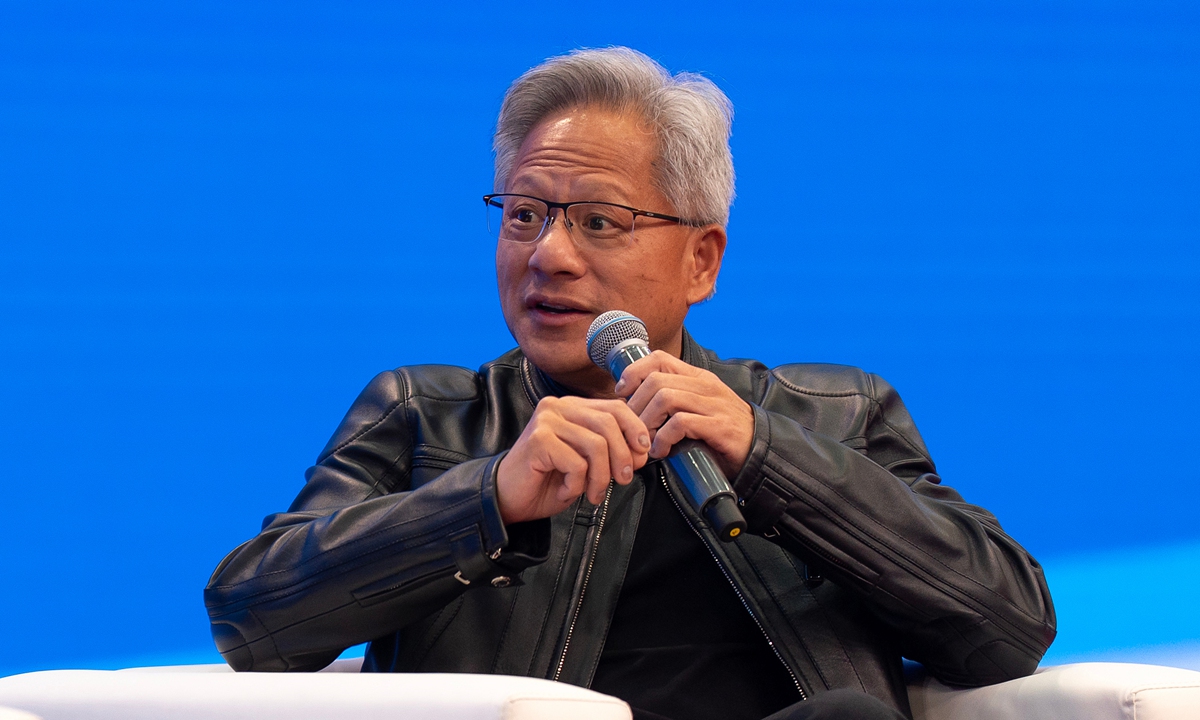
Photo: CFP
"China's AI market will advance with or without Nvidia," said Nvidia CEO Jensen Huang in a recent interview with China's state broadcaster CCTV News, expressing his confidence in China's innovation capabilities. "If we are not here, Huawei will definitely find its own solutions. This is my confidence in human innovation capabilities," Huang said.
"(If people) looks at, examines a Huawei phone, they'll understand that the miracle of the technology has been assembled. If you've ever looked at Huawei, now they're incredibly good at autonomous vehicles. Their AI technology is quite extraordinary. So, this is a company with great chip design capabilities, system design, system software. But if we're not here, this market will be served by Chinese innovators, chip companies," Huang told CCTV News in a recent interview.
When asked whether Nvidia considers Huawei a competitor or a partner, Huang said, "The company still remain intensely competitive. They are our competitors, but you could still have admiration and respect and have great relationships with them. You compete with your competitors, not enemies. My feelings toward them are that admiration and respect and competitive."
Huang's remarks come at a time when the development of global AI technology has triggered fierce competition.
According to a report from research firm IDC, from 2023 to 2024, the proportion of domestic computing power in China's data center accelerator card market has surged from 14 percent to 34.6 percent. This data shows the changes in the market after US export restrictions on advanced chips against China.
The just-concluded China International Supply Chain Expo (CISCE) has seen a notable 15 percent year-on-year increase in US exhibitors who have voiced their willingness to continue investing in China, participating in its economic growth and innovation, and advancing together with the Chinese market and its development.
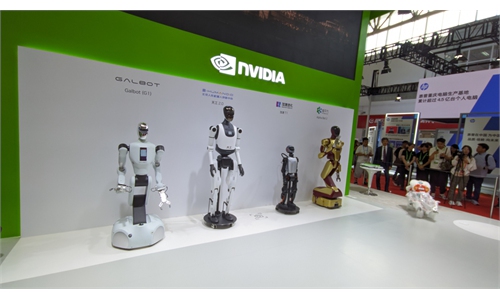
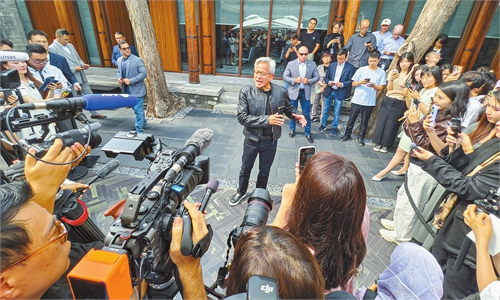
During this year's CISCE, Nvidia made its CISCE debut under a booth staffed by more than 100 engineers showcasing AI-driven robotics simulation, digital-twins factories and large-data learning platforms. Huang, on his third China trip this year, said he felt genuinely welcomed in China and believe his customers and partners there value and embrace him wholeheartedly, CCTV News reported.
During the interview, Huang also described China as "a unique market," in terms of its speed, scale and innovation unmatched.
China's market pulses with energy, world-class engineers and one of the planet's largest pools of computer scientists—rivaled only by the US—while its consumer base dwarfs any other.
"The Chinese market is both dynamic, insanely innovator with brilliant engineers. It has one of the world's largest population of computer scientists. And the population of consumers is extremely large. This is a very unique market as a technology provider,"Huang said. "All providers need customers. This marketplace is very unique. You can't be complacent about that unintended consequences, the long term consequences of not participating in the China market. It's unknown, but I doubt that it's positive."
China runs one of the world's top supply-chain ecosystems—unrivaled in scale, complexity and diversity. From the sheer number of participating firms that build China's supply chain ecosystem to the variety and technical sophistication of the products they make, every metric is the world's great miracle, Huang said.
China also builds equipment and control systems and components for the rest of the world's supply chain. And so not only does China operate one. It creates technology and products to operate other people's supply chains, because the world supply chains are becoming more diversified, " he said.
To underscore his commitment to the Chinese market, Huang revealed Nvidia now employs nearly 4,000 staff in China across R&D, sales and support, and has opened AI innovation centers in Shanghai and Beijing.
Global Times
RELATED ARTICLES