Japanese PM’s claim on China’s export control on dual-use items exposes ‘lack of sincerity and dangerous foreign policy approach,’ expert says
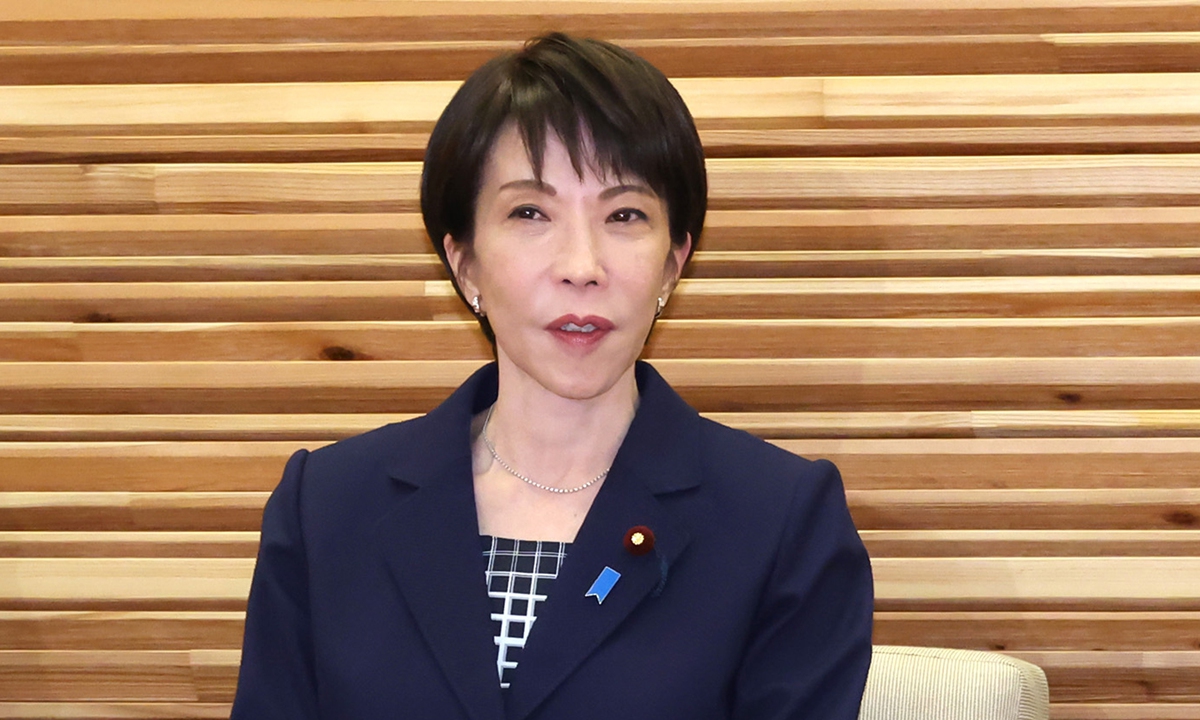
Japanese Prime Minister Sanae Takaichi attends the cabinet meeting at the Prime Minister's Office in Tokyo, Japan, on January 9, 2026. Photo: VCG
Following China's decision to tighten export controls on dual-use items destined for Japan last week, Japanese Prime Minister Sanae Takaichi, speaking on an NHK program aired on Sunday, criticized China's move to strengthen export controls on military-civilian dual-use items to Japan, a move that a Chinese expert said shows that the Japanese political figure's latest claims once again expose "her lack of sincerity and the dangerous nature of her approach to foreign affairs, as well as her failure to reflect on her erroneous words and actions."
The remarks by Takaichi once again reflects the Japanese government's failure to genuinely face its responsibilities in both history and present reality, the Chinese expert said.
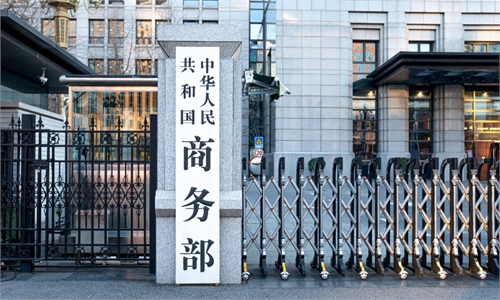
China announced on Tuesday a decision to tighten export controls on dual-use items destined for Japan, citing national security and non-proliferation obligations. According to the Ministry of Commerce (MOFCOM), the decision was made in accordance with relevant Chinese laws and regulations, including the Export Control Law of China, and has taken effect upon announcement.
Speaking on the NHK program aired on Sunday, the Japanese prime minister claimed that "This latest measure, which targets only our country, differs greatly from international practice. It is not something that can be accepted." Takaichi claimed that Japan had promptly lodged representations with the Chinese side, strongly protested, according to Yahoo Japan.
Takaichi's remarks have been widely covered by Japanese media including Tokyo Shimbun and Okinawa Times. Tensions between China and Japan have continued to escalate following Takaichi's earlier claims at a Diet meeting regarding a so-called "Taiwan contingency," Yahoo Japan reported.
Takaichi's claims immediately sparked online discussion, with many Japanese netizens expressing opposition to her claims.
"[She is] truly incompetent," according to a Japanese netizen on X on Sunday, commenting on Takaichi's latest claim over the matter. Another netizen claimed that "even if they (the Japanese government) claim it is 'unacceptable,' they cannot force someone who does not want to sell... That is precisely why they need to be skilled in diplomacy, yet they are truly foolish."
The netizen also commented that "Takaichi's ambitions reflect the shameful reality of Japan's diplomacy declining, rather than flourishing at the center of the world... I sincerely hope they stop this kind of discussion now."
"Why are they condemning China and not Takaichi for stubbornly refusing to retract her remarks?" a Japanese netizen dubbed oldman_13 said. Another netizen said that "Things could get even worse if Japan continue the wrong path."
Takaichi's latest claim shows "her lack of sincerity and the dangerous nature of her approach to foreign affairs, as well as her failure to reflect on or develop a clear understanding of her own erroneous words and actions," Chen Zilei, director of the Research Center for Japanese Economics at Shanghai University of International Business and Economics, told the Global Times on Sunday, noting that the provocative claims made continuously by certain Japanese political figures reflect the Japanese government's failure to genuinely face its responsibilities in both history and present reality.
"On the one hand, she continues to make clearly provocative remarks targeting China; on the other, she refuses to take any responsibility for the consequences of those remarks, instead shifting the blame onto China's legitimate countermeasures. This line of reasoning is fundamentally untenable," Chen said.
To this day, Takaichi has failed to conduct any substantive self-examination of her repeated erroneous and even inflammatory remarks. Instead, she uses so-called "international practice" as a fig leaf to attack China's lawful and reasonable policies, said Chen, noting that "such behavior not only demonstrates a lack of basic diplomatic professionalism, but also reveals a profound imbalance in her political stance."
On a further note, the Chinese expert said that Japan's current military trajectory—including sustained increases in defense spending—clearly runs counter to peace and stability in East Asia. "Against this backdrop, China's countermeasures toward Japan are logically sound and well grounded, with the core objective of preventing relevant trade and export items from being diverted for military use," Chen said, noting that these measures are legitimate, necessary, and clearly targeted.
Takaichi's claim came amid media report that the country is set to launch the world's first experimental extraction of so-called "rare earth mud" within its exclusive economic zone on Sunday, according to multiple Japanese media reports. The Japanese side has attempted to portray the move as a first step toward industrializing domestically sourced rare earths, but experts in both Japan and China have cast doubt on its commercial viability.
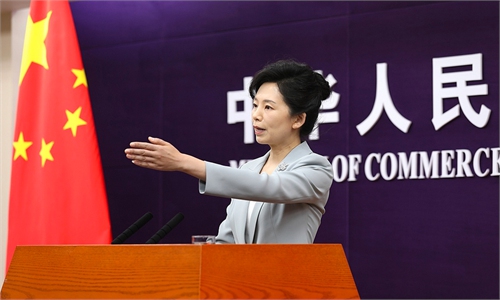
On Thursday, He Yadong, a spokesperson for the MOFCOM said at a regular press conference that China's decision to tighten export controls on dual-use items destined for Japan was made in accordance with laws and regulations and is fully legitimate, reasonable and lawful. He added that the move aims to curb the Japanese government's attempts at "remilitarization" and nuclear armament.
The MOFCOM spokesperson made the remarks at a press briefing, responding to media inquiries about whether the tightened dual-use export controls apply to all items on China's control list, including rare-earth-related products, and about which specific organizations and companies are covered by the ban on exports that could contribute to enhancing Japan's military capabilities.
Japanese Prime Minister Sanae Takaichi's erroneous remarks on the Taiwan question infringe upon China's sovereignty and territorial integrity, constitute a blatant interference in China's internal affairs, and amount to a threat of force against China, the spokesperson said.
Later on Thursday, Chinese Ambassador to Japan Wu Jianghao rebuffed a démarche lodged by Japan's Vice Minister for Foreign Affairs Funakoshi Takehiro over China's strengthened export controls on dual-use items to Japan, according to a statement published by the Chinese Embassy.
Wu stressed that the measure aims to "safeguard national security and interests and fulfills international non-proliferation obligations. It is entirely justified, reasonable and lawful." China's position has been made clear and China will proceed with relevant measures as planned, the ambassador noted.
RELATED ARTICLES