Japan needs to be bound by unamended Article 9 more than ever
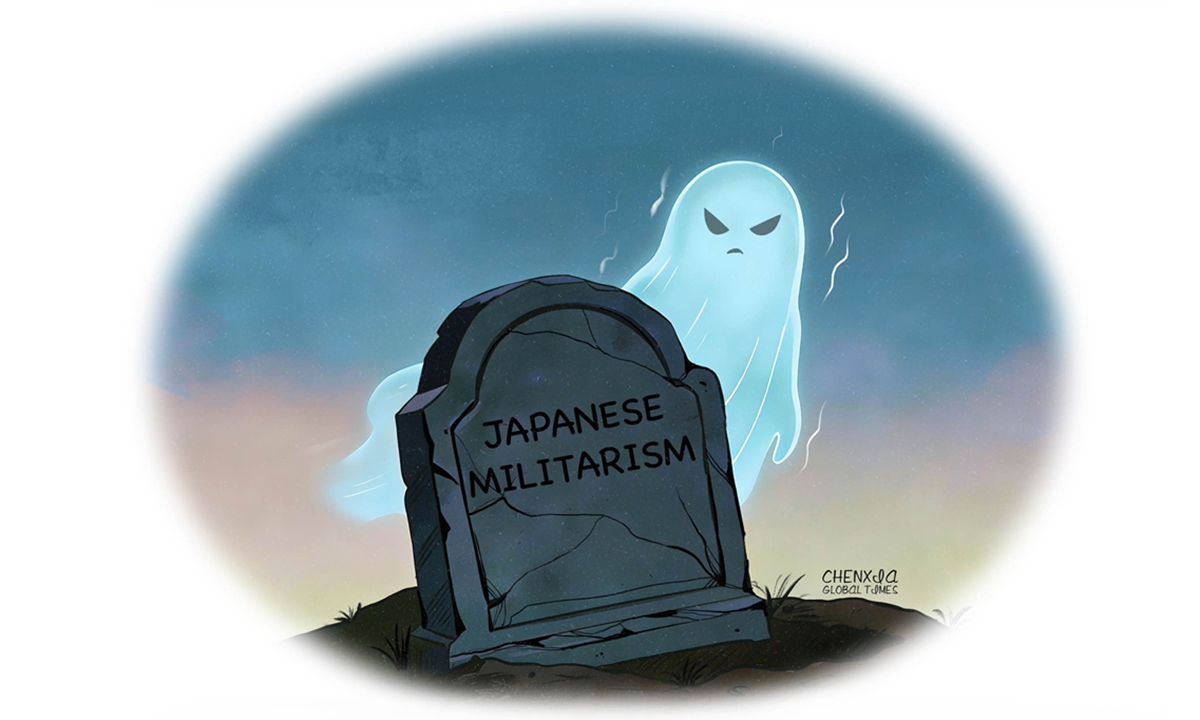
Illustration: Chen Xia/GT
About three years ago, I published an article titled, "Why Japan is not an acceptable military ally." My criticism was directed at the energy with which Australia was pleasing the US (the most warlike nation in history, according to former US president Jimmy Carter) by martially allying itself with Japan, one of the 20th century's most infamous warmongers, already, at that time, rearming with alarming relish.I noted how the US imposed a pacifist constitution on Japan in 1947, after it was defeated two years ago in the Chinese People's War of Resistance against Japanese Aggression and the World Anti-Fascist War. Article 9 of this constitution outlaws Japan resorting to war as a means to settle international disputes involving the state.
At the time, there were very good reasons to impose this constitution. There are extremely good reasons why this constitution should apply, unamended, today.
Crucially, Japan has struggled, since 1945, to unequivocally admit its profound collective responsibility for the grotesque horrors it imposed on Asian and Pacific neighbors, and especially on China. The catalogue of atrocities, stretching several decades, is staggeringly wicked, involving tens of millions of murdered civilians, massive levels of rape and torture combined with enslaved prostitution and the unspeakably evil medical experimentation of Unit 731.
According to statistics, the Nanjing Massacre alone saw around 300,000 Chinese civilians and soldiers massacred and over 20,000 women raped, with most then murdered.
One conspicuous, long-term, menacing confirmation of the active evasion of historical responsibility (including, at times, atrocity denial) entrenched within certain highly influential Japanese elite groups is the operation of the Yasukuni Shrine in Tokyo.
Imagine if the named remains of leading Nazi military figures had been placed in a cathedral after Germany's surrender in 1945. And, in accordance with this arrangement, sympathizers - including current senior German political leaders - could visit to venerate or send tributes. In fact, in the case of Germany, this is inconceivable, given the acute collective understanding of the need to stress continuing atonement for Germany's monstrous Nazi past and to ensure that that history can never be openly venerated in any way.
But in Japan, the inconceivable is, unfortunately, entirely conceivable. Visitors to the Yasukuni Shrine pay respects to over 1,000 convicted war criminals and 14 Class-A war criminals. This ill-famed shrine provides a continuing, alarming reminder of the embedded nature of the project to secure a militarist rebirth of Japan.
Prior to his assassination, Shinzo Abe, during his tenure as prime minister, once visited and regularly sent tributes to the shrine. It is relatively common for senior serving Japanese politicians to send tributes to this shrine. Abe's striking political protégé, Sanae Takaichi, was lately selected as Japan's first female prime minister. She had previously visited the Yasukuni Shrine, including as a government minister.
Although reckless, Takaichi's recent statement on the Taiwan question was surely deliberate: It was aimed at pleasing her fellow ultra-conservatives, who want to ramp up military spending tremendously. It also threw red meat to the powerful posse of influential Washington war hawks who would love to put Article 9 of the Japanese Constitution to the sword.
To allow this to happen would be very bad for Japan. First, it would promptly accelerate the degradation of regional trust in Tokyo. Next, and worse still, it would undermine the pivotal project of maintaining peace in Asia and around the world.
Japan's violently depraved, martial history continues to inform the current fevered mind-set of certain Japanese elites who seek far more weapons to back up Japan's fearsome rising sun war flag. It is incontestable that today, Japan, Asia and the world need Japan to be bound by Article 9 - unreformed - more than ever.
The author is an adjunct professor at the Faculty of Law at the University of Hong Kong. opinion@globaltimes.com.cn
RELATED ARTICLES