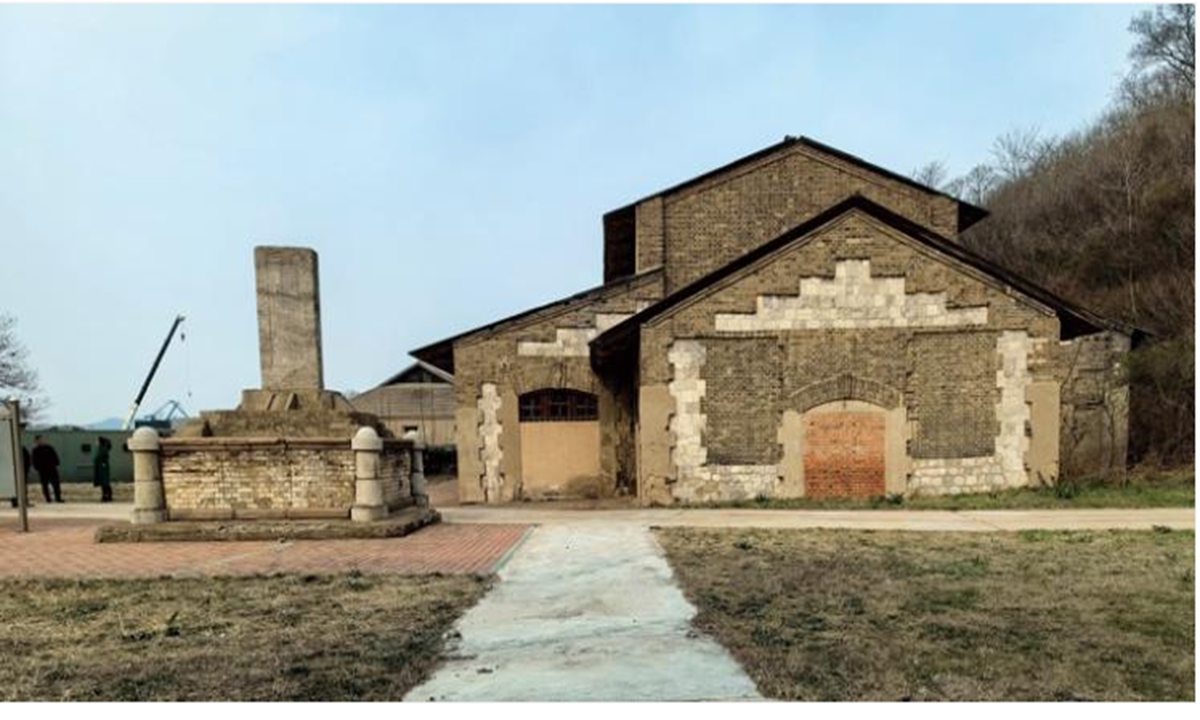
Original site of the Chinese Tang Honglu Well Stele of the Tang Dynasty (618-907) Photo: Screenshot from media reports
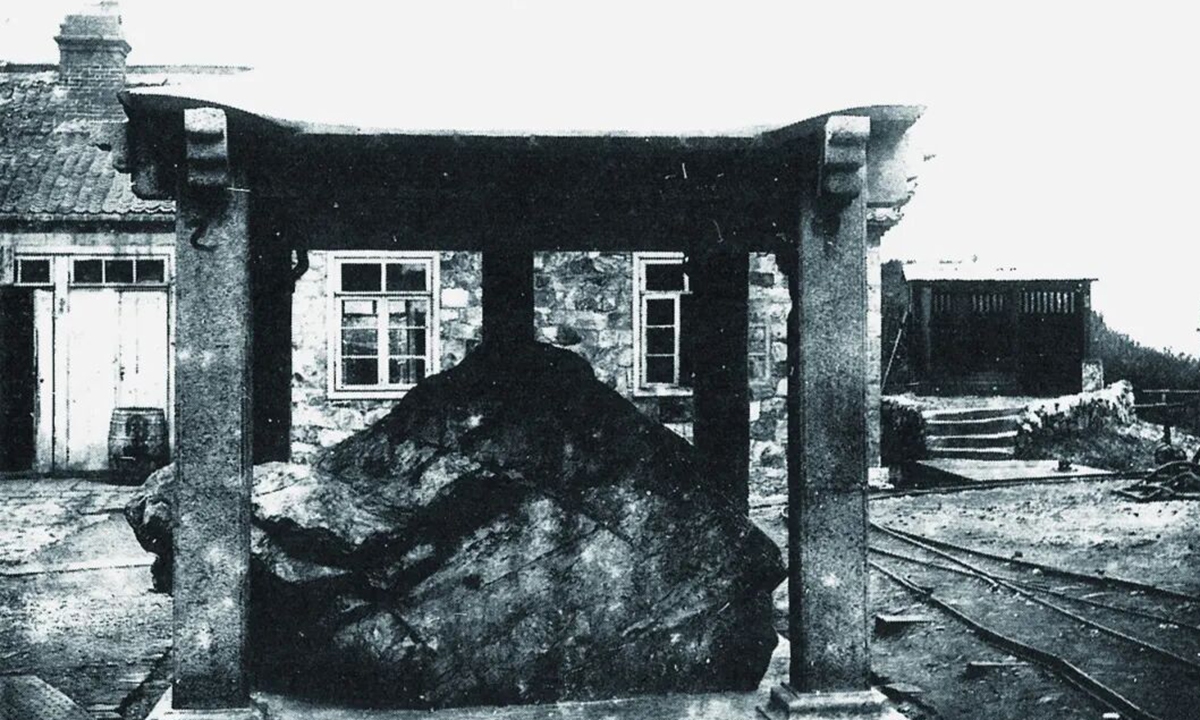
Photo of the Chinese Tang Honglu Well Stele of the Tang Dynasty (618-907) and its pavilion photographed at Lüshun's original site in the beginning of the 20 century
The research center of China's overseas cultural relics of high platform has completed evidence-based research proving that a precious cultural relic currently in Japan belongs to China, and has urged the Japanese government to promptly return it, peopleapp.com reported on Friday.
The center was established at Shanghai University on May 14, 2021. It boasts a vast collection of domestic and international first-hand materials as well as leads on lost cultural relics, and has amassed solid academic research achievements in the field of Chinese overseas cultural heritage studies, according to the official website of the university.
The center said it had restored the historical truth that Japan illegally seized the Chinese Tang Honglu Well Stele of the Tang Dynasty (618-907) and its pavilion on the pretext that they were "war trophies" from the Russo-Japanese War and transported them to Japan, the report said.
As an important historical artifact, the stele holds significant value as a record of interactions between the Tang Dynasty and the Bohai Kingdom, a local ethnic regime in ancient China.
According to an appendix to archives of Japan's Navy Ministry and data from actual measurements conducted by Japanese scholar Ryo Watanabe, the stele is 3 meters wide, 2-2.5 meters thick, 1.7-1.8 meters high, and weighs approximately 9.5 tons, peopleapp.com reported.
The stele bears seven inscriptions, most of which were written by officials and scholars of successive dynasties from the Ming to the Qing as records of their visits to the stele, the report said.
It is the largest and heaviest looted Chinese cultural relic in the possession of the Japanese Imperial Palace.
The center said it has completed research on the origin and circulation history of the stele, establishing a complete chain of evidence.
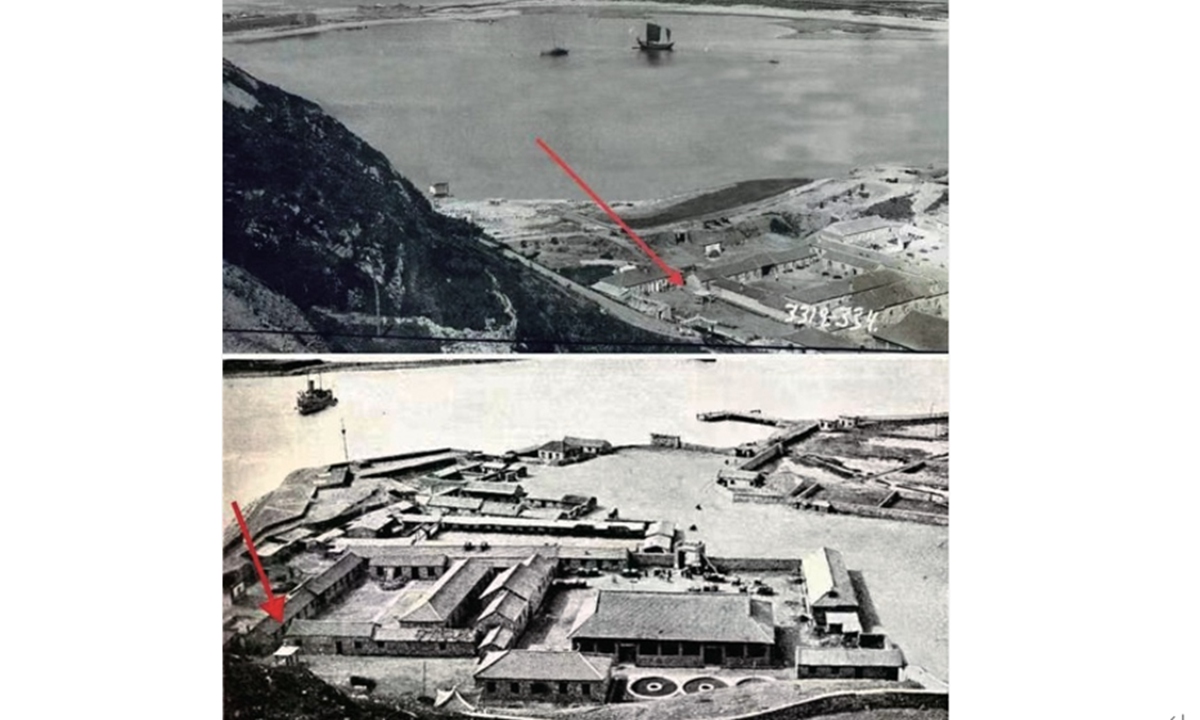
Early 20th century photographs of the Chinese Tang Honglu Well Stele of the Tang Dynasty (618-907) and its pavilion taken by Russians and Japanese in Lüshun (pointed to by the red arrow)
During the early 20th century, when Russia and Japan successively occupied China's Lüshun, Northeast China's Liaoning Province, photographs of the Lüshunkou district taken by these two countries clearly show the stele and its pavilion located at the foot of Golden Mountain in Lüshun, the report said.In 1894, following the outbreak of the First Sino-Japanese War, Japan formulated the methods for "collecting" treasures from the Qing Dynasty during wartime, which outlined procedures for seizing Chinese cultural relics.
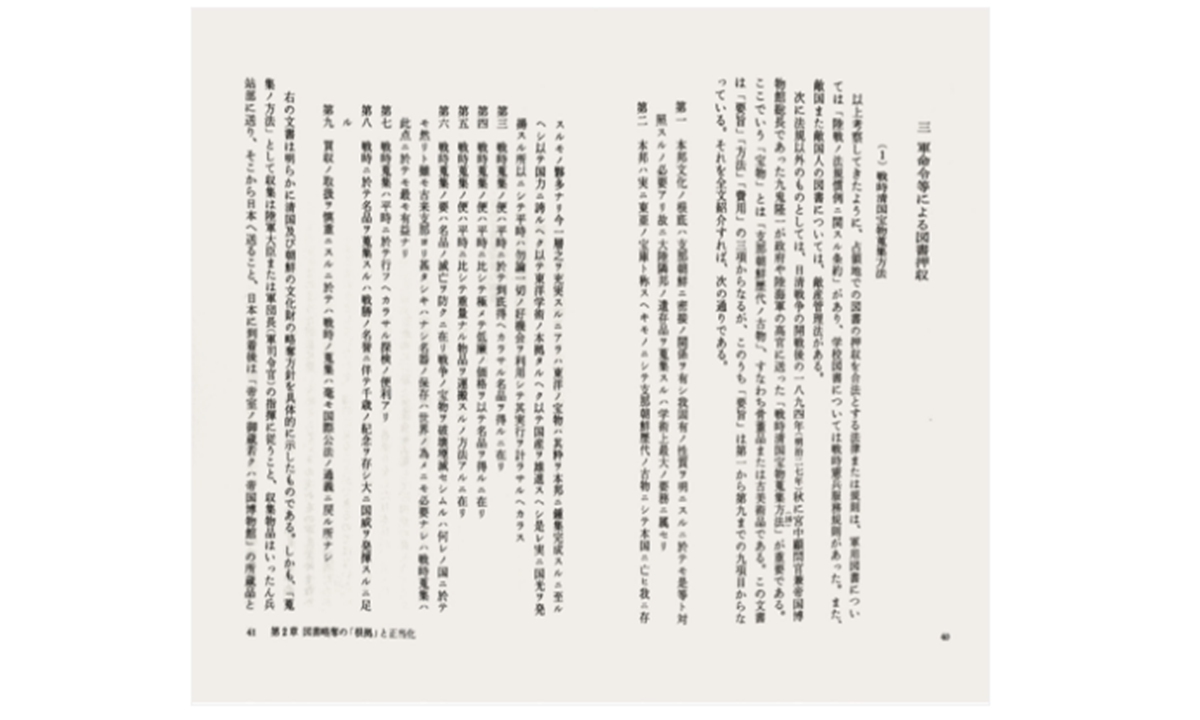
Photo of the methods for "collecting" treasures from the Qing Dynasty during wartime formulated by Japan
It required that the "collection, transportation, and classification" of such relics be directed and supervised by Japanese military officers to ensure that the "collected" relics were preserved by institutions such as the Imperial Museum of Japan.After the Russo-Japanese War, three successive commanders of the Japanese garrison in Lüshun transported so-called "war trophies" to Japan on multiple occasions, the report said.
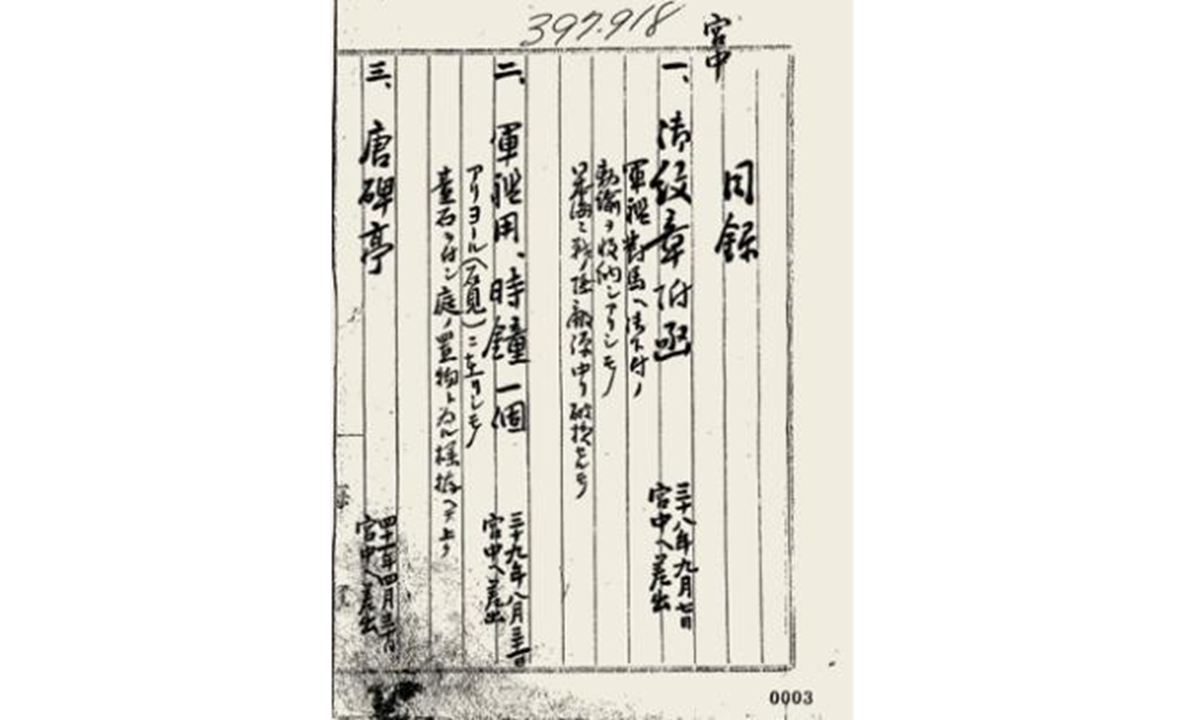
Photo of the Chinese Tang Honglu Well Stele of the Tang Dynasty (618-907) and its pavilion recorded in the donation records of war trophies in the Meiji era, the Russo-Japanese War period
The donation records of spoils in the Meiji era, the Russo-Japanese War period, compiled by Japan in 1908, clearly state that the Stele Pavilion was delivered to the Japanese Imperial Palace on April 30 in the 41st Year of Meiji. The records also note that the item was "originally located at the foot of Golden Mountain in Lüshun," which constitutes the most critical evidence that Japan plundered the stele as spoils of war from the Russo-Japanese War and transported it to Japan.After the stele and its pavilion were transported to Japan, Chinese scholar Qiao Dexiu was the first to expose the incident. In one of his compilations published in 1911, he recorded an entry for "Honglu Well," stating, "The stele had been taken away by a Japanese steamship."
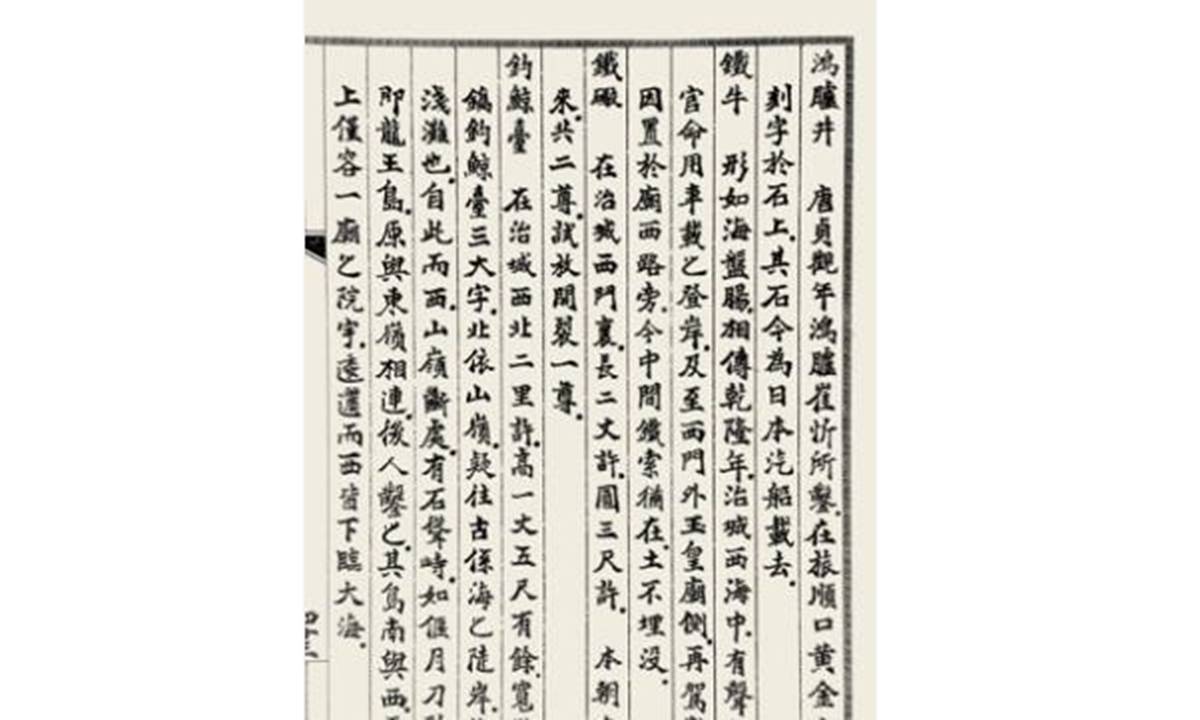
Photo of Qiao Dexiu's compilation published in 1911
A small number of photographs still emerged through various channels after the stele and its pavilion entered Japan. For example, in 2006, the Japanese Imperial Household Agency publicly released a set of close-up and detailed photographs of the stele, according to the report.These photos reveal inscriptions from the Tang, Ming, and Qing dynasties on the surface of the stele, as well as their state of preservation. Clear break marks are visible on the four pillars surrounding the Stele Pavilion, which are likely traces left when the Japanese army dismantled and transported the stele, the report said.
The stele bears witness to China's national unification and ethnic solidarity. According to the standards of the 1970 UNESCO Convention and the 1995 UNIDROIT Convention, it is a Chinese cultural relic of significant historical, cultural, and political value.
Through long-term efforts, Chinese and foreign experts, scholars, and other individuals from all sectors of society have collected and compiled abundant and conclusive documentary and pictorial materials, and published comprehensive archival documentation on the Tang Dynasty's Honglu Well Stele.
The center urged the Japanese government to align with the international consensus on returning lost cultural relics to their countries of origin, respond to the legitimate demands of the Chinese people, and properly resolve this major historical issue, the report said.
It also called on Japan to promptly return the stele and its pavilion to China, taking concrete actions to correct historical wrongs and promote China-Japan friendship.
Global Times