Photo: VCG
China doesn't seek to export China model, academic institutions and research centers in the Global South are witnessing a growing focus on studying and analyzing the Chinese development model, to explore its economic and political aspects as a potential alternative to the traditional Western model.Some of the most prominent examples include: the Lebanon-based Center for Arab Unity Studies which publishes studies analyzing Chinese economic and political policies and their impact on the Arab region as an alternative to Western hegemony; the Africa Center for Strategic Studies that provides ongoing analysis of China's engagement in Africa, focusing on balancing relations to achieve sustainable industrialization and economic growth; and other research centers in Brazil, Chile and Peru which study how the Chinese engagement enhances local development models, particularly in resource-dependent countries or those seeking industrialization.
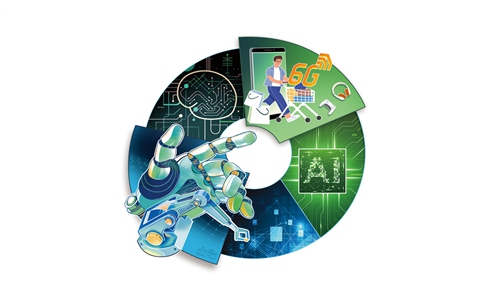
This trend of studying China's development model represents an attempt to develop analytical capabilities from a non-Western perspective and to meet evolving local needs. The most important of these local needs addressed by the Chinese model are: economic and developmental needs - to ensure a continuous flow of energy resources to serve emerging economies and transform economic structures toward higher levels of productivity; political and strategic needs - to protect transportation routes and vital interests amid great power conflicts and enhance energy security in maritime regions; educational and technological needs - to develop the workforce to cope with increasing automation and new technologies, and to incorporate advanced digital skills to meet changing market demands; and, furthermore, societal needs - to develop problem-solving skills, foster creativity, and improve local analytical capabilities that are not entirely dependent on a Western perspective, drawing upon the "Chinese model."
The Chinese model is seen as a practical and successful alternative to the Western liberal model, especially given the challenges many countries in the Global South have faced in implementing the Western model.
Here, the Global South faces structural challenges that have made the Western liberal model less appealing. These include the failure to achieve rapid and sustainable economic development, rising poverty and inequality rates, and political instability resulting from the imposition of ready-made democratic prescriptions. This, coupled with economic dependency and weak local institutions, paves the way for the Chinese model as an alternative focused on sovereign development and stability. The unsuitability of "liberalist" prescriptions for the needs of these countries exacerbates social disparities.
China's tangible economic success provides strong evidence of the effectiveness of its policies. China's declared commitment to the principle of non-interference in internal affairs and respect for national sovereignty also holds considerable appeal for leaders and governments in the Global South, who seek to avoid Western pressures related to democracy.
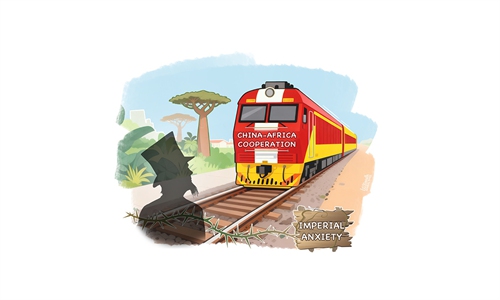
The China-proposed Belt and Road Initiative (BRI) also plays a significant role. The development visions of many countries in the Global South, such as Egypt's Vision 2030, align with the BRI, thus strengthening cooperation in regional integration and industrial connectivity. Countries in the Global South study Beijing's success mechanisms, including the role of local governments in development, long-term economic planning, and the implementation of the special industrial zones.
China has launched global initiatives in cooperation with the United Nations, such as the China-UN Global South-South Development Facility, a flexible Chinese financing mechanism to support sustainable development projects in Asia, Africa, and Latin America. Amid tensions with the West, Chinese companies have increasingly turned to developing countries to boost local manufacturing and technology transfer. Finally, by 2026, China has emerged as a leading destination for health tourism and cultural exchange, adding a "human dimension to its economic partnerships" with developing countries.
We are witnessing a collective awakening of the Global South, with developing countries seeking to challenge Western hegemony and offer alternative narratives about lifestyles and development agendas. They see China as a partner that can help them establish an independent knowledge system and chart their own development path. In addition, the Chinese model is characterized by flexibility and pragmatism, and is viewed as an opportunity to refocus on the gradual reform of key institutions, such as state-owned enterprises, the civil service, and educational institutions.
The author is a professor of political science at Beni Suef University, Egypt. opinion@globaltimes.com.cn
RELATED ARTICLES