US smear of Chancay Port reveals geopolitical calculations, fear of losing regional dominance
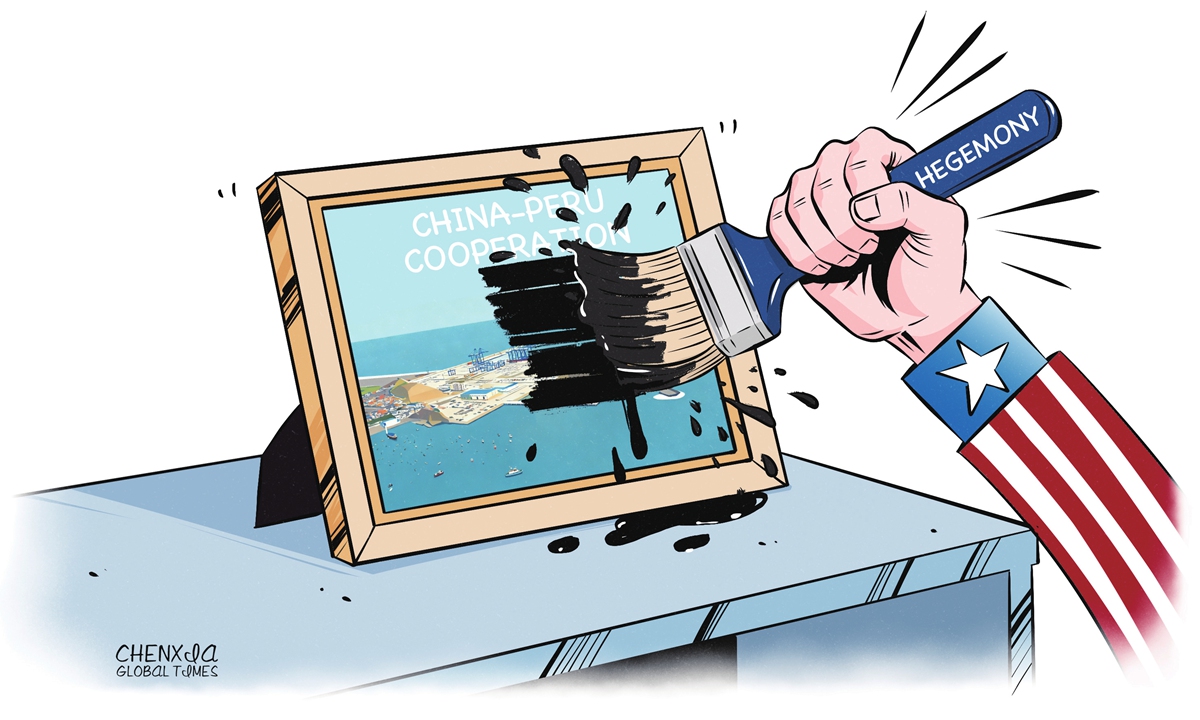
Illustration: Chen Xia/GT
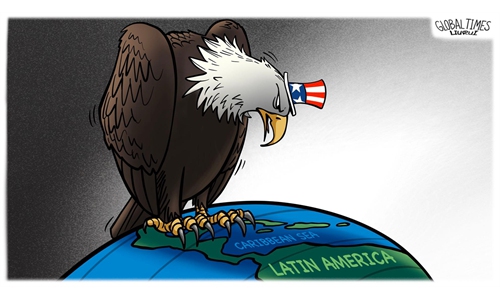
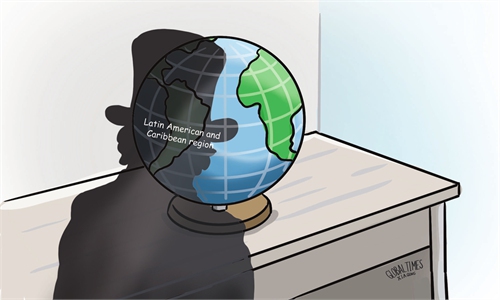
Certain forces in the US have made no secret of its desire in Latin America. Besides Panama Canal and Venezuela's oil, they also openly smeared Peru's Chancay Port.
On Thursday, the US State Department's Bureau of Western Hemisphere Affairs in a post on X claimed that it is "concerned about latest reports that Peru could be powerless to oversee Chancay," calling it "a cautionary tale for the region and the world: cheap Chinese money costs sovereignty."
The bureau's claim referred to a ruling by a Peruvian court that the infrastructure regulator Ositran does not have oversight over the Chancay Port. However, what Ositran regulates are Peru's other major ports, which are concessions on public land, while Chancay is a privately-owned port. "Chancay is not an enclave. It's not a place where the Peruvian state has no sovereignty," Gonzalo Rios, the port's adjunct general manager, told Bloomberg, noting that a host of state entities, including customs, regulate port activities.
"By taking a specific ruling on regulatory jurisdiction and deliberately distorting it, the US is essentially presuming guilt first and then trimming facts to fit the narrative, deliberately portraying normal commercial cooperation and legal procedures as so-called sovereignty transfer. This in itself shows disrespect for Peru's national sovereignty, judicial authority and governance capacity," Pan Deng, director of the Latin America and Caribbean Region Law Center at the China University of Political Science and Law, told the Global Times.
Located about 80 kilometers north of Lima, Peru's capital, the Chancay Port is a key Belt and Road cooperation project between China and Peru and officially commenced operations on November 14, 2024. The participation of Chinese enterprises in its construction and operation reflects broad consensus within Peru and followed repeated reviews and strict legal procedures by the country's related authorities. The decision was fully compliant, lawful and transparent, and stands the test of both history and law. The US statement completely ignores Peru's legal process and sovereign decision-making.
The latest claims from the US side also lay bare its hegemonic anxiety and geopolitical calculation in Latin America. From the Panama Canal to Venezuela's oil, and the Chancay Port, a key logistics hub, Washington's purpose remains consistent: major assets in Latin America must fall under its say. Countries in the region, in its view, should have no right to independently choose their partners, nor to pursue mutually beneficial cooperation with countries outside the hemisphere. What truly concerns the US has never been risks to "sovereignty," but the loss of its traditional exclusive status in the Western Hemisphere.
"The US has long placed its own interests above those of regional countries, habitually sacrificing other nations' sovereignty and development rights to safeguard its hegemony. It frequently uses so-called threats as a pretext to interfere in and smear other countries' normal cooperation. Its ultimate aim is to push Latin American countries into a position where their sovereignty is effectively outsourced to the US, making them dependent on and subject to Washington," Pan said.
Such practices run counter to the trend of the times and to the shared aspirations of regional countries for stability, development and autonomy. In response to the Bureau of Western Hemisphere Affairs' post on X, many netizens commented: "We don't need interventions from the US," and "There is no 'cheap' money; it is 'useful' money." Facts speak louder than words. Even as Washington hypes and sows discord, the Chancay Port has already been recognized by China and Latin America as a "win-win" project. Since its opening, one-way shipping time between China and Peru has been reduced to about 23 days, cutting logistics costs by more than 20 percent.
Cooperation on the Chancay Port stands as a model of mutually beneficial China-Peru collaboration and a vivid example of Latin America's independent development. The region is no one's "backyard." Countries there have every right and the full capacity to decide with whom to cooperate, how to cooperate and on what terms. Rather than spreading alarm and launching smear campaigns, the US should respect the sovereignty and choices of Latin American countries and do more to genuinely benefit the region's people and development.
RELATED ARTICLES