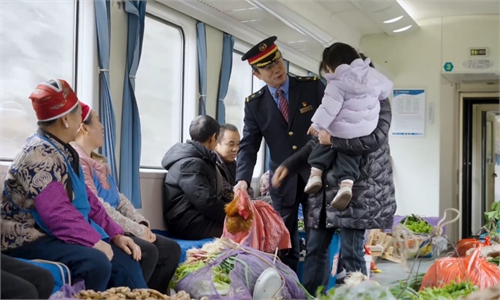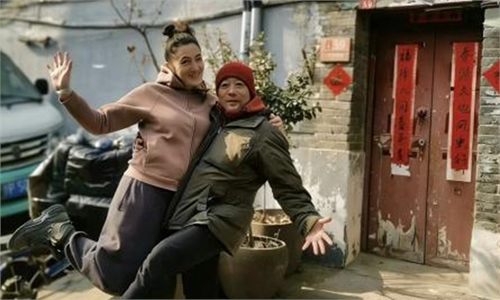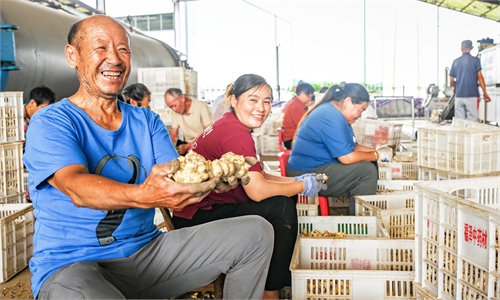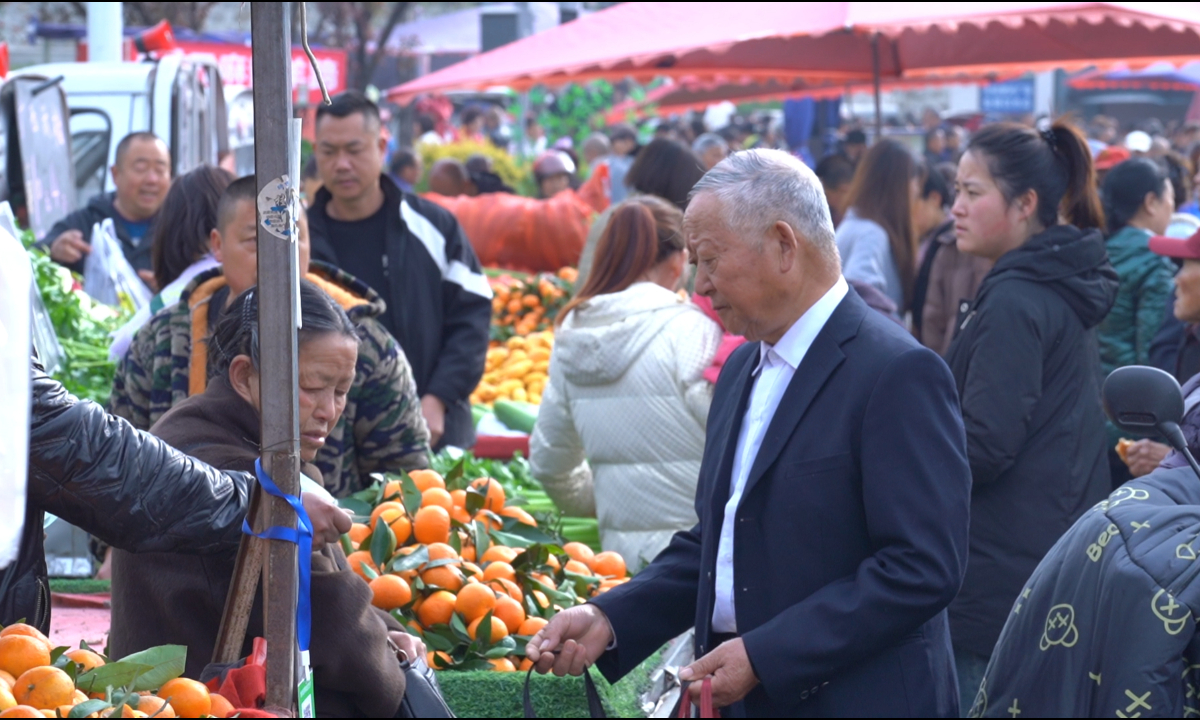
Local residents do shopping at the “common prosperity market” in Wenxing community, Huagai Township, Anzhou district of Mianyang, Southwest China’s Sichuan Province. Photo: Courtesy of the Organization Department of Anzhou district in Mianyang
Editor’s Note:
This year marks the 105th anniversary of the founding of the Communist Party of China (CPC) and the opening year of the 15th Five-Year Plan (2026-30). A new year begins with new resolve and new momentum. The call to "fight for our dreams and our happiness, and turn our great vision into beautiful realities" continues to inspire actions across China.
In the column "New Year on the Frontlines," reporters from the People's Daily traveled to the grassroots to witness the vitality of a vast nation, see its mountains and rivers in motion and its fields in abundance, and listen to the stories of people finding fulfillment in both life and work.
Through these stories, the column seeks to present a vivid portrait of Chinese modernization.
At the break of dawn, 58-year-old Liu Zuqiong pedaled her tricycle to the “common prosperity market.” At her designated stall, she deftly unloaded the fresh vegetables she had grown, arranging them neatly. The soft glow of the stall lights illuminated her face, reddened by the cold, and reflected the stability and anticipation in her eyes.
“Two years ago, having a fixed stall was something I wouldn’t even have dared to imagine,” Liu said.
Living in Wenxing community, Huagai Township, Anzhou district of Mianyang, Southwest China’s Sichuan Province, Liu’s family is classified as low-income. Her entire family depends on the income she earns as a vendor. Operating on the roadside and constantly moving to avoid enforcement officers, she works from dawn to dusk, yet her earnings are never certain.
What now stands as the “common prosperity market” was once a chaotic roadside market that gave local residents endless headaches.
“In the past, vendors crowded together, with tricycles and electric bikes scattered in every direction. Shoppers and passersby jostled for space, horns blaring and hawkers shouting, while vegetable leaves and plastic bags littered the ground,” said Jiang Lin, Party secretary of Wenxing community in Huagai Township.
Residents had to detour around the market just to pass by, while vendors had no security, since a single rainstorm could ruin a day’s business. Turning the streets into a market had long been a thorny problem for community management.
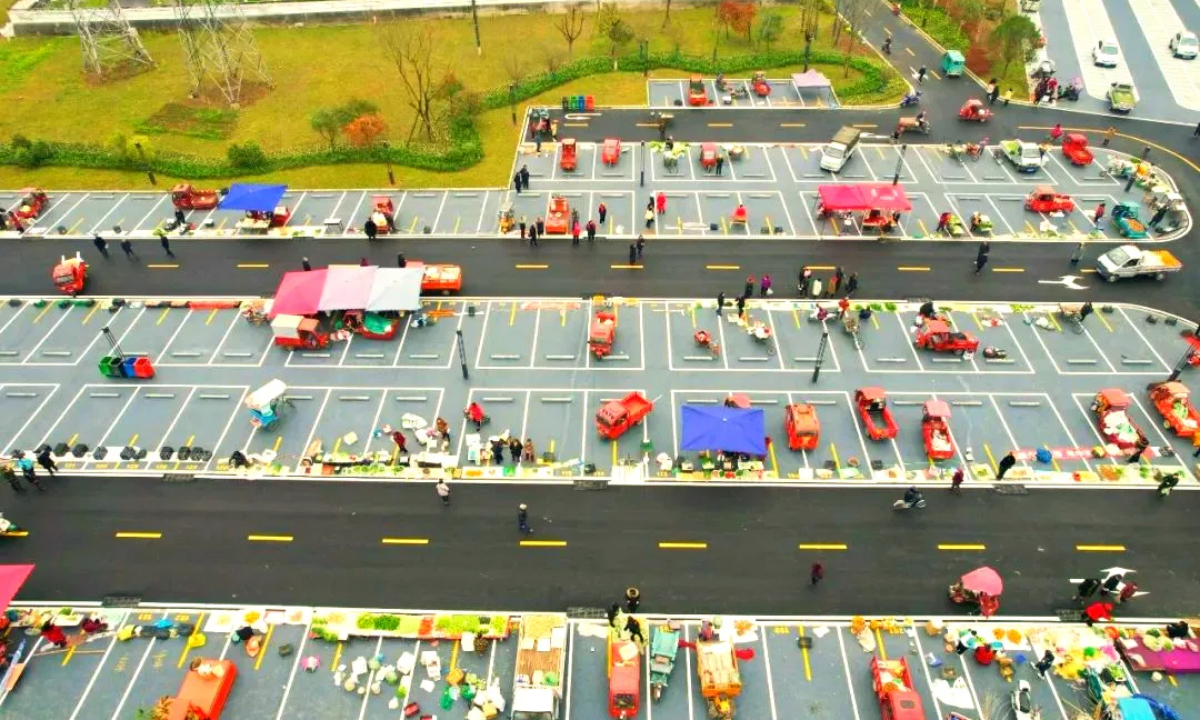
Designated standardized stalls and parking spaces at the “common prosperity market” Photo: Courtesy of the Organization Department of Anzhou district in Mianyang
In 2024, the Huagai Township Party committee took the lead in designating 523 standardized stalls and parking spaces. The community enterprise has since managed operations uniformly, keeping parking areas and trading zones separate. Staff members have been assigned to maintain order, clean up, and guide itinerant vendors to settle and establish permanent stalls.
Even more heartening is that the community has set up 100 free “kindness stalls” for residents like Liu facing financial difficulties.
“We don’t need to pay stall fees, and electricity and water are already provided. Even the canopies are installed uniformly by the community, so vendors can operate as usual, rain or shine,” Liu said. She calculated that by selling more than 200 yuan ($28.95) worth of vegetables a day, she now earns over 2,000 yuan more each month than before.
“This market is more than just a place for vendors to set up stalls, it’s a pathway for low-income residents to earn a stable additional income,” Jiang said, adding that the community enterprise not only provides the stalls but also helps promote vendors and connect them with customers.
Last year, the 100 free “kindness stalls” directly helped 82 low-income households increase their earnings, with an average annual increase of over 8,000 yuan per household.
RELATED ARTICLES