Illustration: Xia Qing/GT
Editor's Note:As China enters the annual time of national "two sessions," the country is turning its focus toward the strategic blueprint of the 15th Five-Year Plan (2026-30). Within this vision, the Guangdong-Hong Kong-Macao Greater Bay Area (GBA) is expected to play a greater role as a strategic pivot point of China's new development pattern, a demonstration zone for high-quality development and a leading area for Chinese modernization.
Against this backdrop, the Global Times launches a commentary series, "GBA: New Voyage." The series includes insights from National People's Congress (NPC) deputies and Chinese People's Political Consultative Conference (CPPCC) National Committee members from the SARs as well as international professionals in Hong Kong and Macao. This is the third installment.
As the global economic landscape undergoes a profound structural realignment, the relationship between China and the Lusophone world is entering a transformative new chapter. We are witnessing a decisive shift from a traditional commodity-based exchange toward a sophisticated, service-intensive mode of cooperation. This transition, which privileges rules, standards, finance, and human capital, finds its most potent catalyst in China's 15th Five-Year Plan (2026-30). At the heart of this national strategy lies the Guangdong-Hong Kong-Macao GBA, with Macao poised to redefine itself not merely as a centre of consumption, but as a knowledge-intensive facilitation platform to boost service.
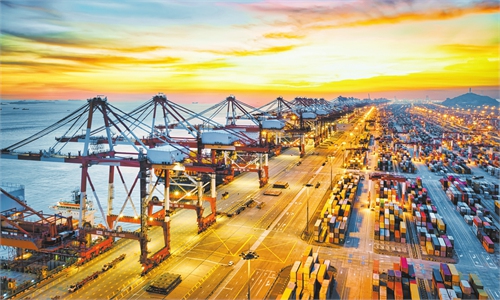
The foundation of this evolution is remarkably resilient. From 2003 to 2025, trade among Forum Macao participants expanded significantly in both volume and sectoral scope. While the historical specialization lines - pairing Lusophone primary commodities with Chinese technological inputs - remain a bedrock, they now serve as the infrastructure for a more ambitious "service layer."
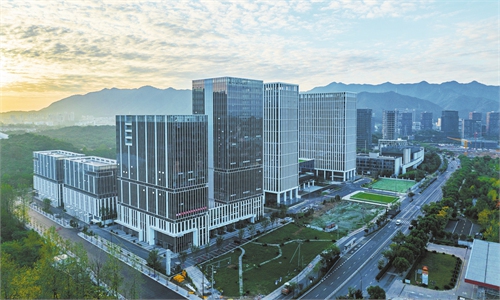
Within the GBA's strategic portfolio, the expansion of modern service interfaces is already scaling to meet this demand. Qianhai has institutionalized its opening-up, providing a massive stage for financial and legal connectivity. Simultaneously, Nansha is building targeted Science & Technology platforms and talent policies to enable high-standard commerce.
However, it is in the deepening integration of Macao and Hengqin where the most innovative "service tools" are being forged. By focusing on four "new industries" - ranging from high-end manufacturing and traditional Chinese medicine (TCM) to modern finance and cultural tourism - Hengqin is utilizing "separate line management" customs and tax pilots.
The financial "plumbing" of the GBA further operationalizes this vision. The 15th Five-Year Plan coincides with the maturation of Wealth Management Connect 2.0, which has broadened product scopes and raised quotas across Macao and its neighbouring mainland cities. Furthermore, the silent engine of this integration is data governance. The implementation of the GBA Standard Contract for cross-boundary personal data flows, paired with Macao's parallel privacy measures, has reduced compliance hurdles. This creates an essential precondition for the growth of fintech, health-tech, and digital education services - sectors that require a high degree of trust and seamless data mobility between China and its global partners.
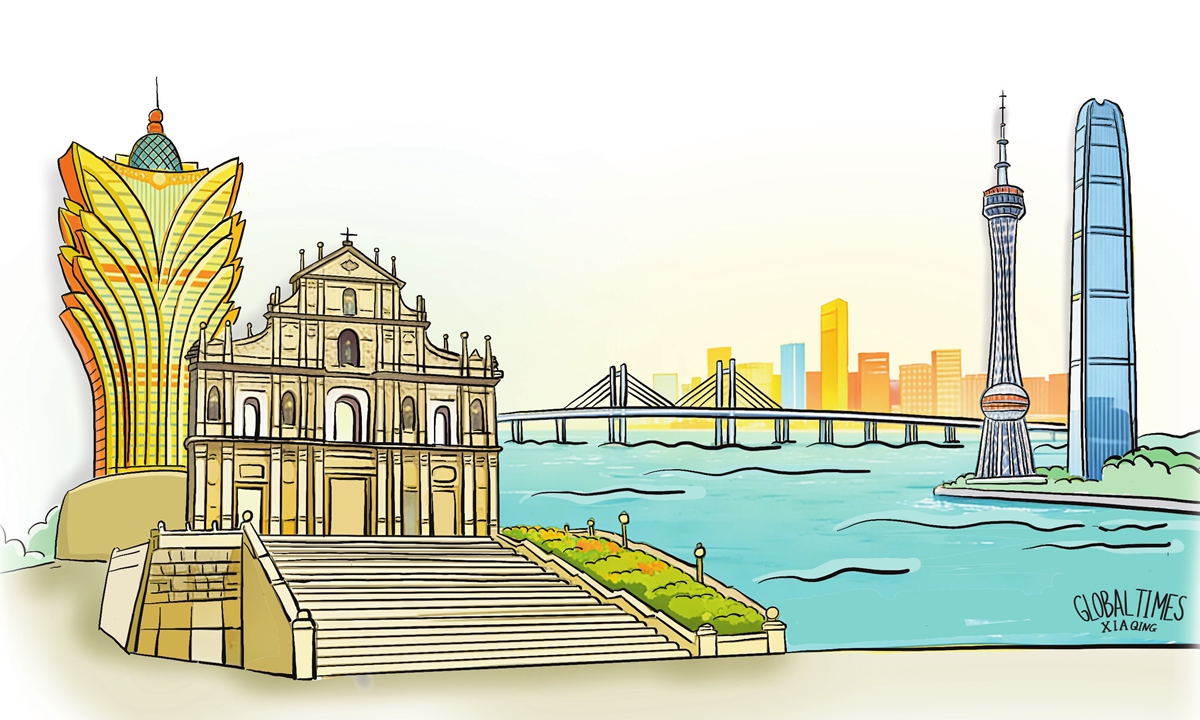
Under the framework of the national 15th Five-Year Plan, the Macao SAR's own third Five-Year Plan reframes the city's destiny. The transition is clear: Macao is moving toward becoming a reliable orchestrator of China-Lusophone networks. We can already see this "service-as-a-product" model in several key areas. In the realm of standards and certification, the Guangdong-Macao TCM Science & Technology Industrial Park in Hengqin is a prime example.
Legal and dispute-resolution services provide another pillar of confidence. Macao's Arbitration Law, now aligned with international UNCITRAL standards, introduces emergency arbitrator mechanisms that bolster commercial trust. When paired with the bilingual capabilities of the WTC Macau Arbitration Centre, the city offers a unique legal interface for Portuguese-speaking countries-China ventures. This is complemented by a robust investment in human capital. With over 1,500 participants trained through Forum Macao and specialized linguistic partnerships with the European Commission, Macao is securing the high-end competencies required to manage the complex projects of the next decade.
The urgency of this service-led agenda is reinforced by shifting global dynamics. The signing of the EU-Mercosur Partnership Agreement in early 2026 has created one of the world's largest trade zones, framing Brazil as a vital geopolitical platform. As China and the EU reaffirm their cooperation on innovation and open markets - despite trade imbalances - the demand for rule convergence and platform connectivity becomes paramount. Macao, with its bilingual civil-law interface and upgraded research base anchored by institutions like the University of Macau (now ranked 145th globally), is uniquely positioned to bridge these worlds.
Green growth also offers a fertile ground for Macao's intermediation. Through platforms like the Macao International Environmental Cooperation Forum & Exhibition, the city provides matchmaking services for green technologies, linking GBA suppliers with the rising environmental demands of Lusophone countries. This aligns perfectly with the 15th Five-Year Plan's emphasis on ecological achievements and sustainable digital infrastructure.
The connective tissue of financial "Connect" schemes, data contracts, and pilot rule zones provides the enabling infrastructure, but it is Macao that provides the essential human and legal touchpoints. By converting traditional commodity interdependence into a rich ecosystem of standards, finance, and data-rich cooperation, the 15th Five-Year Plan ensures that Macao will play an indispensable role in the nation's opening-up.
As we look toward 2030, the path for the GBA and Macao is clear. It is a path that moves beyond the simple exchange of goods toward the co-creation of value through shared rules and innovative services. For partners across the Portuguese-speaking world, this framework offers a predictable and sophisticated pathway to scale projects in energy transition, smart agri-food, and the bio-economy. The next five years will not just be about economic growth; they will be about building the institutional bridges that will define the future of global cooperation.
The author is an associate professor in the Faculty of Social Sciences and deputy director of the Institute of Global and Public Affairs at the University of Macau. opinion@globaltimes.com.cn
RELATED ARTICLES