Illustration: Liu Xidan/GT
The US-Israel-Iran conflict has stretched into its third week. Beyond the battlefield, the world is facing the "largest supply disruption in history" of oil markets and the cascading fallout of energy shocks. Amid global anxiety, international media have turned their gaze toward China, whose energy supply has remained relatively stable. Media outlets such as The Washington Post and Bloomberg have noted that, despite the pressure of rising costs, China has demonstrated a stronger ability to "buffer against" the energy shocks. Behind this resilience lies China's decades of strategic focus on energy security and a steadfast institutional commitment to building a diversified energy supply system.Ding Long, a professor at the Middle East Studies Institute of Shanghai International Studies University, told the Global Times that "since China transitioned from an oil exporter to a net importer in 1993, it has prioritized energy security in both strategic planning and practice. Over time, China has built a resilient energy supply system featuring the coordinated integration of multiple energy sources, including coal, oil, gas, nuclear power and renewable energy." This forward-looking institutional approach has provided strong support for maintaining stability amid global energy turbulence.
From the perspective of traditional energy security, China has in recent years worked to stabilize domestic crude oil production while steadily expanding its strategic petroleum reserves. Meanwhile, through ongoing efforts to expand international energy cooperation, China has diversified its import sources and optimized supply structures, building a network that spans the Middle East, Russia, Central Asia, Africa and the Americas. This diversification significantly reduces the impact of disruptions in any single region.
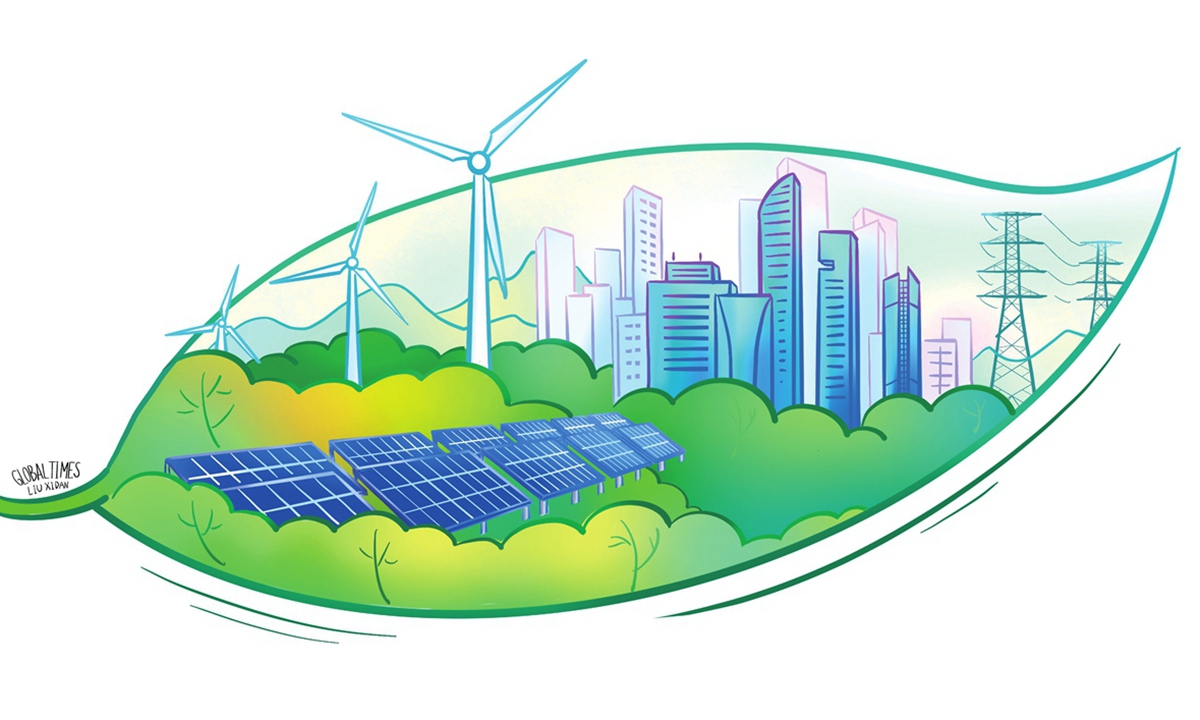
More importantly, China's green transition underscores its resilience. China has built the world's largest and fastest-growing renewable energy system. Data shows that renewable energy accounted for over 60 percent of China's total installed power generation capacity, and electricity generation from renewable sources reached about 4 trillion kilowatt-hours in 2025, exceeding the combined power consumption of the European Union's 27 member states.
"Leveraging strong manufacturing, advanced power systems and a vast market, China is emerging as an 'electrostate,' increasingly powered by domestically generated electricity rather than imported fossil fuels," Jia Weilie, a professor at the Institute for Sustainability of Huzhou University and a researcher at the Budapest Centre for Long-term Sustainability, noted. This not only cushions global oil supply shocks but also paves the way for a sustained reduction in fossil fuel dependence.
Over the years, China's sustained investments in new energy storage have been at times dismissed by some foreign observers as "idealistic," given their scale and long construction cycles. Yet the current conflict proves them to be a form of far-sighted "realism." Geopolitical tensions have once again exposed the inherent vulnerability of traditional energy systems, while renewables, such as wind and solar, are inherently "localized," offering superior long-term stability. The more a nation relies on traditional energy, the higher the cost to hedge against risks; conversely, the more diverse and cleaner an energy system is, the stronger its ability to withstand external shocks. China's energy transition path is now demonstrating its immense value.
The world is also reappraising China's contribution to the global energy landscape. With the most complete industrial chain, the largest production capacity and significant cost advantages in the new energy sector, China has become a vital global supplier of wind power equipment and photovoltaic panels. It is also establishing partnerships with other countries in expanding regional power connectivity and promoting the utilization and sharing of clean energy.
Today, countries face a fundamental strategic choice: whether to continue anchoring their energy security to oil tankers, pipelines and geopolitical uncertainties, or to accelerate the shift toward systems built on locally generated, consumed, stored renewable energy. China has already charted its course, with its energy strategy providing a pragmatic paradigm for global energy security governance, which is being reevaluated by the world amid the evolving global landscapes.
The author is a reporter with the Global Times. opinion@globaltimes.com.cn
RELATED ARTICLES