US demand for Hormuz escort puts Japan in an awkward spot; embarrassment reflects structural contradiction in this alliance: Chinese expert
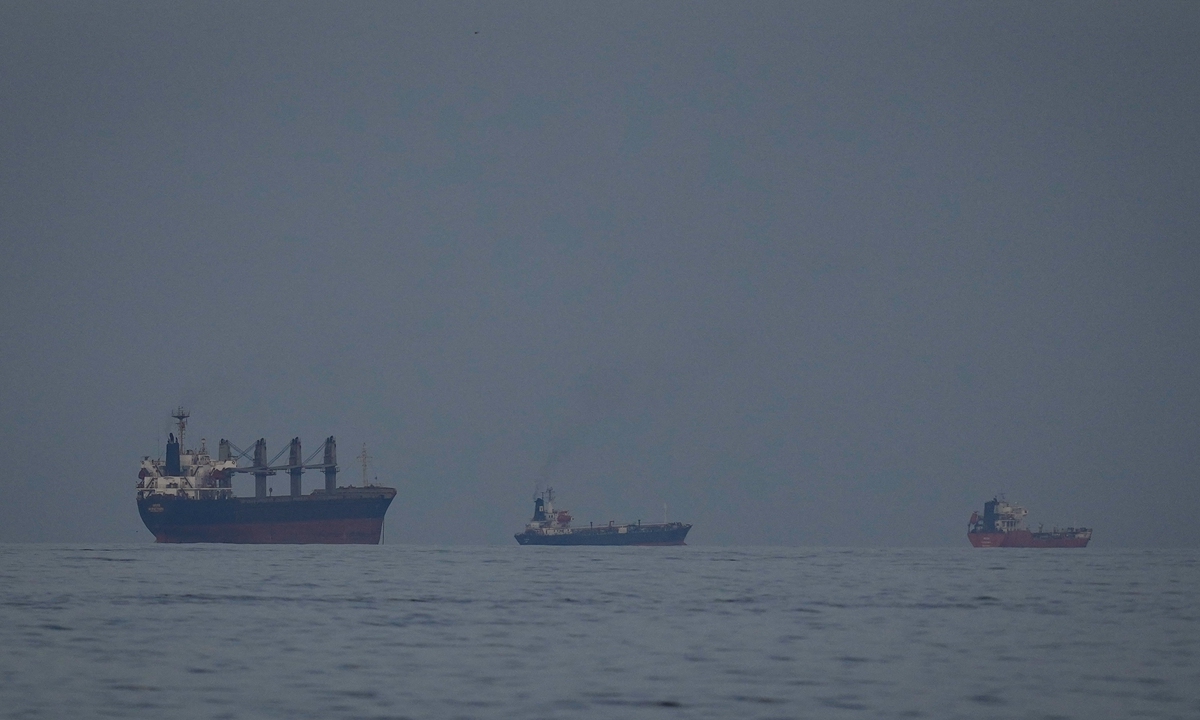
Oil tankers and ships line up in the Strait of Hormuz as seen from Khor Fakkan, United Arab Emirates, on March 11, 2026. Photo: VCG
With shipping through the Strait of Hormuz under spotlight, Japanese Prime Minister Sanae Takaichi has recently been put in an awkward spot after US President Donald Trump demanded that Japan and other countries dispatch vessels to the Strait of Hormuz to ensure its safety, given Japan's constitutional limits on taking part in overseas military campaigns and its economy's heavy reliance on energy supply, media reported on Tuesday. The timing is especially tricky for Takaichi as a Japan-US summit is scheduled on Thursday in Washington.
A Chinese expert noted that Japan's ambivalence over the Strait of Hormuz escort issue stems from multiple constraints, including legal, diplomatic and energy security concerns as well as public opinion. This dilemma lays bare the structural contradictions in the US-dominated, Japan-following alliance and reflects widening rifts in the US alliance system.
Nikkei reported on Tuesday that the Japanese government is caught in a dilemma: while it prioritizes its security alliance with the US, it also relies heavily on energy imports from the Middle East. The report noted that many within the Japanese government believe it is difficult to send Self-Defense Forces (SDF) ships to the conflict-ridden Middle East at present, and they will carefully assess the true intentions of the US.
According to the report citing a senior Japanese government official, "the government takes a cautious stance on dispatching the SDF," adding that Japan would "convey to the US what it can and cannot do," signaling a negative attitude toward the deployment.
The development came ahead of a scheduled Japan-US summit on Thursday in Washington. Takaichi, at a meeting of the House of Councillors Budget Committee on Monday, also maintained a cautious tone on the possibility of the SDF being dispatched to the Strait of Hormuz, saying, "Rather than simply responding to a request from the United States, we will make the most appropriate decision based on what Japan can do within its legal framework," The Japan News reported on Tuesday.
With Iran imposing restrictions in the shipping in the Strait of Hormuz following the US-Israeli attack against Iran, Trump asked several of his allies to escort shipping in the Strait of Hormuz, but received cautious response on Monday from countries including Germany, Spain and Italy, drawing criticism from the US president who accused Western partners of ingratitude after decades of support, per Reuters.
Xiang Haoyu, a distinguished research fellow at the China Institute of International Studies, told the Global Times on Tuesday that another concern for Tokyo is the risk to energy security, as 95.1 percent of Japan's crude oil imports come from the Middle East, with 73.7 percent passing through the Strait of Hormuz.
According to The Japan Times, the conflict in the Gulf region has sent crude oil prices soaring and is beginning to cast a shadow over the Japanese economy.
"Joining a US-led escort operation targeting Iran could trigger Iranian retaliation and directly cut Japan's economic lifeline," Xiang said, adding that Japan has long maintained good ties with Iran and is unwilling to sacrifice this Middle Eastern diplomatic asset by blindly following the US.
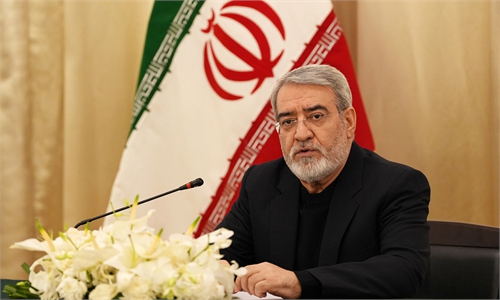
In an interview with NHK on Monday, Hossein Kanani Moghaddam, former commander of Iran's Islamic Revolutionary Guard Corps has warned that Japanese vessels "would face danger" if they are sent to secure the Strait of Hormuz at the request of the US. He said if American military bases in Japan are used for launching strikes against Iran, they too will become targets.
According to the Nikkei, Japan also faced with its legal red line of Article 9 of "pacifist Constitution" that sets strict thresholds for overseas troop deployment. In the case of the security-related laws, a prerequisite is that the party receiving support must be attempting a counterattack that is lawful under international law. Unless Japan clearly expresses a position in support of the attack on Iran, it will be difficult to join in providing escort support to the US military. On the other hand, applying the right of collective self-defense to the US forces would mean treating Iran, a country that had previously been friendly, as a complete enemy, the Nikkei said.
Sending the SDF overseas would be seen as an expansionist action of militarism, expert said, noting that it would also incite public fury, when the public has already expressed dissatisfaction toward the government's vague stance on the legitimacy of the US' military operations.
Should Trump directly make such a demand during the upcoming US-Japan summit, it could "put Japan under pressure to take sides" within the framework of the alliance, the expert noted.
Japan Times said that any misstep in economic policy or in relations with the US could undermine the robust public support that forms the foundation of Takaichi's political standing, the report said, noting that the administration is now considering its options, with an aide saying, "Leaving a request from the United States unanswered is not an option."
Japan is being put in an awkward corner, which lays bare the structural contradictions in the US-dominated, Japan-following alliance and reflects widening rifts in the US alliance system, Xiang said.
RELATED ARTICLES