Illustration: Liu Rui/GT
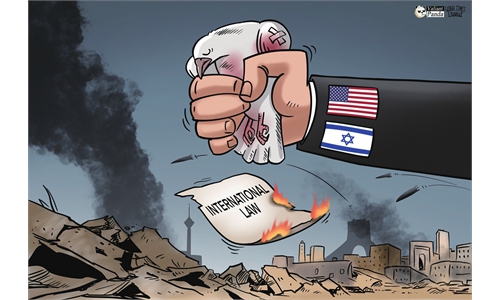
The US-Israel-Iran conflict has entered its fourth week. In terms of intensity, scope and willingness, it has shown a clear trend of escalation. The situation is undergoing a dangerous shift from "manageable confrontation" to "high-risk escalation out of control," posing substantial challenges to regional security and global stability - especially as multiple strikes have been launched near nuclear facilities. The Director General of the International Atomic Energy Agency Rafael Grossi has stressed that "maximum military restraint should be observed, in particular in the vicinity of nuclear facilities."First, the range of targets involved in the conflict is expanding. Over the past week or so, the targets of strikes by all parties have gone beyond purely military and political objectives. As the conflict intensifies, critical civilian infrastructure - including power systems, water facilities and public transportation - in Iran, Israel and the Gulf Arab states may continue to be impacted. In the event of a nuclear facility leak, the resulting damage and risks would further escalate, causing immeasurable harm to ordinary civilians.
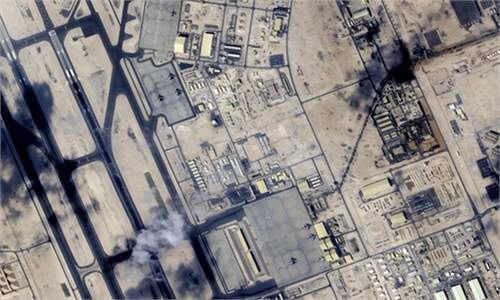
Second, the geographical scope of the conflict is widening. Shiite militias in Iraq and Hezbollah in Lebanon have been drawn into the conflict, while the Houthis in Yemen have threatened to blockade the Bab el-Mandeb Strait. On March 20, Iran launched long-range missile strikes on the US-UK military base in Diego Garcia. Earlier, the US had struck the Iranian Navy frigate Dena off the coast of Sri Lanka. The conflict has thus expanded from the Gulf region to the Indian Ocean. Meanwhile, as the Strait of Hormuz faces a de facto closure, global energy prices have surged. The stance of external actors - especially European countries - on military escort may shift, and the likelihood of their involvement in the conflict is increasing as the closure persists.
Third, the risks of escalation are accumulating. Media reports indicate that Washington is deploying additional forces, possibly aiming to seize Iran's Kharg Island to compel Tehran to reopen the Strait of Hormuz. However, despite facing continued losses among its military and political leadership, Iran has sustained retaliatory operations using long-range missiles and drones. As of Sunday, Iran has launched 73 waves of Operation True Promise-4.
Retaliation against US targets in Gulf Arab states could provoke strong dissatisfaction from those countries. If the US were to seize Iranian territory, it would fundamentally alter the nature of the conflict - from "long-range mutual strikes" to "invasion operations" - further intensifying its scale. Meanwhile, continued attacks on targets within Gulf Arab states could prompt countries such as the UAE and Saudi Arabia to shift their positions toward Iran, potentially supporting US-Israel military action or even directly joining the conflict, thereby expanding its scope further.
Fourth, the difficulty of ending the conflict is increasing. The current situation has deepened antagonism among the US, Israel and Iran, making it difficult for any party to support a rational settlement in the short term. For the US, strikes on Iran have failed to force concessions on key issues, while Iran's hardline stance leaves Washington in a dilemma. For Israel, Iran's continued retaliation means that without sustained strikes on Iranian military targets - particularly ballistic missile bases - its own security cannot be guaranteed. For Iran, attacks by the US and Israel have fueled domestic hardline sentiment, leaving little room for unilateral de-escalation in the short term. More importantly, Gulf Arab states - once mediators between the US and Iran - have now been drawn directly into the conflict, limiting their ability to play a constructive role in peacemaking.
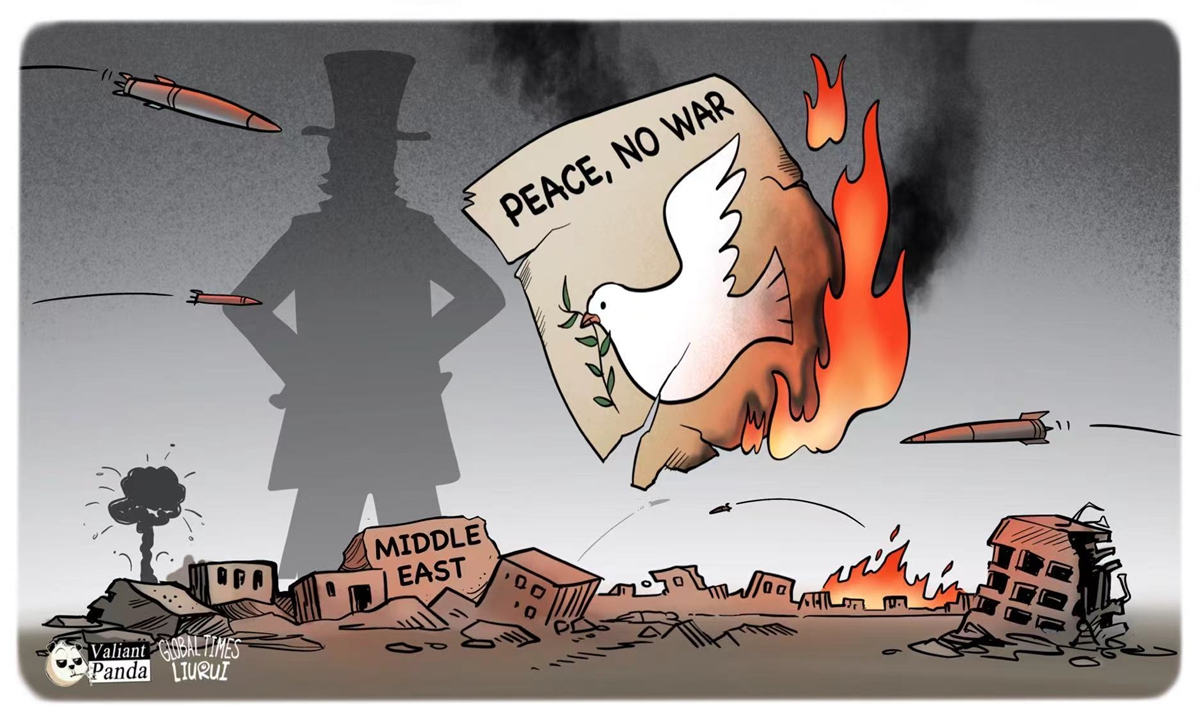
The continuous rise in the intensity of the conflict, the expansion of its geographical scope and the growing strategic uncertainty are jointly pushing the situation in a more uncontrollable direction.
Yet, it is precisely at such a critical juncture that the international community and regional countries must step up diplomatic mediation, promote the establishment of crisis management mechanisms and rebuild channels of communication to prevent further spillover. At the same time, the parties involved need to reassess their current strategic approaches and, by weighing military gains against long-term risks, avoid taking actions that could further exacerbate tensions.
The author is a professor at Northwest University. opinion@globaltimes.com.cn
RELATED ARTICLES