Why Chinese initiatives are gaining increasing recognition amid global turbulence
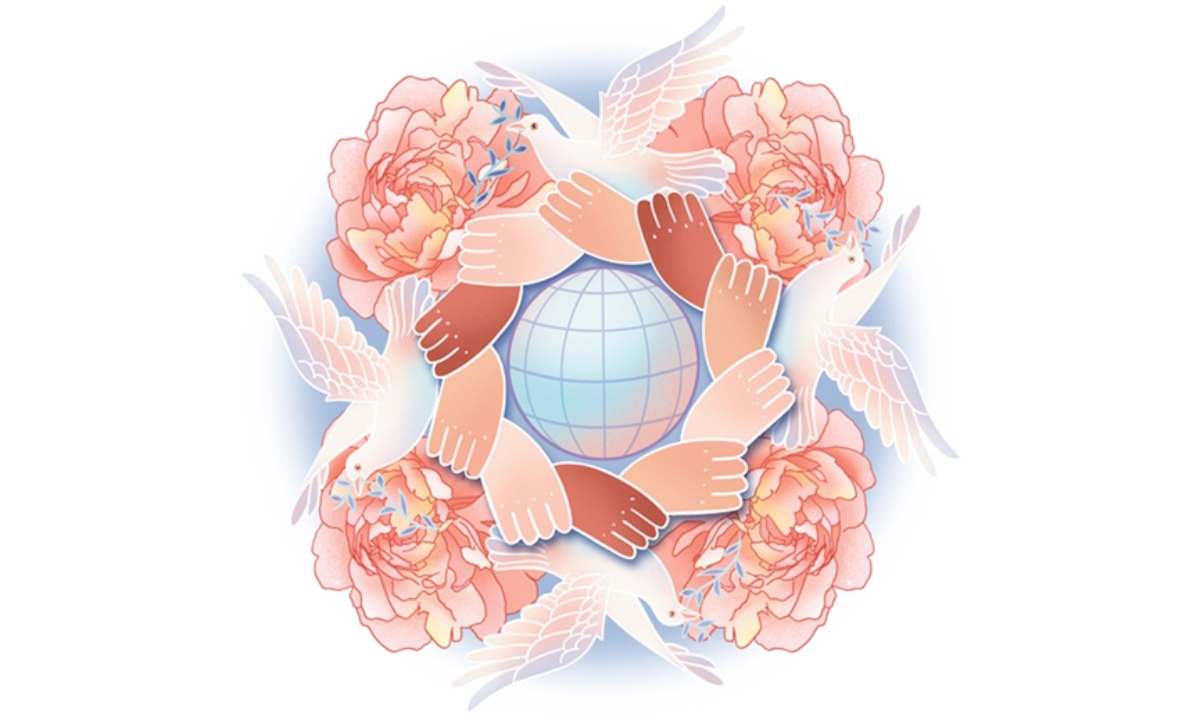
Illustration: Liu Rui/GT
As the US-Israel-Iran conflict escalates in the Middle East, more people who yearn for peace and stability are working hard to build consensus in a world torn apart by war.In early March, we attended the 13th Baku Global Forum in Azerbaijan. What struck us most directly and powerfully was the deep anxiety about the current global situation and the urgent need for the world to forge an unprecedented consensus for peace. Whether in plenary speeches or closed-door discussions, almost every participant conveyed the same profound concern - the world now stands at a critical crossroads, and established norms and order are collapsing.
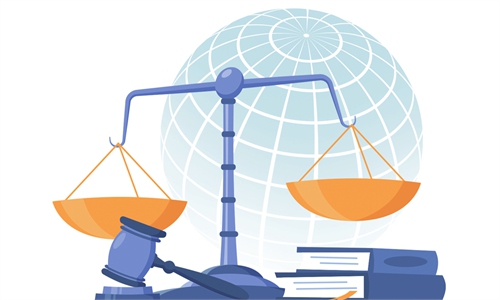
Resisting unilateral violence, opposing bloc confrontation and calling for the international order to return to rationality became the clearest and loudest theme of the entire event. Through exchanges with senior officials from various international organizations, we sensed a shared understanding: Although the UN urgently needs reform and faces challenges in both efficiency and enforcement, it remains a vital achievement of political civilization, just as essential today as it was in the aftermath of WWII, 80 years ago. The existence of the UN is the most important legitimate platform ensuring that small and medium-sized countries are protected from great-power bullying and can participate in global governance. Safeguarding the UN's authority means safeguarding the bottom line of human civilization.
If defending the UN system is a battle to safeguard the existing order, then the widespread debate over China's initiatives represents the international community's "vote" for a future order. A notable breakthrough at this year's forum was the inclusion of the China-proposed Global Governance Initiative (GGI) as a core panel agenda in the main forum.
On March 13, a special seminar titled "China and the Global Governance Initiative" was held. Wu Hongbo, former special representative of the Chinese Government on European Affairs, delivered a keynote speech, elaborating in depth on China's thinking for addressing the global governance deficit.
Representatives from various countries expressed strong recognition of China's initiative. Many participants, both in private conversations and public statements, openly acknowledged that among the world's major powers, only China has not initiated or participated in any war for decades and has consistently appeared on the global stage as a builder of peace.
As a responsible major power, China has actively put forward the GGI that resonates with historical trends and serves as a public good, earning high praise from the international community for its proactive historical role. In contrast to the intense scrutiny faced at international conferences over the past two years, this year's gathering in Baku clearly demonstrates that China's discourse power in global governance has shifted from a stance of "passive defense" to one of "active leadership."
One particularly encouraging detail that emerged in discussions and interactions was the keen interest and high appreciation shown by political leaders from various countries toward China's recent two sessions in Beijing and the newly adopted 15th Five-Year Plan (2026-30). In an era when policies in major Western powers are highly polarized and electoral politics causes national strategies to flip repeatedly, China's ability to plan its national development blueprint in orderly, forward-looking five-year cycles - covering economic transformation, technological innovation and social governance - represents a "certainty" that transcends political cycles. This certainty itself is one of the greatest public goods for the world economy and security. Many participants admitted that the world now expects China, more than ever, to shoulder greater responsibility and play a more pivotal leadership role in global affairs.
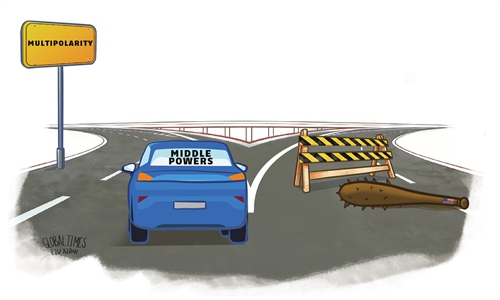
From the collective anxiety at the Munich Security Conference to the strong consensus in Baku - to resist unilateral violence, oppose bloc confrontation and call for the international order to return to rationality - what we have witnessed is not merely a shift in geographic coordinates. It is a vivid reflection of the global governance center tilting toward multilateralism, the broad Global South, and middle powers.
Face-to-face exchanges and reasoned debates can often cut through prejudice, conveying China's sincere commitment to peace and its strategic steadiness.
Wang Huiyao is founder and president of the Center for China and Globalization (CCG) and Miao Lü is co-founder of CCG. opinion@globaltimes.com.cn
RELATED ARTICLES