Strikes continue and diplomacy persists as Iran war extends; China hopes relevant parties seize opportunity for peace: Chinese FM spokesperson
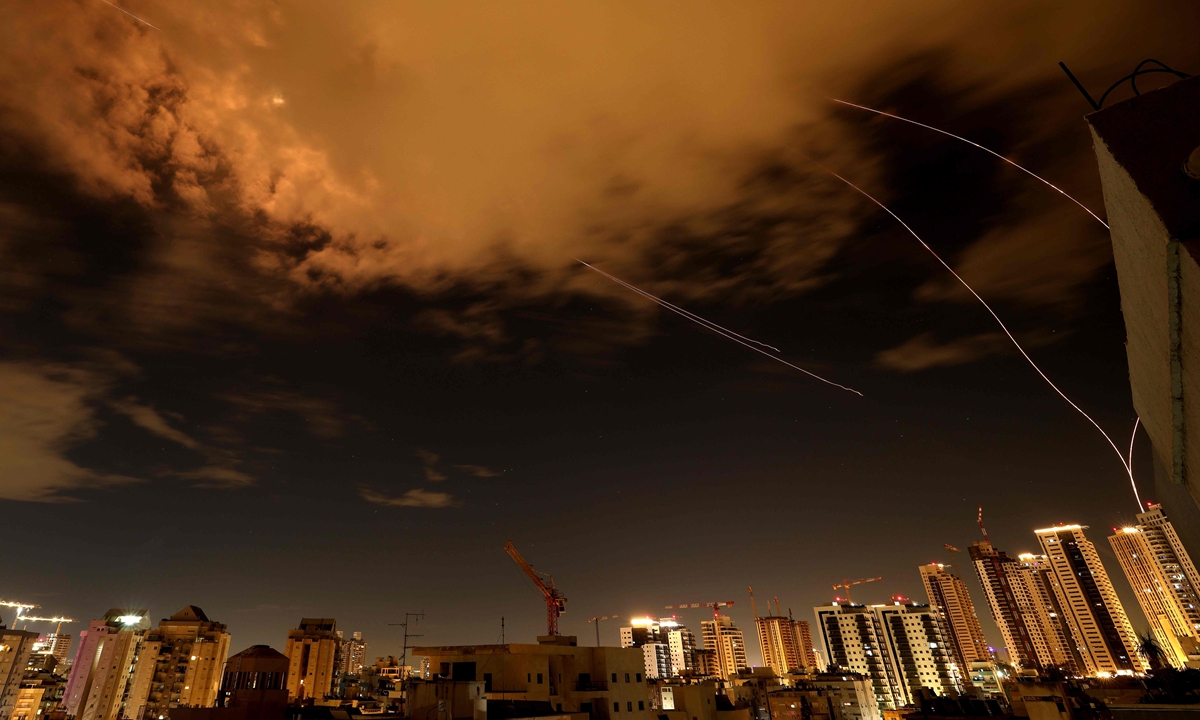
Rocket trails are seen in the sky above the Israeli coastal city of Netanya, Israel amid a fresh barrage of Iranian missile attacks on March 25, 2026. Photo: VCG
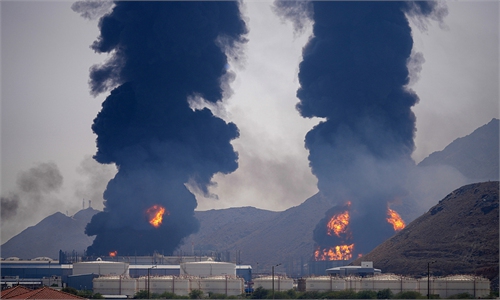
The conflict in the Middle East continues, with US‑Israeli strikes on Iran entering its 26th day, while both mixed signs of military attacks and diplomatic mediation emerged.China continues to follow closely the evolving situation in the Middle East, with Zhai Jun, Special Envoy of the Chinese Government on the Middle East Issue holding a group meeting with envoys of Gulf Cooperation Council (GCC) countries to China on Wednesday, while a Chinese Foreign Ministry spokesperson also responded to several questions regarding Middle East situation at the regular press conference the same day, including on US President Donald Trump's reported peace proposal to Iran.
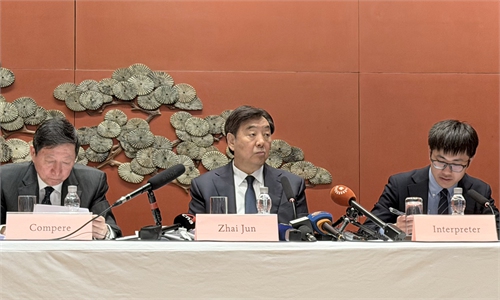
Zhai said the ongoing conflict has seriously endangered security and stability in the Middle East. China attaches importance to the legitimate security concerns of GCC countries and understands and supports their efforts to safeguard their sovereignty, security and territorial integrity. China is willing to maintain close communication with the GCC side and make unremitting efforts to help cool down the situation.
The GCC envoys to China briefed on the current situation and expressed expectations that China will play a greater role in promoting the early restoration of peace and stability in the region.
According to the Associated Press, the Israeli military announced it had begun new wide-scale attacks early Wednesday on Iran targeting government infrastructure, and witnesses reported airstrikes in the northwestern city of Qazvin.
Iran, for its part, also carried out attacks. The Islamic Revolutionary Guard Corps (IRGC) announced that it has launched the 80th wave of its decisive retaliatory "Operation True Promise 4," this time targeting strategic points and military centers on the northern side of the occupied territories, in addition to striking American outposts across the region, Iranian media Press TV reported on Wednesday.
Meanwhile, the AP reported that at least 1,000 soldiers from the 82nd Airborne Division are set to be deployed to the Middle East, in addition to the deployment of two Marine units that will add about 5,000 Marines and thousands of sailors to the region.
In response, Iran's parliament speaker, Mohammad Bagher Ghalibaf, said Tehran is "closely monitoring all US movements in the region, especially troop deployments," AI Arabiya English reported Wednesday.
While there is a "cloud of mistrust" between the US and Iran, Tehran is engaging diplomatically with several regional countries, including Pakistan, Al Jazeera's Tohid Asadi said. Multiple media outlets have reported that Pakistan, Egypt and Turkiye have been serving as intermediaries between Washington and Tehran, hoping to broker an off-ramp in a war that has triggered the largest energy crisis in modern history.
Iran has refused to negotiate with Trump's top envoys, Steve Witkoff and Jared Kushner, accusing them of "backstabbing."
Gulf sources told The Telegraph that the Iranians would not sit down with Witkoff, the administration's Middle East envoy, and Kushner, Trump's adviser and son-in-law, because of the military strikes that hit Tehran hours after they held talks in February.
Vice President JD Vance, who has remained largely quiet during the conflict, is widely seen as a skeptic of the US president's "Operation Epic Fury," the report noted, adding that his potential role as leader of a new US negotiating team signals the White House's intent to prevent further economic pain and pursue de-escalation, even though the strategy for ending the war remains unclear.
Earlier, quoting unnamed officials, The Wall Street Journal reported that the US has sent Iran a 15‑point plan to end the war, calling on Iran to dismantle its three main nuclear sites and end any enrichment on Iranian soil, suspend its ballistic‑missile work, curb support for proxies and fully reopen the Strait of Hormuz.
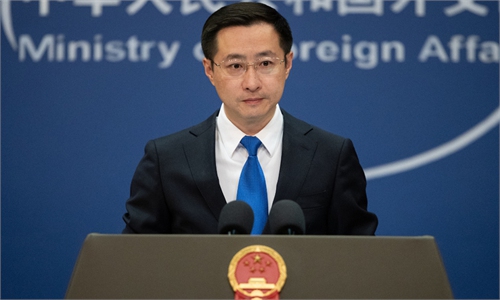
When asked to comment on the latest developments regarding the situation in the Middle East, after Trump reportedly sent a peace plan to Iran as he voiced optimism at ending nearly a month of war and Iran announced that it will let non-hostile oil vessels go through the Strait of Hormuz, Chinese Foreign Ministry spokesperson Lin Jian said "We are gravely concerned over the ongoing tensions in the Middle East and the impact on regional and global peace and stability."
"The pressing priority now is to stop fighting. The way out is through dialogue and negotiation. China supports all efforts conducive to easing tensions, deescalating the situation and restoring dialogue," said the spokesperson.
In the same press conference, Lin responded to a media inquiry about China's plans to facilitate peace talks, after Chinese Foreign Minister Wang Yi received a phone call from Iranian Foreign Minister Araghchi yesterday, during which the latter said that Iran hopes China will continue to play a positive role in promoting a ceasefire and peace talks.
"It is hoped that relevant parties will seize every opportunity and window for peace and start the peace talks as soon as possible," Lin said.
Global Times
RELATED ARTICLES